Signs You Have a Slow Puncture — and What to Do
A slow puncture can go undetected for weeks. Here are the warning signs and what you should do before it causes bigger problems.
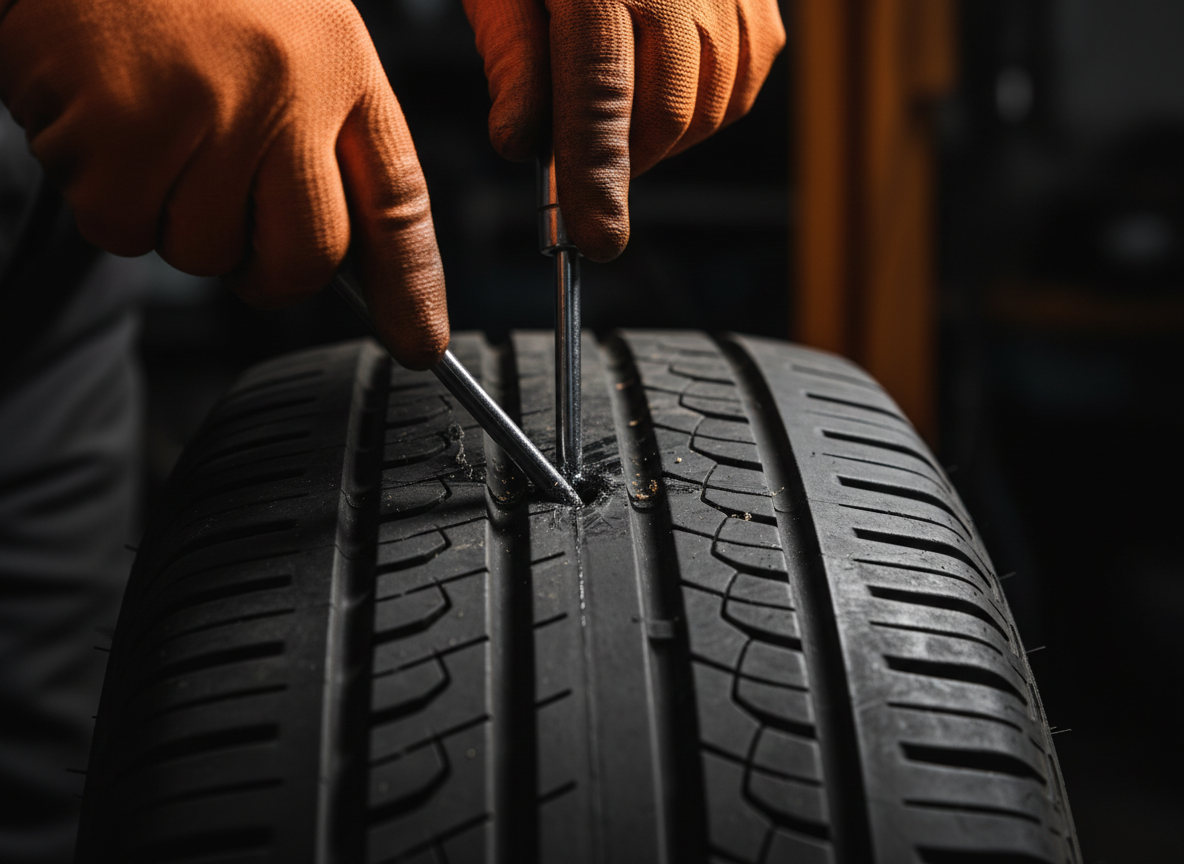
A slow puncture is a small leak that causes a gradual, steady loss of tyre pressure. Unlike a sudden blowout, it can be easy to miss — but ignoring it is dangerous, because a soft tyre overheats, wears rapidly and can fail suddenly.
This guide explains the warning signs of a slow puncture, the common causes, and whether a repair is possible. If you suspect a slow puncture, our mobile puncture repair team can come to you across the East of England — call 01279 881234.
What Is a Slow Puncture?
A slow puncture loses pressure over days or weeks rather than minutes. The tyre may look fine when parked but be visibly softer after a long drive, or trigger a TPMS warning light intermittently. Because the loss is gradual, many drivers simply top the tyre up and carry on — but the underlying damage is still there and getting worse.
Driving on an under-inflated tyre is unsafe and expensive. The softer tyre flexes more, generating heat, which accelerates wear and can cause the tyre to delaminate or blow out. It also increases fuel consumption and damages the sidewall.
Warning Signs of a Slow Puncture
TPMS Warning Light
The most obvious alert on a modern car. If your TPMS light comes on, check all four pressures immediately. A light that keeps returning after you have inflated the tyre is a classic slow-puncture symptom. See our TPMS warning light guide.
One Tyre Losing Pressure Faster
Check your pressures weekly. If one tyre consistently drops faster than the other three, you almost certainly have a slow puncture.
Pulling to One Side
If the car drifts left or right without steering input, one tyre may be significantly under-inflated. The drag from the soft tyre pulls the car towards that side.
Increased Fuel Consumption
Under-inflated tyres increase rolling resistance, so you use more fuel. A sudden drop in mpg with no other explanation can point to a soft tyre.
Visually Low Tyre
Do a visual walk-around before driving. A tyre that sits noticeably lower on the wheel than the others, or has a flattened contact patch at the bottom, is soft.
A Hissing Sound
In a quiet garage, you may hear a faint hiss from a leaking tyre — particularly from a faulty valve.
Common Causes of a Slow Puncture
- A nail, screw or piece of glass embedded in the tread — often the object stays in, plugging the hole enough for a slow leak
- A faulty or perished valve stem — the rubber cracks with age and leaks
- A corroded or bent alloy wheel rim — corrosion on the bead seat creates a micro-gap between tyre and wheel
- A cracked sidewall from an earlier impact or age
- A poor previous repair — an incorrectly fitted plug can leak
Can a Slow Puncture Be Repaired?
Many slow punctures can be repaired safely and legally at low cost. A repair is possible if:
- The object is embedded in the central tread area (roughly the middle 60–70% of the tread width)
- The hole is small (under 6mm)
- The tyre's internal structure is intact
- The tyre has not been driven flat
A repair is not possible if:
- The damage is in the sidewall or shoulder
- The tyre has a bulge or internal damage
- It is a run-flat tyre that has been driven flat (see our run-flat guide)
- The tyre has been driven under-inflated and overheated
All our puncture repairs follow the British Standard BS AU 159, using a combined plug-and-patch method from the inside of the tyre for a permanent, safe repair.
What to Do If You Suspect a Slow Puncture
- Check your pressures and inflate the soft tyre to the correct pressure
- Re-check the next day — if it has dropped again, you have a leak
- Do not drive long distances on a tyre you know is losing pressure
- Book a professional inspection — a slow puncture will not fix itself
Get a Slow Puncture Fixed at Your Door
Call us on 01279 881234 and we'll come to you, assess the damage for free, and either repair the puncture or advise on replacement. We cover Harlow, Cambridge, Bishop's Stortford and all surrounding areas — see our all locations page. A fast repair now is far cheaper and safer than a blowout later.
Need a mobile tyre service?
We cover Harlow, Bishop's Stortford, Cambridge and all surrounding areas — 24/7.
Call: 01279 881234