What Does the TPMS Warning Light Mean?
That tyre pressure symbol on your dashboard could mean several things. Here's what to do when it comes on.
The TPMS (Tyre Pressure Monitoring System) warning light looks like a flat tyre with an exclamation mark inside it. When it illuminates on your dashboard, it means one or more of your tyres is 25% below the recommended pressure — or there is a fault with a sensor.
In this guide we explain what causes the TPMS light to come on, what to do when it appears, and how to tell the difference between a genuine pressure problem and a faulty sensor. If your light is on right now, our TPMS sensor replacement team can come to you across Harlow, Cambridge and Bishop's Stortford — call 01279 881234.
What Is a TPMS?
Since November 2014, every new car sold in the UK and EU must be fitted with a Tyre Pressure Monitoring System. The system uses sensors inside each wheel to measure tyre pressure in real time and warn the driver when pressure drops to an unsafe level.
There are two types of TPMS:
Direct TPMS
Direct systems use a physical pressure sensor inside each wheel, usually attached to the valve. These give accurate, real-time pressure readings and are fitted to the vast majority of modern cars.
Indirect TPMS
Indirect systems use the car's ABS wheel speed sensors to estimate pressure by measuring how fast each wheel rotates. A deflated tyre has a smaller rolling radius and spins faster. These systems need recalibrating after a tyre change or pressure adjustment.
Why the TPMS Light Comes On
A TPMS warning can be triggered by several different issues, and working out which one matters.
- A slow puncture losing pressure over days or weeks
- A sudden pressure loss from a nail, screw or impact
- Temperature drop in winter — cold air reduces tyre pressure, which is why the light often appears on the first cold morning of autumn
- A faulty or dead TPMS sensor — the batteries inside sensors last roughly 5 to 10 years
- A new tyre fitted without the system being reset, or a wheel swap without relearning sensor positions
What to Do When the Light Comes On
Step 1 — Check Your Pressures
Pull over safely at the next opportunity and check all four tyre pressures with a gauge against the figures in your door jamb or owner's manual. Our tyre pressure guide explains how to do this correctly.
Step 2 — Inflate or Repair
If a tyre is low, inflate it to the correct pressure. If it is visibly flat or loses pressure quickly, do not drive on it — you likely have a puncture. Our mobile puncture repair service can come to you.
Step 3 — Watch for a Persistent Light
If the light stays on after you have correctly inflated all four tyres, or flashes before staying on, you most likely have a sensor fault rather than a pressure problem.
TPMS Sensor Faults
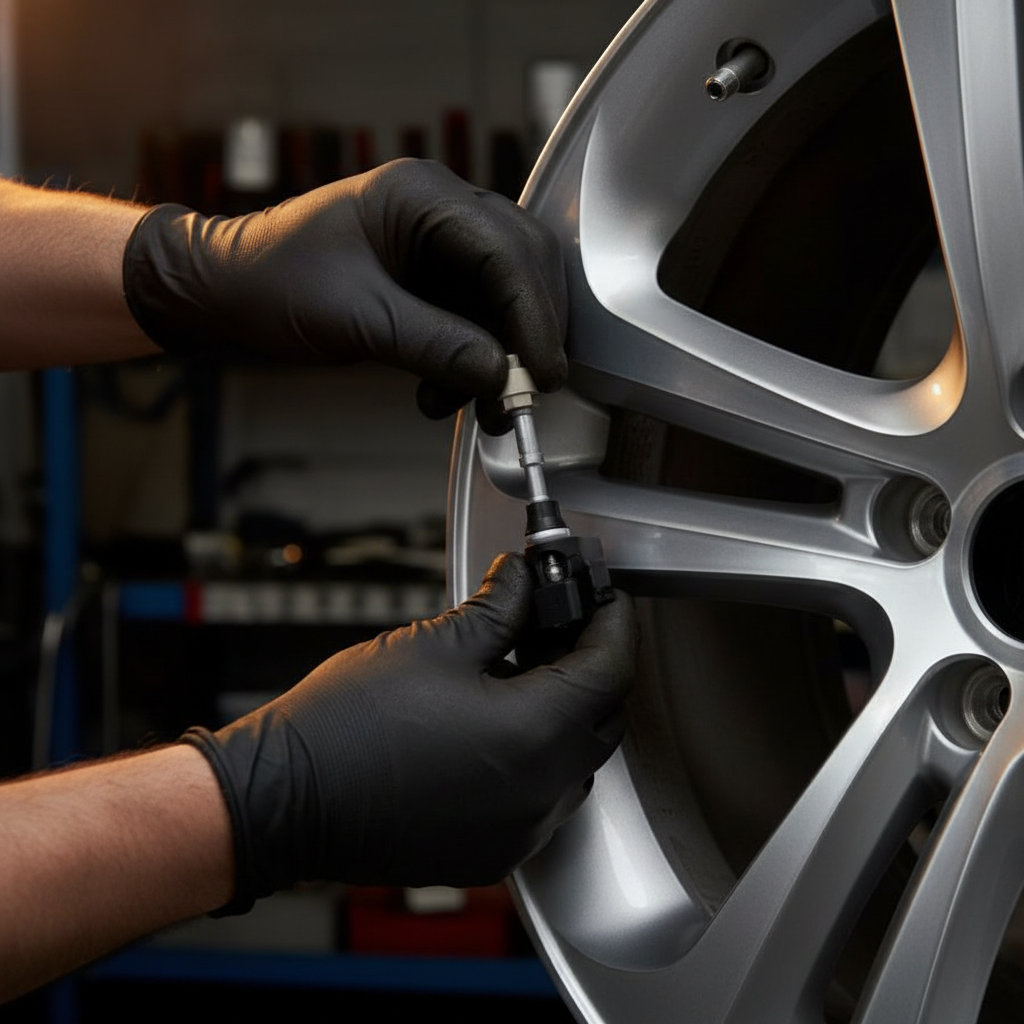
TPMS sensors are small electronic devices mounted inside the wheel, exposed to heat, water and road salt. Their internal batteries cannot be replaced — when the battery dies, the whole sensor must be replaced.
Symptoms of a faulty sensor include:
- The warning light staying on despite correct pressures
- The light flashing for 60–90 seconds on startup then staying on
- One wheel showing a fixed or impossible pressure reading
- A failure after a tyre change or battery disconnect
We carry TPMS sensors for most makes and models and can diagnose, replace and reprogram them at your home or workplace. See our local pages for Harlow and Cambridge.
Can I Drive With the TPMS Light On?
Legally, driving with the light on is an offence if your tyres are actually under-inflated, as this counts as using a vehicle in a dangerous condition. Even if the cause is a faulty sensor, ignoring the warning means you lose your pressure monitoring and risk a puncture going unnoticed until it becomes a blowout. A TPMS fault will also cause an MOT failure.
If your light is on, get it checked. Call us on 01279 881234 and we'll diagnose the cause at your location and fix it the same day.
Need a mobile tyre service?
We cover Harlow, Bishop's Stortford, Cambridge and all surrounding areas — 24/7.
Call: 01279 881234