Tyre Pressure Warning Light Fix: When to Call for Help
Could the warning light be signalling a tyre problem rather than a faulty sensor? If you’re wondering whether it’s safe to keep driving, don’t ignore it or assume a reset will solve the problem. A reliable tyre pressure warning light fix starts with checking the tyres and their pressures. It can be…
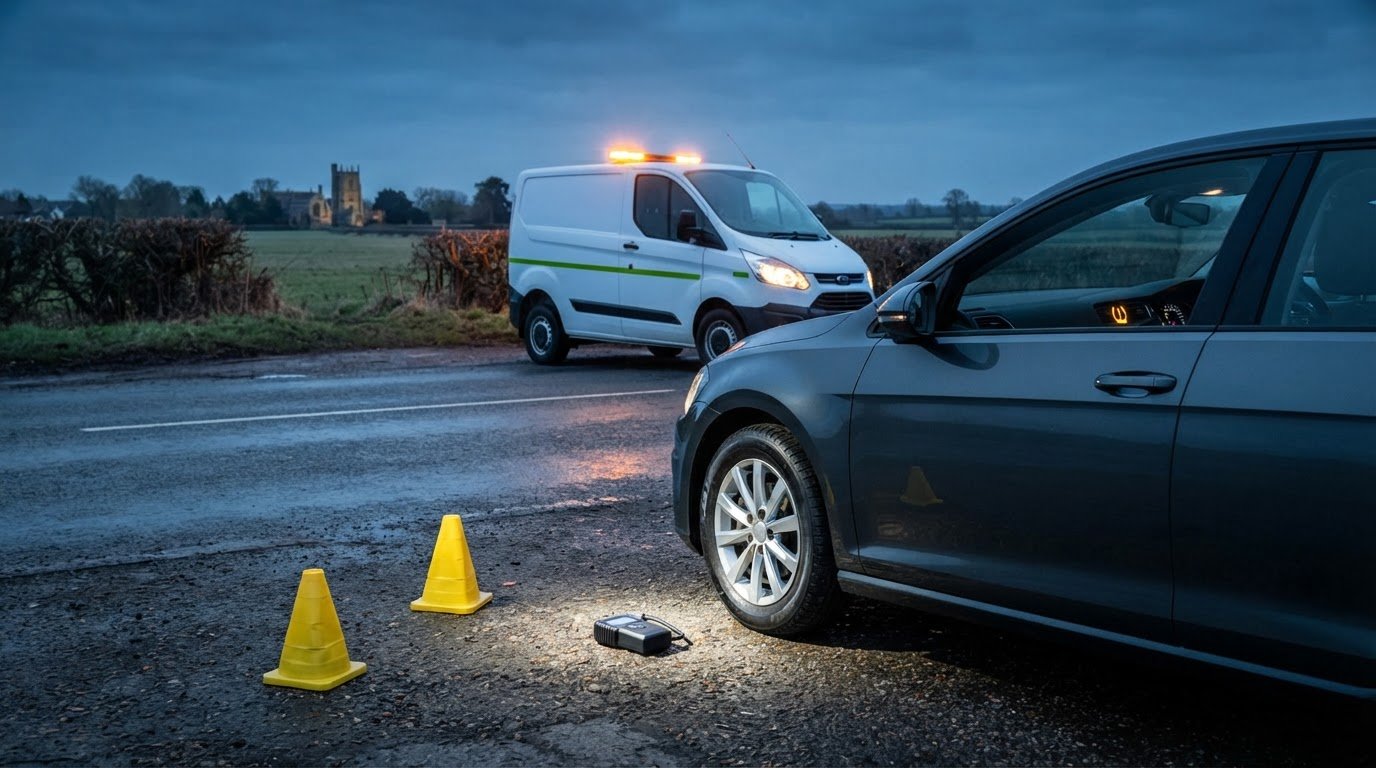
Could the warning light be signalling a tyre problem rather than a faulty sensor? If you’re wondering whether it’s safe to keep driving, don’t ignore it or assume a reset will solve the problem. A reliable tyre pressure warning light fix starts with checking the tyres and their pressures.
It can be unsettling when the light comes on and you can’t tell whether a tyre is losing air or the TPMS has developed a fault. Start by checking whether a tyre looks damaged or deflated, then compare its pressure with the figure in your vehicle handbook or on the tyre-pressure placard. If the car’s handling has changed, stop somewhere safe and arrange assistance rather than continuing your journey.
This guide explains how to distinguish a possible pressure problem from a TPMS issue, when a reset may be appropriate and when an assessment is needed. If you need on-site help, Mobile Tyre Service provides mobile tyre repair and TPMS sensor services in Essex and Cambridge.
Key Takeaways
- Treat the warning as a prompt to investigate, not proof of a puncture or sensor failure.
- Use the pressure figures specified for your vehicle, then follow its handbook before attempting a reset.
- A practical tyre pressure warning light fix depends on identifying whether the cause is pressure loss, changing conditions or a possible TPMS issue.
- If a tyre problem needs on-site attention, mobile tyre fitting or repair can help in Essex and Cambridge.
- When checks point towards a sensor issue, mobile TPMS sensor support offers a relevant next step.
Tyre Pressure Warning: What it Means and What to Do
A tyre pressure warning means you should check the tyres and, if their pressures are correct, consider whether the monitoring system needs attention. It doesn’t identify which tyre is affected or confirm the cause. The TPMS, or Tyre Pressure Monitoring System, monitors tyre pressure and alerts the driver when its readings indicate a potential issue. For an overview of how these systems work, see Tire-pressure monitoring system.
Stay calm. Ease off the accelerator smoothly and avoid sudden braking or steering. If the car begins to pull, handling feels different or a tyre looks flat, stop in a safe place as soon as you can. The warning alone can’t tell you whether pressure has dropped, a tyre is damaged or the monitoring system needs attention. Treat it as a prompt to check, not a diagnosis.
What does the tyre pressure warning light look like?
On many vehicles, the symbol resembles a cross-section of a tyre, often with an exclamation mark inside. Displays differ between makes and models, and colours or other warning patterns can carry different meanings. Check your vehicle handbook for the exact symbol and instructions. Its appearance alone doesn’t prove that a tyre is punctured or that a sensor has failed.
Can you drive with the warning light on?
Whether it’s safe to continue depends on the condition of the tyres, how the vehicle behaves and the guidance in its handbook. Moving cautiously to a safe stopping place is different from continuing a normal journey without checking the cause.
If a tyre appears flat, the car pulls to one side or its handling changes, stop safely and arrange assistance. Don’t continue simply because the vehicle is still moving. If there’s no obvious change in handling, proceed cautiously to a suitable safe place to inspect the tyres and check their pressures. Follow the handbook’s instructions, and don’t assume that switching off the warning is a tyre pressure warning light fix. If pressure has dropped, address the cause before relying on a reset.
Why a tyre pressure warning light comes on: low pressure, temperature or TPMS
A warning can have several causes. One tyre may be underinflated, pressure may have fallen gradually, or a change in temperature may affect the reading. A monitoring-system issue is another possibility, particularly if checks show the tyres are at the correct pressures. A warning light signals that a check is needed, not a confirmed diagnosis.
Don’t assume the tyre has a puncture, or that the TPMS is faulty just because the light stays on. Check each tyre methodically, then follow the vehicle’s instructions to understand what the system is reporting.
How low tyre pressure and temperature changes affect the warning
Compare each tyre’s pressure with the recommended figure for your vehicle. Find it in the handbook or on the vehicle’s tyre-pressure placard, often located inside a door opening or fuel-filler flap. Don’t use the maximum pressure marked on the tyre sidewall as your target. Follow the handbook’s instructions for when and how to take the readings.
Pressure can drop gradually, and cooler conditions can affect tyre pressure readings. Neither cause proves there’s a puncture. After you correct a pressure, the warning may not update immediately. Your vehicle may need time, a specific reset or another procedure. Follow the handbook rather than repeating a reset or relying on a generic online sequence.
When the issue may involve a TPMS sensor
If all tyres match the recommended pressures but the alert remains, or the display behaves unusually, a fault in the monitoring equipment may be possible. The dashboard symbol alone can’t identify a failed sensor. Vehicle-specific reset instructions and an assessment can help distinguish a sensor-related issue from pressure loss.
When checks point towards the monitoring system, mobile TPMS sensor support is a relevant next step. Read the mobile TPMS sensor service guide for details. A useful tyre pressure warning light fix starts with accurate pressure checks, then addresses what those checks reveal rather than simply clearing the symbol.
If a sensor issue appears likely, mobile TPMS sensor support can bring tyre and monitoring-system assistance to your chosen location.
Resetting a tyre pressure warning light: what to check before you try
Correcting tyre pressure and resetting the TPMS are separate steps. Inflation addresses pressure that’s below the vehicle’s recommendation; a reset or relearn procedure updates the monitoring system after the correction. Resetting first can hide a warning without resolving a leak or damaged tyre. A dependable tyre pressure warning light fix starts with checking the tyres, not clearing the dashboard.
Use this comparison to decide what to check next:
Pressure issue: One or more readings are below the vehicle’s recommended pressures. Next check: Adjust according to the handbook, then follow its guidance on updating the system.
Possible TPMS fault: Readings appear correct, but the warning remains or returns. Next check: Use the vehicle-specific reset instructions. If the alert persists, arrange a TPMS assessment.
Visible damage or recurring pressure loss: A tyre looks damaged or loses pressure again after inflation. Next check: Prioritise an inspection and arrange tyre assistance. Don’t rely on repeated inflation or resetting.
Check and correct tyre pressures before resetting
Park safely and use a suitable tyre pressure gauge. Check all tyres, including the spare only if your vehicle instructions require it. Follow the handbook or vehicle placard for the recommended figures and the correct checking conditions. Don’t substitute the maximum pressure printed on the tyre sidewall.
If you find damage, or a tyre’s pressure drops again, don’t treat the warning as a reset issue. Repeatedly adding air won’t identify or repair the cause. Arrange an inspection before continuing a normal journey, especially if the vehicle’s handling changes.
Why the warning may stay on after correcting pressure
Some vehicles need a reset or relearning procedure after the pressures have been corrected. The steps vary by make, model and monitoring system, so use the exact instructions in your handbook. There’s no universal button sequence. Don’t try a procedure intended for a different vehicle.
If the warning remains or returns despite correct readings and the prescribed procedure, the system may need an assessment. Mobile TPMS sensor services can help when checks suggest a sensor-related issue. For tyre or sensor support at your chosen location, explore mobile tyre and TPMS support.
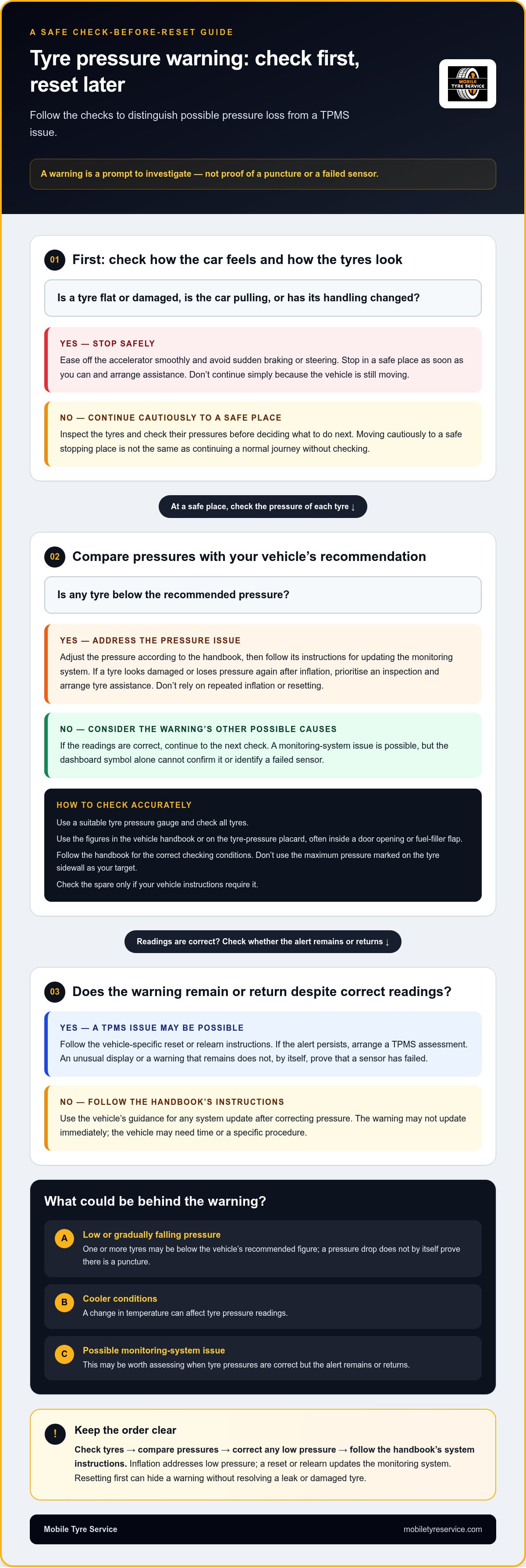
A safe step-by-step tyre pressure warning light fix
Use this sequence to make a measured decision. Correcting the pressure may address the underlying issue, but it won’t repair a damaged tyre. If you can’t inspect or check the tyres safely, don’t continue your journey just to try a reset.
- Stop somewhere safe. Find a suitable place away from moving traffic. Don’t stop in a dangerous position to inspect a tyre. If the vehicle pulls or feels unstable, slow smoothly and stop as soon as it’s safe.
- Look at each tyre. Check for obvious deflation, visible damage or an object embedded in the tread. Don’t remove an object, as doing so could worsen air loss. Keep clear of traffic while inspecting.
- Check the pressures if it’s safe. Use a suitable gauge and compare each reading with the vehicle’s recommended figures. Follow the handbook or tyre-pressure placard for the correct values and checking conditions.
- Choose the next action. If pressure is low but there’s no sign of damage, correct it according to the handbook, then follow the vehicle’s instructions for the monitoring system. If pressure falls again, or the tyre looks unsafe, arrange tyre assistance instead of repeatedly inflating it or attempting a reset.
The checks to make at a safe location
Don’t put yourself or others at risk for a roadside check. If you can’t reach a safe place, or can’t use a gauge safely, leave the inspection to a tyre professional. A tyre that looks significantly deflated or damaged needs attention before you consider driving on.
Keep pressure correction separate from repair. Adding air may address underinflation, but it doesn’t establish why pressure dropped or make damage safe. A tyre professional can assess whether repair or replacement is appropriate. Not every puncture can be repaired, and a warning doesn’t automatically mean the TPMS sensor needs replacing. When complex mechanical or sensor issues require in-depth workshop diagnostics, specialist automotive centres such as MonacoPro Auto Garage provide comprehensive evaluations to identify and resolve faults.
When to stop and arrange tyre assistance
Stop safely if the vehicle’s handling changes, a tyre appears deflated, or pressure drops again after correction. For drivers facing a completely flat tyre or roadside breakdown where moving the vehicle is hazardous, emergency services such as Bernabe Towing & Recovery offer vital recovery assistance. Don’t use a dashboard reset as a substitute for an inspection. If the tyre has damage that requires repair, see the mobile tyre repair cost guide for related information.
For an issue that needs on-site tyre attention, choose a mobile tyre repair service. The right tyre pressure warning light fix addresses the cause, whether that means correcting pressure, assessing tyre damage or investigating the monitoring system.
Mobile tyre pressure warning light support in Essex and Cambridge
Once you’ve stopped safely and checked the tyres, decide what to do based on what you find. Low pressure may need correcting, but visible damage or pressure that keeps dropping calls for a tyre assessment. If the readings appear correct and the warning persists, the monitoring system may need attention. A tyre pressure warning light fix should address the identified issue, not simply clear the dashboard alert.
Mobile Tyre Service provides mobile tyre fitting, tyre repair and TPMS sensor services at customers’ chosen locations in Essex and Cambridge. This is a practical option when a tyre concern needs on-site attention or checks suggest a sensor-related issue.
When mobile tyre repair or fitting may be the next step
Visible damage, a tyre that looks deflated or pressure loss that returns after inflation are reasons to arrange a professional tyre assessment. Don’t assume every puncture can be repaired, or that a tyre must automatically be replaced. The appropriate option depends on the tyre’s condition and assessment.
Mobile tyre repair or fitting brings tyre support to your location, which can help when continuing to drive doesn’t feel safe or appropriate. If the vehicle’s handling has changed or a tyre appears unsafe, don’t drive on to seek help. Stop somewhere safe and arrange assistance at your location.
When to consider mobile TPMS sensor service
If you’ve checked the pressures against the vehicle’s recommended figures and the warning remains or returns, the TPMS may need attention. A dashboard alert alone doesn’t confirm a failed sensor, so avoid replacing parts based only on the symbol. Vehicle-specific instructions and an appropriate assessment can help identify whether the issue is pressure-related or sensor-related.
Mobile TPMS sensor service is a relevant next step when your checks point towards the monitoring system. Mobile Tyre Service provides tyre and TPMS support in Essex and Cambridge, with assistance delivered at customers’ chosen locations. When arranging support, explain the warning and the checks you’ve already made so the issue is clear.
If you need help with a tyre or TPMS concern, arrange mobile tyre support.
Take the right next step for your tyres
A warning light is a prompt to check, not a diagnosis. Compare each tyre’s pressure with the vehicle’s recommended figures, inspect for visible damage and use the handbook for any reset procedure. If a tyre looks unsafe, handling changes or pressure keeps falling, stop safely and arrange assistance rather than relying on a reset.
The right tyre pressure warning light fix depends on the cause. Mobile tyre fitting and repair can address tyre concerns at your chosen location, while mobile TPMS sensor services are relevant when checks point towards a monitoring-system issue. Mobile Tyre Service supports customers in Essex and Cambridge.
For a tyre or TPMS concern, arrange mobile tyre support. Make the safe checks first, then arrange mobile tyre support in Essex or Cambridge if you need on-site help.
Frequently Asked Questions
What is the fastest safe fix for a tyre pressure warning light?
The fastest safe tyre pressure warning light fix is to stop somewhere safe and check before resetting anything. Inspect the tyres for visible damage or deflation, then compare their pressures with the figures in your vehicle handbook or on its placard, using a suitable gauge if it’s safe. Correct pressure only as instructed. If a tyre looks unsafe, pressure falls again or you can’t check safely, arrange an assessment rather than continuing or repeatedly clearing the warning.
Can I drive with the tyre pressure warning light on?
Whether you can continue depends on tyre condition and how the vehicle behaves. If a tyre looks flat, the car pulls to one side or handling changes, stop somewhere safe and don’t continue a normal journey. If the tyres appear normal, follow your handbook and check pressures promptly at a safe location. A warning light doesn’t confirm that the tyres are safe to drive on, so don’t ignore it just because the car feels normal.
How do I reset a tyre pressure warning light?
Use the reset instructions in your vehicle handbook, as procedures vary by make, model and monitoring system. First check and correct all relevant tyre pressures; resetting without addressing low pressure can leave the underlying issue unresolved. Some systems need a specific reset or relearning process after adjustment. If the light stays on or returns after you’ve followed the handbook, arrange a tyre or TPMS assessment instead of repeating the reset.
Why is my tyre pressure warning light still on after inflating the tyres?
The pressure may still be incorrect, the system may need a vehicle-specific reset or relearning procedure, or there may be a TPMS issue. Recheck each relevant tyre against the recommended figures in your handbook or on the vehicle placard. Then follow the handbook’s instructions. If pressures are correct but the warning persists or returns, have the tyres and monitoring system assessed rather than assuming inflation alone has fixed the cause.
Can cold weather make the tyre pressure warning light come on?
Yes, temperature changes can affect tyre pressure readings and may contribute to a warning. Check each tyre against the vehicle’s recommended pressure using the handbook or vehicle placard, and follow its guidance for taking readings. Don’t assume colder conditions are the only cause. Damage, pressure loss or a TPMS issue may also need attention. If the warning remains after checking, use your vehicle’s instructions to decide what to do next.
Does a flashing tyre pressure warning light mean the sensor is faulty?
Not necessarily. On some vehicles, a flashing warning can indicate a TPMS issue, but the display’s meaning varies by make and model. Check your handbook for the specific symbol and behaviour. A flashing light alone doesn’t prove that a sensor has failed. First make sure the tyres appear safe and check their pressures against the recommended figures. If the alert persists, arrange an assessment of the tyres and monitoring system.
When should I call for mobile tyre or TPMS sensor help?
Arrange support if a tyre looks damaged, loses pressure again or appears unsafe to drive on. Mobile tyre repair or fitting can help when the issue concerns the tyre; mobile TPMS sensor service may be relevant if the warning persists despite correct pressures. Mobile Tyre Service provides these services at customers’ chosen locations in Essex and Cambridge. If you can’t safely continue or check the tyre, arrange on-site support.
Need a mobile tyre service?
We cover Harlow, Bishop's Stortford, Cambridge and all surrounding areas — 24/7.
Call: 01279 881234