Tyre Pressure Monitoring System Repair: Warning Signs, Diagnosis and Mobile Help
Could a TPMS warning point to a tyre problem rather than a failed sensor? The light doesn’t automatically mean the monitoring system is broken. One or more tyres may be under-inflated or losing pressure, or a valve or sensor could be at fault. That’s why tyre pressure monitoring system repair starts…

Could a TPMS warning point to a tyre problem rather than a failed sensor? The light doesn’t automatically mean the monitoring system is broken. One or more tyres may be under-inflated or losing pressure, or a valve or sensor could be at fault. That’s why tyre pressure monitoring system repair starts with checking both the tyres and the system, rather than assuming the cause.
This guide explains warning signs, the difference between pressure alerts and sensor faults, and sensible safety steps to take before continuing your journey. You’ll also learn what information can help identify the issue, including whether your vehicle uses direct or indirect TPMS. Mobile Tyre Service provides on-site TPMS sensor installation and maintenance in Essex and Cambridge, at home or roadside. The first step is to understand what the warning could mean and what to do next.
Key Takeaways
- A TPMS warning needs a tyre check as well as a system check. Don’t assume the sensor is at fault.
- Compare dashboard alerts with tyre condition and pressure readings to help distinguish a pressure problem from a possible sensor fault.
- If the warning stays on, prioritise a safe inspection and correct tyre pressure over resetting the system without understanding the cause.
- Note how the warning behaves and whether pressure readings update. This information can help focus tyre pressure monitoring system repair.
- Mobile TPMS sensor support is available at home or roadside in Essex and Cambridge.
What does a tyre pressure monitoring system warning mean?
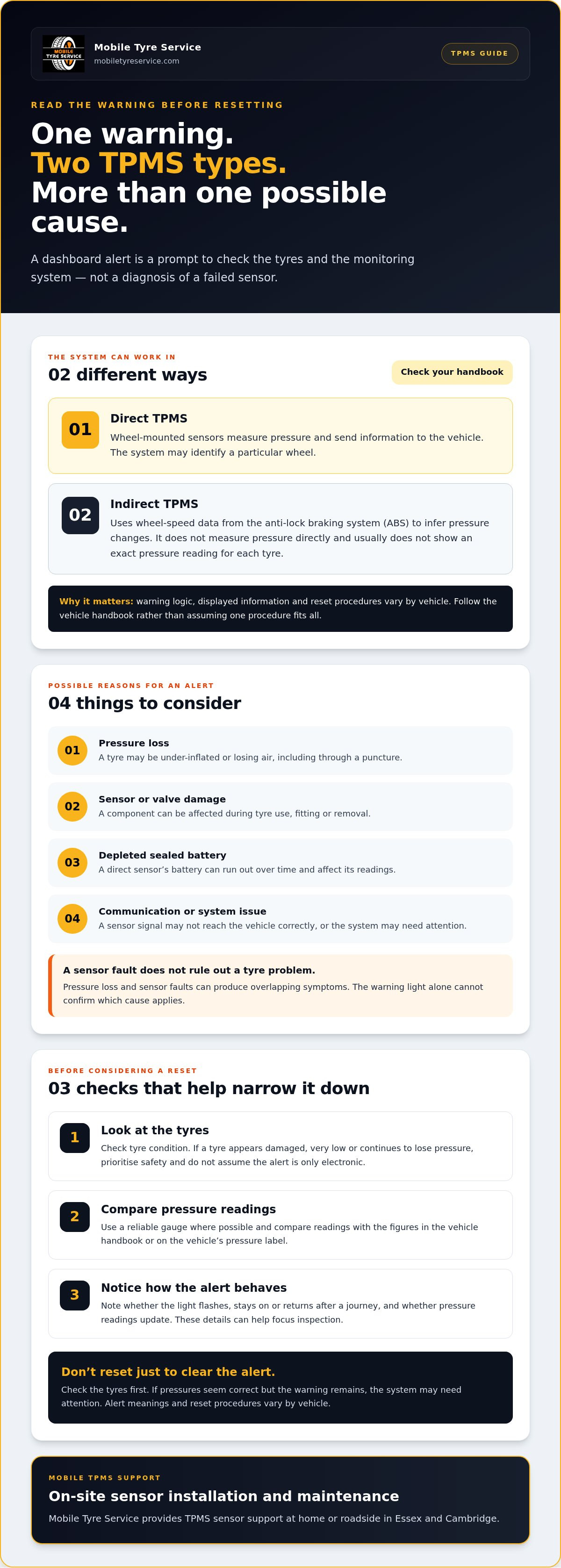
A tyre pressure monitoring system (TPMS) monitors tyre pressure and alerts the driver when it detects a pressure concern or a problem with the monitoring system. A dashboard warning can point to an under-inflated tyre, a sensor issue or another system fault. The symbol alone doesn’t identify the cause, so treat it as a prompt to check the tyres and investigate, not as a diagnosis.
TPMS designs vary. Some measure pressure at individual wheels; others use vehicle data to identify changes that may indicate pressure loss. The Tire-pressure monitoring system overview describes these broad approaches. Symbols, messages and alert behaviour depend on the vehicle, so consult its handbook or manufacturer guidance to interpret what you see.
What is the difference between a pressure warning and a TPMS fault?
Low pressure is a tyre condition: one or more tyres may need checking and inflating to the vehicle’s recommended pressure. A sensor fault affects the monitoring system’s ability to detect or report information. These are different issues, but the dashboard may not make the distinction obvious. A sensor warning doesn’t prove the tyres are correctly inflated, so check them directly rather than relying on the display alone.
Why might a TPMS warning appear?
A warning may follow gradual pressure loss, a puncture or a change in temperature. A sensor may also be damaged, its sealed battery may be depleted, or the system may be having difficulty communicating with a sensor. These causes can produce overlapping symptoms, so the warning light alone can’t confirm which one applies.
- Pressure loss: A tyre may be under-inflated or losing air, even if the change isn’t immediately visible.
- Sensor damage: A sensor or valve may be affected during tyre use, fitting or removal.
- Depleted battery: The battery inside a direct sensor can run out over time, affecting its ability to report readings.
- Communication or system issue: A sensor signal may not reach the vehicle correctly, or the system may need attention.
Check the tyres and compare their pressures with the figures in the vehicle handbook or on the vehicle’s pressure label. Use a reliable gauge where possible. If a tyre appears damaged, very low or continues to lose pressure, prioritise safety and don’t assume the warning is only electronic. If the pressures seem correct but the warning remains, the system may need attention as part of tyre pressure monitoring system repair.
Warning patterns and reset procedures vary by vehicle. A light that flashes, stays illuminated or returns after a journey may have different meanings across models. Don’t reset the system simply to clear the alert before checking the tyres. Follow the vehicle handbook and seek tyre or TPMS support if the cause remains unclear.
How TPMS sensors detect pressure problems and develop faults
Vehicles monitor tyre pressure in different ways, so warning logic and sensor arrangements depend on the model. A direct TPMS measures pressure with sensors fitted at the wheels. An indirect TPMS uses wheel-speed data from the vehicle’s anti-lock braking system (ABS) to infer a pressure change. The distinction matters: indirect systems don’t measure pressure directly or usually display an exact pressure reading for each tyre.
Direct and indirect TPMS: what differs?
In a direct system, wheel-mounted sensors send pressure information to the vehicle. In an indirect system, the car compares wheel rotation: an under-inflated tyre can rotate differently because its rolling circumference changes. As Bridgestone's explanation of TPMS operation and warning signs outlines, both approaches can alert the driver but rely on different inputs. Reset and recalibration steps vary by vehicle, so follow the handbook rather than assuming one procedure fits all.
This variation affects what a warning can tell you. A direct system may identify a particular wheel, while an indirect system may signal a pressure difference without reporting an individual pressure value. The dashboard message is a useful clue, not a complete diagnosis. Check the vehicle’s display and guidance to understand what its system can report; for broader technical vehicle calibrations and setups, you can also discover Motortech 4X4 for examples of how advanced sensor systems are calibrated on modern rigs.
What can damage or disrupt a TPMS sensor?
A direct sensor is a component inside the wheel, often associated with the valve. Impact damage, corrosion, wear or a depleted sealed battery may affect its operation. Tyre removal and fitting also require care: tools or movement around the tyre bead can damage a sensor if it is struck or handled incorrectly. If a warning appears after tyre work, consider the tyre and TPMS together rather than assuming the sensor is the cause.
Possible contributors include:
- Impact or physical damage: A pothole or other hard impact may affect a tyre, wheel or sensor, but the warning alone won’t show which part is involved.
- Corrosion or wear: A valve or sensor component may deteriorate over time and disrupt pressure reporting.
- Battery depletion: A direct sensor’s sealed battery can eventually run out, preventing it from sending readings.
- Signal or system communication issues: The vehicle may not receive information from a sensor reliably.
Keep sensor faults separate from tyre faults. A puncture or leaking valve can cause real pressure loss without proving the sensor is faulty. Equally, a sensor fault doesn’t rule out a puncture or under-inflation. Inspection helps establish whether the issue concerns the tyre, sensor or both. For tyre pressure monitoring system repair involving a sensor, Mobile Tyre Service provides mobile TPMS sensor support, including installation and maintenance at home or roadside in Essex and Cambridge.
How to tell whether a tyre or TPMS sensor needs attention
A dashboard alert is a starting point, not a verdict. Compare what the vehicle reports with what you can safely observe at the wheels. If a tyre looks damaged, is visibly deflated or feels unusual on the road, prioritise the tyre itself. Dashboard information cannot rule out damage, and a pressure reading should never override a clear physical warning sign.
Use this comparison to decide what to check next. These are clues, not diagnoses: a pressure problem and a sensor fault can occur separately or at the same time.
| Observed symptom | Possible explanation | Sensible next action |
|---|---|---|
| Tyre looks flattened, damaged or cut | Pressure loss or physical tyre damage | Stop somewhere safe. Don’t continue on a visibly damaged or severely deflated tyre. |
| Handling feels different, or a warning appears after a pressure change | A tyre may be under-inflated, or pressure may need checking after adjustment | Pull over safely and check each tyre with a suitable pressure gauge. |
| Warning remains after pressures have been corrected | A continuing pressure issue or possible TPMS fault | Recheck the pressures and tyre condition; arrange an assessment if the alert persists. |
| Pressure display is missing, implausible or slow to update | Possible sensor, signal or system issue, if the vehicle displays individual readings | Consult the handbook and note which readings are affected before seeking help. |
Which symptoms suggest a tyre-pressure issue?
A tyre that looks lower than the others, visible damage, a change in handling or a warning after a pressure change all warrant caution. Stop safely before inspecting the wheels, away from moving traffic where possible. Check pressures when the tyres are cold, using a reliable gauge and the figures in the vehicle handbook or on the pressure label. Don’t rely on a visual check alone, and don’t drive on a visibly damaged or severely deflated tyre.
Which symptoms may point to a sensor or system fault?
If you’ve checked and corrected the pressures but the alert remains, a sensor or system issue is possible. That still isn’t proof: pressure may continue to fall, or the vehicle may need a model-specific procedure. Missing, delayed or implausible readings are relevant if your vehicle displays individual pressures. Record the warning message and readings, then use the TPMS warning-light guide to understand related symptoms.
Don’t try to conceal a persistent alert with a reset before checking the tyres. Reset procedures differ by vehicle and won’t repair a puncture or faulty component. If the cause remains unclear, note whether one tyre appears low, whether damage is visible and how the warning behaves. These details can help focus tyre pressure monitoring system repair and distinguish a tyre concern from a possible monitoring-system fault.
What to do when a TPMS warning stays on
A persistent TPMS warning calls for a measured response: first establish whether the tyre is safe, then consider whether the monitoring system needs attention. Don’t try to clear the light before checking the tyres. A reset can remove a warning from the display without addressing pressure loss or damage.
Follow this sequence, using the vehicle handbook for instructions specific to your model:
1. Stop safely. If the vehicle feels unstable or a tyre looks damaged or deflated, pull over somewhere safe as soon as you can. Avoid stopping where you are exposed to moving traffic.
2. Inspect the tyres. From a safe position, look for obvious cuts, bulges, embedded objects or a tyre that appears significantly lower than the others. Don’t handle an object embedded in a tyre or put yourself in danger to inspect it.
3. Check the pressures. If it’s safe to do so, use a suitable pressure gauge and compare each reading with the vehicle’s recommended figures. A dashboard display can be useful, but it doesn’t replace a physical check when a tyre appears damaged.
4. Arrange an assessment if the warning remains. If the tyres appear sound and the pressures are correct but the alert persists, the system may need attention. Seek help promptly rather than treating a reset as a repair.
What should you check before arranging TPMS repair?
Make a note of the dashboard message, when it first appeared and any pressure readings shown. Record whether the alert started after tyre fitting, a pothole or other impact, a suspected puncture, or a change in seasonal temperatures. These details help explain the symptoms, but none proves the cause on its own.
Don’t remove a sensor or repeatedly reset the system without vehicle-specific instructions. Reset and relearning procedures differ between models, so follow the manufacturer’s guidance. For a separate puncture or pressure-loss concern, the mobile tyre repair guide covers related tyre issues.
When should you stop driving and seek assistance?
Stop safely if a tyre is visibly damaged or deflated, or if the vehicle’s control or handling is affected. Don’t continue on a tyre that appears unsafe. Follow the vehicle manufacturer’s instructions and avoid carrying out checks beside moving traffic. If the car seems to drive normally but the warning stays on, arrange a prompt assessment; normal handling doesn’t confirm that the tyres or TPMS are functioning correctly.
For tyre pressure monitoring system repair, Mobile Tyre Service provides mobile TPMS sensor installation and maintenance at home or roadside in Essex and Cambridge. Arrange mobile TPMS sensor support for help with a persistent warning.
Mobile TPMS repair and sensor support in Essex and Cambridge
A TPMS concern doesn’t always mean you need to travel to a garage. Mobile tyre and TPMS support brings sensor installation or maintenance to your home or roadside in Essex and Cambridge. The right next step depends on the vehicle, the symptoms and what the inspection finds. A warning may relate to tyre pressure, a sensor or another system concern, so the work should address the issue identified rather than assume every alert needs the same fix.
What happens during an on-site TPMS service?
The service begins with the symptoms: what the dashboard shows, when the warning began and whether pressure readings are available. The tyre or sensor concern is then assessed, and the appropriate tyre or TPMS work explained before proceeding. This helps establish whether the issue appears to involve the tyre, sensor or both.
Vehicle-specific fitment and system procedures affect the work involved. Sensor access, for example, may involve tyre work, while any reset or relearning process depends on the vehicle’s requirements. Mobile Tyre Service focuses on the tyre and TPMS issue at hand. The procedure depends on the vehicle and inspection findings.
How to arrange mobile TPMS help locally
When arranging mobile support, share your location, vehicle make and model, and the warning symptoms. Include the exact dashboard message if you can, whether the vehicle displays pressure readings, and any recent tyre work or impact. This information provides useful context for the service.
At home, a driveway or other suitable working space makes it easier to attend to the tyre and sensor concern. Roadside support is also available when the location is safe for work. If the vehicle is in an unsafe position, or a tyre appears damaged or deflated, prioritise your safety and follow the vehicle manufacturer’s guidance rather than attempting to continue the journey.
Mobile tyre pressure monitoring system repair provides a practical route to sensor installation or maintenance without making a garage visit the first step. The assessment guides the work, while on-site support keeps the service focused on your location and the vehicle’s tyre or TPMS needs.
Arrange mobile TPMS support in Essex or Cambridge. Share your location, vehicle details and warning symptoms to get started.
Take the next step with confidence
A TPMS warning can disrupt your plans, but a clear next step helps you deal with it safely. If you’ve checked the tyre pressures and the alert remains, don’t treat a reset as a fix. Note the warning, any readings available and what you’ve already checked. These details can help focus the assessment and guide tyre pressure monitoring system repair for your vehicle.
Mobile TPMS sensor installation and maintenance is available at home or roadside in Essex and Cambridge. Share your vehicle details and symptoms to get started. You don’t need to identify whether the cause is the tyre or sensor before arranging support; the condition and fault should guide the next step.
Arrange mobile TPMS support and take a practical step towards resolving the warning. With useful information and on-site assistance, you can move forward with greater confidence.
Frequently Asked Questions
Can a tyre pressure monitoring system be repaired?
Yes. Tyre pressure monitoring system repair may involve addressing a tyre or valve issue, or installing or maintaining a TPMS sensor. The right work depends on what an inspection reveals and how the vehicle’s system is designed. For example, a pressure leak may need attention even if the sensor is reporting it correctly. A persistent alert after the tyre concern is resolved may call for a separate sensor or system assessment, something automotive specialists like Speedy Roo Motorsports & Repair Inc carry out using dedicated vehicle diagnostic equipment.
Can I drive with the TPMS warning light on?
It depends on the tyre’s condition and how the vehicle behaves. If a tyre looks damaged or deflated, or the car’s handling changes, stop somewhere safe and don’t continue on that tyre. If there are no obvious symptoms, check the pressures safely and consult the handbook. A warning that remains unexplained still needs prompt attention, even if the vehicle seems to drive normally.
Will a TPMS warning turn off after I inflate the tyres?
It may, but the warning won’t necessarily clear immediately or simply because air has been added. Confirm each tyre is at the pressure specified for your vehicle, using a gauge rather than relying on appearance. Some models require a particular reset or relearning procedure after pressures are corrected. Follow the handbook, and don’t repeatedly reset the system if the alert returns or a tyre continues to lose pressure.
How do I know whether the TPMS sensor or tyre is faulty?
You can gather clues, but a dashboard message alone can’t confirm which component is at fault. Compare the tyre’s condition with a pressure-gauge reading and note whether pressure falls again after correction. If your vehicle displays individual readings, record any that are missing or implausible. A tyre can leak while its sensor works correctly, so an inspection may be needed to distinguish a tyre issue from a monitoring fault.
Can a TPMS sensor be repaired, or does it need replacing?
Some TPMS concerns involve a valve or fitting that can be attended to; others require sensor replacement. The appropriate option depends on the component’s condition and the vehicle’s system. In a direct sensor, the internal battery is sealed, so it can’t be replaced separately when depleted. A suitable replacement and any vehicle-specific setup depend on the sensor arrangement and fitment requirements.
Does changing a tyre affect the pressure monitoring system?
It can. On vehicles with wheel-mounted sensors, tyre removal and fitting take place close to sensor components, so careful handling is important. Damage during the work may disrupt readings or trigger a warning, although a light appearing afterwards doesn’t prove the sensor was damaged. If the alert starts after a tyre change, note when it appeared and which wheel was worked on to help focus the assessment.
Can a mobile tyre service help with TPMS problems in Essex or Cambridge?
Yes. Mobile Tyre Service provides TPMS sensor installation and maintenance at your preferred location in Essex or Cambridge, including at home or roadside. Share the vehicle details, your location and the warning symptoms when arranging support. The appropriate work depends on the vehicle and inspection findings.
Need a mobile tyre service?
We cover Harlow, Bishop's Stortford, Cambridge and all surrounding areas — 24/7.
Call: 01279 881234