Signs of a Slow Puncture: What to Check and What to Do
What if the clearest clue isn’t a warning light, but the same tyre losing pressure again after you’ve topped it up? The signs of a slow puncture can be easy to miss between checks. A TPMS alert or change in handling can have more than one cause, but repeated pressure loss is a strong reason to inves…

What if the clearest clue isn’t a warning light, but the same tyre losing pressure again after you’ve topped it up? The signs of a slow puncture can be easy to miss between checks. A TPMS alert or change in handling can have more than one cause, but repeated pressure loss is a strong reason to investigate.
It can be difficult to judge whether a tyre is safe to drive on when its pressure is dropping gradually. This guide explains how to recognise possible signs of a slow puncture, check tyre pressure consistently and decide when to stop driving and arrange assistance.
You’ll also learn what to look for around the tyre and how to respond if the pressure keeps falling. If you suspect a puncture, Mobile Tyre Service provides mobile tyre assistance at your location across Essex and Cambridge.
Key Takeaways
- Repeated pressure loss after correct inflation is one of the clearest signs of a slow puncture. A single warning light doesn’t identify the cause.
- Small tread damage, a valve issue or a problem with the tyre-to-wheel seal can allow air to escape gradually.
- Check pressure with a suitable gauge and use the figures in your vehicle handbook or on the tyre-pressure label.
- Inspect the tyre only from a safe position and note symptoms before deciding whether to continue your journey.
- Mobile tyre repair or fitting in Essex and Cambridge can help address a suspect tyre without driving it elsewhere.
Signs of a slow puncture: the warning pattern to look for
Pressure that repeatedly falls after you’ve inflated a tyre to the correct level deserves attention. One low reading may reflect when or how the tyre was checked, but repeated drops in the same tyre are harder to dismiss. Note the tyre’s position, the pressure reading and the date. Frequent top-ups are another clue, particularly when the same tyre needs air again soon afterwards.
A slow puncture is gradual air loss from a tyre over time, rather than sudden deflation. It may not look dramatic at first. The tyre can appear usable while its pressure drops, so a visual check alone may not reveal the problem.
From a safe position, compare the tyres while the vehicle is parked on level ground. Look for one that appears lower or softer than the others, and pay attention to changes over time. The signs of a slow puncture can also include:
- Recurring low-pressure readings on the same tyre.
- Repeatedly needing to add air to that tyre.
- A visibly flattened area or a tyre that looks lower than its counterpart.
- Unusual road noise or a change in how the vehicle feels.
These clues don’t identify the exact cause. A pressure gauge shows how much air is in the tyre at the time of the check, but not where air is escaping or why. A dashboard alert also needs context. A Tire Pressure Monitoring System (TPMS) warns of a pressure concern, but the alert alone doesn’t establish that there’s a puncture.
Pressure loss that returns after topping up
Use the pressure figure specified in your vehicle handbook or on its tyre-pressure label, not a generic figure. Record the reading for each tyre and the date, then check again consistently to see whether one tyre is losing pressure. A repeated drop in the same tyre is more useful than one isolated measurement, although it won’t reveal the precise cause. Topping up is not proof that the issue has resolved.
Changes in appearance, sound or handling
A lower-looking tyre or unfamiliar road noise can support your concern, but handling changes may have other causes. Don’t diagnose a puncture from pulling to one side, sluggish steering or an unusual feel alone; as comprehensive vehicle specialists like Eagle Transmission & Auto Repair note, symptoms such as pulling can also stem from wheel alignment or suspension issues. If steering, control or stability is affected, stop somewhere safe rather than continuing to assess the problem on the move. Note what you noticed for the tyre assessment.
How a slow puncture develops, and why symptoms can be subtle
A slow puncture allows air to escape gradually rather than deflating the tyre all at once. The tyre may still look broadly normal and the vehicle may feel driveable as its pressure falls. Gradual pressure loss can go unnoticed between checks because the change may be too slow to spot at a glance. A pattern of readings or other warning signs may be the first indication of a developing leak.
Air can escape from several places. Small tread damage, a tyre valve issue or a loss of sealing where the tyre meets the wheel can all cause gradual pressure loss. Symptoms may raise suspicion, but they can’t confirm which part is responsible. An inspection is needed to identify the cause. A dashboard alert or visible mark alone can’t provide a reliable diagnosis.
Possible sources of gradual air loss
A small puncture in the tread is one possible source, but it isn’t the only one. Air may also escape through the tyre valve or the seal between the tyre and wheel. If you spot an object in the tread, don’t assume it’s the source of the leak. Its appearance doesn’t establish whether air is escaping there. Avoid disturbing it and arrange an inspection.
Regular pressure checks and tyre inspections can help you notice changes, but neither identifies the cause of a particular leak. Some damage may not be easy to see from outside the vehicle. Even if the tread looks clear, air loss may come from another part of the tyre or its seal. Treat what you observe as useful information for an inspection, not as a confirmed diagnosis.
Why one pressure reading can be misleading
A pressure reading is a snapshot, not a record of what happened beforehand. One low result doesn’t show whether pressure has steadily fallen, while one reading within the recommended range can’t rule out a leak that develops later. Compare readings taken consistently over time, using the pressure guidance in your vehicle handbook or on its tyre-pressure label.
Keep measurement conditions as consistent as practical. Temperature and the conditions in which you take a reading can affect the result, so follow your vehicle guidance rather than treating readings taken in different circumstances as directly comparable. Note the date, tyre position and reading. This record can reveal a pattern more clearly than memory alone.
The signs of a slow puncture can point to a problem without identifying its source. If pressure keeps falling, Mobile Tyre Service provides mobile tyre repair at your location in Essex and Cambridge. Mobile tyre repair support is a practical next step when you need the tyre assessed without driving it elsewhere.
Slow puncture or another tyre warning? Compare the clues
A warning light, a low pressure reading and a tyre that suddenly looks deflated are different clues. Each can point to a pressure concern, but none identifies the cause on its own. Compare what you’ve noticed, check the tyres safely and use the pressure guidance in your vehicle handbook. A recurring pattern is more informative than a single warning. Visible deflation or affected handling calls for immediate caution.
| Clue | What it may indicate | What to do |
|---|---|---|
| Repeated low pressure in one tyre | Gradual air loss is possible, especially if the reading falls again after inflation to the vehicle’s recommended pressure. | Check with a suitable gauge, note the result and arrange an inspection if the pattern continues. |
| A TPMS warning | The system has detected a pressure concern. The cause may involve tyre pressure or a sensor issue. | Check the tyre pressures against the vehicle handbook before taking further action. |
| Sudden visible loss of pressure | The tyre may have deflated quickly or sustained damage. | Stop somewhere safe. Don’t continue driving on a visibly deflated tyre. |
Repeated pressure loss versus a one-off warning
A warning that appears once and doesn’t return differs from the same tyre repeatedly measuring low. Check with a suitable pressure gauge and compare the reading with the figure in your handbook or on the vehicle’s pressure label. If it’s low, follow the vehicle guidance. Note which tyre is affected and whether the warning returns. A light going out doesn’t resolve a recurring pressure-loss pattern.
When a TPMS warning may need attention
A tyre pressure monitoring system alerts the driver to a pressure concern, but it doesn’t diagnose a puncture or explain why the alert appeared. Check the tyre pressures first. Don’t reset or ignore the warning before checking them. If the alert persists despite pressure checks, a sensor issue may need assessment alongside the tyres. Mobile Tyre Service provides a mobile TPMS sensor service for sensor-related concerns.
Use the vehicle handbook for pressure figures and instructions specific to your car. Correct pressure matters for safe tyre use, but a reading alone can’t determine whether a tyre is damaged or a sensor is faulty. If the tyre looks visibly deflated or the vehicle feels unstable, stop in a safe place rather than continuing to investigate on the road.
Consider the signs of a slow puncture alongside the pattern of readings and the vehicle’s behaviour, not as a single dashboard message. A gauge shows the pressure at that moment; an inspection can help distinguish a tyre concern from a sensor warning. If the warning remains after checking pressures, or a tyre keeps losing pressure, arrange an assessment rather than relying on the light going out.
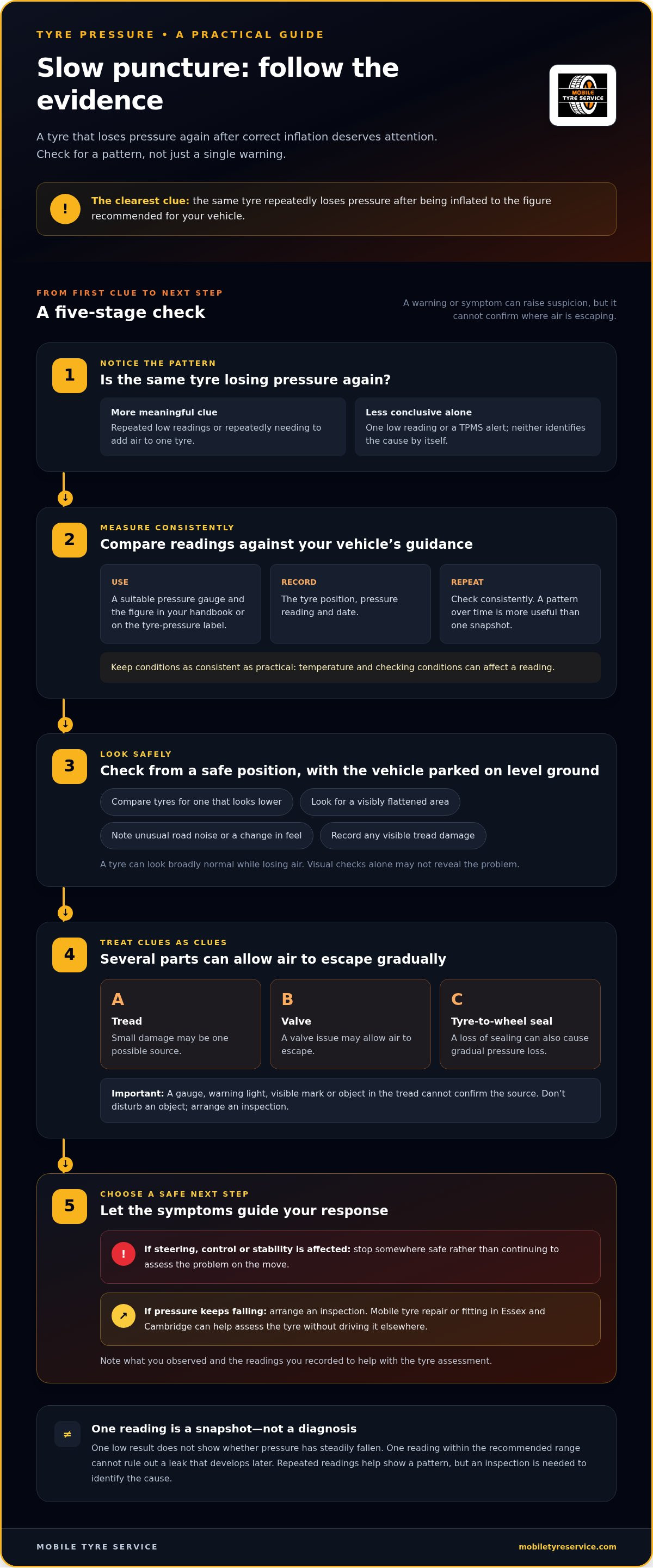
What to do if your tyre shows signs of a slow puncture
Act on the condition of the tyre, not just the warning light. If it looks visibly deflated or the vehicle’s handling feels unsafe, don’t continue driving to see whether the problem gets worse. If the tyre looks flat or handling is affected, stop safely and seek assistance. Choose a place away from moving traffic before inspecting the tyre or taking a pressure reading.
A safe first-check checklist
Once parked safely, inspect the tyre from a position that keeps you clear of traffic. Look for obvious changes in its shape or visible damage, but don’t remove an embedded object or put your hands near an unsafe area. If the vehicle feels unstable, skip the inspection and prioritise getting to safety. A visual check can help describe the issue, but it can’t confirm the cause.
If it’s safe, use a suitable pressure gauge and follow the figure in your vehicle handbook or on the tyre-pressure label. Don’t substitute a generic figure. Record the tyre’s position, the reading, when you took it and any relevant warning-light behaviour. These details provide a clearer account of what’s happening than relying on memory.
- Move to a safe place away from traffic before approaching the tyre.
- Look for visible damage or flattening from a safe position. Don’t handle embedded objects.
- Check the pressure only if it’s safe, following the vehicle’s own guidance.
- Note which tyre is affected, the reading and whether a dashboard warning appeared, remained on or returned.
When to arrange professional tyre assistance
Arrange an assessment if pressure repeatedly drops, you can see damage or a warning persists after checking the tyre pressures. Don’t drive on a visibly deflated tyre or continue if control or stability feels affected. Mobile tyre assistance from Mobile Tyre Service can assess the tyre at home or roadside, avoiding the need to travel on a suspect tyre. The assessment helps determine the appropriate action.
A record of readings and warning behaviour can help explain the concern, but it doesn’t replace an inspection. The mobile tyre repair cost guide provides relevant information about repair costs. The right next step for your tyre depends on its condition and assessment.
Mobile Tyre Service provides mobile tyre repair at customers’ locations in Essex and Cambridge. If the signs of a slow puncture persist, arrange mobile tyre assistance rather than risking a journey on a tyre that may be losing pressure.
Arrange mobile tyre help in Essex or Cambridge
If you’ve noticed repeated pressure loss or another warning that makes you doubt the tyre is safe, avoid driving further than necessary. An on-site tyre service can assess the tyre where the vehicle is parked, so you don’t need to travel on a suspect tyre. Depending on the assessment, the next step may be repair or fitting. Not every tyre can be repaired.
Mobile Tyre Service provides mobile tyre repair and fitting for customers in Essex and Cambridge, including at home or roadside. Sharing clear details about the vehicle and symptoms helps explain the situation and location when arranging assistance. If the vehicle feels unstable or the tyre is visibly flat, prioritise stopping safely instead of attempting to drive to another location.
What details to provide when arranging assistance
Give a concise account of what you’ve observed. Say which tyre is affected, when the symptoms began and whether pressure has fallen more than once. If available, share the pressure reading, any visible damage and what the TPMS warning is doing, such as whether it remains on or returns after a pressure check.
- The vehicle’s location, and whether it’s at home or roadside.
- Which tyre appears affected and when you first noticed the issue.
- Any pressure readings, visible damage or change in handling.
- Whether a TPMS warning has appeared, persisted or returned.
Don’t put yourself at risk to gather information. If you can’t safely check the pressure or inspect the tyre, explain what you can see from a safe position. A straightforward description is useful; you don’t need to identify the fault yourself.
Mobile tyre support at your location
Mobile tyre repair and fitting brings assistance to the vehicle’s location. This is especially practical when pressure keeps dropping and driving elsewhere may be unsafe. An assessment helps establish the appropriate next step. Mobile TPMS sensor services are also available if a sensor warning remains part of the concern after the tyre pressures have been checked.
The signs of a slow puncture are a reason to take recurring pressure loss seriously, not to assume the cause or repair outcome. Share your location and symptoms, then follow the advice provided for the vehicle’s situation. Mobile Tyre Service supports customers across Essex and Cambridge with mobile tyre assistance at home or roadside.
If you’re in Essex or Cambridge and need help with a suspect tyre, arrange mobile tyre assistance.
Make your next journey with confidence
Don’t let uncertainty about a tyre force a rushed decision. Whether navigating daily commutes or preparing for demanding cross-country journeys like the self-drive 4x4 expeditions organised by MINT Adventures, tyre integrity is essential. If the signs of a slow puncture have raised concerns, treat the next step as a safety decision, not a test of whether the tyre will hold. Arrange an inspection before relying on the vehicle for another journey, and share the symptoms you’ve observed so the tyre can be assessed clearly.
Mobile tyre assistance can bring repair or fitting support to your vehicle. Mobile TPMS sensor services can help address a persistent sensor warning. The right outcome depends on an assessment of the tyre and the reported concern, so don’t assume that a warning light going out has resolved the issue.
Arrange mobile tyre assistance to have the tyre assessed and decide on the next step with greater confidence.
Frequently Asked Questions
Can I drive with a slow puncture?
Don’t assume it’s safe to drive on a tyre that may be losing pressure. If it looks flat or the vehicle feels unstable, stop somewhere safe and seek assistance. If the tyre still looks inflated, a visual check alone can’t establish whether it’s safe for a journey. Avoid treating repeated top-ups as a fix, particularly if the pressure drops again.
Is a TPMS warning light always a sign of a puncture?
No. A TPMS light signals a pressure concern, but it doesn’t prove that a tyre has a puncture. Check the pressures using the vehicle’s recommended figures, then see whether the warning remains or returns. If all tyres appear correctly inflated but the alert persists, a sensor issue may be involved. Don’t ignore the light or reset it instead of checking the tyres.
How often should I check my tyre pressure if I suspect a slow puncture?
There isn’t one checking interval that suits every suspected leak. If you’re concerned, take a reading before deciding whether to use the vehicle, and follow the vehicle handbook for pressure-checking guidance. Use the same gauge and similar conditions where practical, and note the time and result so you can compare readings. If pressure continues to fall, frequent checks don’t make driving safe.
What happens if a slow puncture is left unchecked?
As pressure falls, a tyre can become increasingly underinflated, which may affect how the vehicle handles and increase the risk of further tyre damage. The change may be gradual, so the vehicle’s behaviour might not make the problem obvious straight away. A tyre that seems driveable can still need attention. Arrange an assessment if you suspect ongoing pressure loss rather than waiting for the tyre to look completely flat.
Can cold weather make a tyre look like it has a slow puncture?
Cold conditions can lower tyre-pressure readings, so a change in pressure during colder weather doesn’t automatically prove there’s a puncture. Check the tyres against the figures in your vehicle handbook or on the pressure label, and compare readings taken under similar conditions. If the same tyre continues to lose pressure, treat that pattern as a separate concern and arrange an inspection rather than attributing it to temperature alone.
Can I use a tyre sealant on a suspected slow puncture?
Only use a sealant if it’s suitable for your vehicle and the instructions in your handbook and on the product allow it. Sealant isn’t a substitute for identifying the source of air loss, and it may be intended as a temporary measure rather than a lasting repair. If you’re unsure, don’t apply it speculatively. Record the symptoms and arrange an assessment, especially if the tyre is visibly low or handling feels affected.
Will a slow puncture always leave a visible object in the tyre?
No. Air can escape without an obvious object being visible from outside the tyre. A small puncture may be difficult to spot, and a valve or the seal between the tyre and wheel may also be involved. Don’t probe the tread or remove an embedded object to investigate. If pressure readings keep falling, a professional inspection can help identify the cause, even when a quick visual check shows nothing clear.
Need a mobile tyre service?
We cover Harlow, Bishop's Stortford, Cambridge and all surrounding areas — 24/7.
Call: 01279 881234