Run-Flat Tyre Replacement Cost in Cambridge: What Affects Your Quote?
Could a damaged run-flat need replacing, or might a repair be possible? The run flat tyre replacement cost Cambridge drivers are quoted depends on more than the tyre itself. The vehicle, tyre specification and fitting requirements can all affect the estimate. It’s understandable to want a clear figu…

Could a damaged run-flat need replacing, or might a repair be possible? The run flat tyre replacement cost Cambridge drivers are quoted depends on more than the tyre itself. The vehicle, tyre specification and fitting requirements can all affect the estimate. It’s understandable to want a clear figure before deciding what to do, especially if you’re unsure whether it’s safe to drive.
A puncture doesn’t automatically mean replacement, but run-flat construction and any distance driven after pressure loss can affect whether a repair is suitable. The tyre needs a careful assessment before that decision is made. If replacement is required, the exact tyre size, brand and model, vehicle type and work involved help shape a tailored quote.
This guide explains the main factors behind run-flat replacement costs, what information to have ready when requesting a quote, and why a repair may not be appropriate. It also explains how mobile tyre fitting in Cambridge can bring a replacement to your preferred location, so you don’t have to drive on a damaged tyre.
Key Takeaways
- The run flat tyre replacement cost Cambridge drivers receive depends on the tyre specification, vehicle fitment and work required.
- Check your vehicle guidance before relying on a run-flat after pressure loss. Its limited mobility is not permission to continue driving without limits.
- A repair isn’t always suitable. Damage location, tyre condition and the manufacturer’s guidance all inform the decision.
- Have your vehicle details, tyre markings, location and a description of the damage ready when arranging a tailored quote.
- Mobile fitting in Cambridge can bring a replacement to your preferred location when travelling on a damaged tyre isn’t suitable.
Run-flat tyre replacement cost in Cambridge: what shapes the quote?
The run flat tyre replacement cost Cambridge drivers are quoted depends on the exact tyre required and the work involved. A run-flat isn’t interchangeable with any tyre that fits the wheel: its size and performance ratings must suit the vehicle, and the manufacturer’s fitment guidance matters. Reinforced construction supports limited mobility after pressure loss, which is why accurate tyre selection is important. For background on the design and its limitations, see run-flat tyre technology.
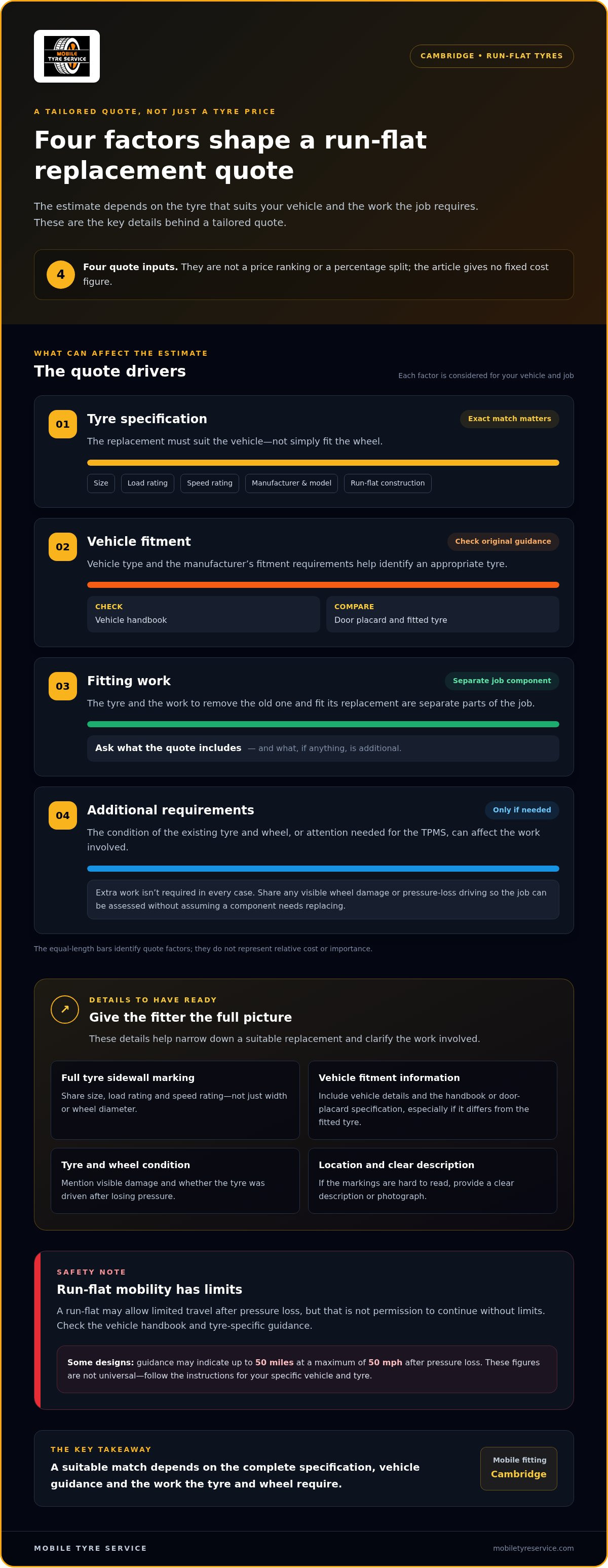
A tailored quote reflects the replacement tyre’s specification, its suitability for the vehicle, the fitting work and any additional requirements identified during the job.
- Tyre specification: Size, load rating and speed rating help identify suitable replacement options.
- Vehicle fitment: The vehicle’s original requirements help determine the appropriate specification.
- Fitting work: The tyre itself and the work to remove and fit it are separate parts of the job.
- Additional requirements: TPMS sensor work or issues with the existing tyre or wheel may affect what needs doing.
Which tyre and vehicle details influence the quote?
Start with the markings on the tyre sidewall. These show the tyre size, load rating and speed rating, usually as a sequence of numbers and a letter alongside the size. Share the full marking rather than only the width or wheel diameter. The complete specification helps narrow down suitable replacements. Compare it with the original fitment information in the vehicle handbook or on the door placard. If the details differ, provide both so the vehicle guidance can inform the selection.
Run-flat status and the specific manufacturer and model can matter too. Tyres with similar dimensions may have different construction or vehicle suitability. A quote should be based on an appropriate match, not simply the closest-looking size. Vehicle type and fitment requirements can further affect the selection.
What work may sit alongside the tyre replacement?
The replacement tyre is one part of the job; fitting it is another. A tailored quote should make clear what work is included and distinguish any additional work identified for the particular vehicle. Extra work isn’t required in every case.
For example, TPMS sensor work is a separate consideration if the vehicle’s tyre pressure monitoring system needs attention. The condition of the existing tyre and wheel can also affect the work involved. If you can see wheel damage, or the tyre has been driven after losing pressure, share that information when requesting a quote. It helps clarify the job without assuming a sensor or another component needs replacing.
How run-flat tyres work and why correct replacement matters
A run-flat tyre is designed to let a vehicle travel for a limited distance after a loss of inflation, within the limits set by the vehicle or tyre manufacturer.
This limited mobility can help a driver reach a safer place after a puncture, but it doesn’t mean the tyre is safe to drive on indefinitely. Follow the vehicle handbook and any tyre-specific guidance. The replacement must also match the vehicle’s fitment requirements, not just appear to be the same size.
What makes a run-flat tyre different?
A run-flat tyre has reinforced sidewalls that can support the vehicle’s weight for a limited period when air pressure is lost. A standard tyre generally relies on inflation pressure to maintain its shape and support. After a puncture, it can become difficult or unsafe to continue driving. Run-flat construction provides some additional mobility, not immunity from damage.
Distance and speed limits vary according to the vehicle and tyre guidance. Some run-flat designs are typically intended for up to 50 miles at a maximum of 50 mph after pressure loss, but those figures aren’t a universal allowance. Check the handbook and follow the instructions for your specific vehicle. If the tyre has lost pressure, don’t assume you can complete your journey simply because it’s a run-flat.
How to identify the correct run-flat specification
Read the full set of markings on the tyre sidewall and record them for a quote. Size is only one part of the specification. Load and speed ratings, run-flat identification and manufacturer fitment requirements can also matter. Marking conventions vary between tyre manufacturers, so don’t rely on one abbreviation as the only way to identify a run-flat.
Use the vehicle handbook or door placard to check the original fitment guidance, then compare it with the tyre currently fitted. If the markings are different or hard to read, share a clear description or photograph when arranging a replacement. This gives the fitting service more context than the size alone and helps narrow down a suitable tyre.
Correct fitment matters because a tyre that doesn’t meet the vehicle’s requirements may not provide the intended performance. A replacement decision should account for the complete specification and the manufacturer’s guidance. That’s why the run flat tyre replacement cost Cambridge quote depends on selecting the right tyre for the vehicle, rather than choosing by size or price alone.
If pressure loss makes driving unsuitable, mobile tyre fitting in Cambridge brings replacement to your preferred location. Share the tyre markings and vehicle details so the required fitment can be identified before the visit.
Repair or replacement: how to make the right run-flat decision
A puncture doesn’t automatically mean a run-flat must be replaced, but appearance alone can’t establish whether a repair is safe. The decision depends on the damage, the tyre’s condition and the manufacturer’s repair guidance. First, the tyre is assessed. A repair may be considered if it meets the relevant criteria; replacement may be needed if the tyre’s structure or safety could be compromised.
Under the general repair criteria in British Standard BS AU 159, puncture position and size matter: damage must be within the central three-quarters of the tread and no more than 6mm. Run-flat repairs also depend on the tyre manufacturer’s guidance. A puncture that looks small from outside may not tell the full story, particularly if the tyre has been driven after losing pressure.
- Assessment: The tyre is examined to establish the damage location and condition.
- Repair: This may be considered only if the damage and manufacturer guidance allow it.
- Replacement: This is the appropriate outcome if the tyre is unsuitable for repair or its condition cannot support safe use.
When should a damaged run-flat be assessed for replacement?
Arrange an assessment if the tyre is damaged or has lost pressure. Driving on a deflated run-flat can strain its reinforced structure, and internal damage may not be obvious from the outside. If it has been driven in that condition, it’s especially important to establish what has happened before deciding between repair and replacement.
Follow the vehicle handbook if pressure drops, and stop somewhere safe rather than assuming the run-flat can carry on. A technician needs to inspect the tyre before deciding the appropriate outcome. An uncertain visual check isn’t proof that a repair is suitable.
Can a run-flat be replaced with a standard tyre?
Don’t assume a standard tyre is a direct substitute. Compatibility depends on the vehicle manufacturer’s requirements and the intended tyre setup. Start with the handbook and provide the vehicle details when requesting a quote. The correct choice can depend on more than matching the size printed on the sidewall.
Repair and replacement costs are separate considerations, and an inspection determines which applies. For general repair-cost context, the mobile tyre repair cost guide can help explain the distinction, but it can’t determine whether a particular run-flat is repairable. That depends on the individual tyre and applicable manufacturer guidance.
For Cambridge drivers, mobile tyre repair and replacement offer a practical option when driving on a damaged tyre isn’t suitable. Share the vehicle and tyre details, whether pressure has been lost and how far the tyre has been driven. This helps establish the next step without assuming repair is possible.
How to prepare for a run-flat replacement quote in Cambridge
Useful details help identify the correct replacement and clarify the work involved before a mobile visit is arranged. You don’t need to diagnose the damage yourself. Note what you can see, whether the tyre has lost pressure and where the vehicle is. If it’s deflated or damaged, don’t drive on it to collect more information.
What information helps identify the right replacement?
Gather the vehicle and tyre details below where they’re safely accessible. Full sidewall markings and handbook guidance help distinguish between tyres that may look similar but have different specifications. If a marking is hard to read, say so rather than guessing. A clear photograph can help identify it.
- Vehicle: Note the make, model and registration details so the vehicle can be identified accurately.
- Tyre size: Record the complete size marking from the sidewall, not just one part of the sequence.
- Run-flat and ratings: Include any run-flat markings and the load and speed ratings shown on the tyre.
- Handbook guidance: Share relevant original fitment information from the vehicle handbook or door placard.
- Damage and pressure: Describe the visible damage, its location if apparent, and whether the tyre has lost pressure. Mention any TPMS warning on the dashboard.
- Photographs: If it’s safe to do so, take clear images of the sidewall markings and visible damage. Don’t put yourself in traffic or move the vehicle to get a better view.
These details give a clearer basis for a tailored run flat tyre replacement cost Cambridge quote. They also help avoid selecting a replacement using incomplete information. If you’ve driven after pressure loss, mention it, as the tyre’s condition may need assessment.
How to prepare the vehicle and fitting location
Mobile fitting can take place at your preferred location, including at home. Provide the full Cambridge address or a clear roadside location, then describe access restrictions that could affect reaching the vehicle or working safely. For example, mention a controlled entrance, limited parking access or a position close to moving traffic. A safe, accessible working area is important. Don’t attempt to move a damaged vehicle to create one.
Keep the vehicle details and photographs ready when arranging the visit. This connects the tyre specification with the location and the condition you’ve described. For roadside fitting, share precise location information and follow the vehicle handbook’s guidance after pressure loss.
Once you have these details together, arrange mobile tyre fitting in Cambridge at your preferred location, without driving on a tyre that may be unsafe.
Mobile run-flat tyre replacement in Cambridge: what happens next?
If a damaged run-flat makes driving unsuitable, mobile fitting brings the replacement to your chosen location. Mobile Tyre Service provides mobile tyre fitting and repair in Cambridge, giving you a practical way to arrange fitting without travelling on a tyre that may be unsafe.
The process starts with information to identify the vehicle and its required tyre. You can then arrange fitting at a suitable location, such as your home or another accessible place. At the fitting, the technician uses the details provided to guide the work and assesses the tyre and vehicle requirements. The appropriate outcome depends on the tyre’s condition and the vehicle’s fitment needs.
What to expect during mobile tyre fitting
Share the vehicle make, model, registration details and tyre markings, including size and ratings. Describe the damage and whether the tyre has lost pressure. This gives the fitting service useful context and helps identify the replacement specification.
Next, provide the Cambridge fitting location and explain any access restrictions. At the visit, the technician considers the vehicle and tyre information alongside the tyre’s condition. If replacement is appropriate, the fitting is completed at the agreed location. The decision to repair or replace should be based on the individual tyre, not assumed because it is a run-flat.
TPMS sensor work is relevant if the vehicle and the work required call for it. Share a dashboard warning or sensor concern when arranging service. It doesn’t mean every replacement needs a new sensor. The requirement depends on the vehicle and the sensor’s condition.
Choose a clear next step for your Cambridge replacement
Before arranging the visit, bring together the key details. A concise, accurate description helps keep the next steps clear:
- Vehicle: Make, model and registration details.
- Tyre: Full sidewall size, run-flat markings, and load and speed ratings where visible.
- Condition: Damage location if known, whether pressure has been lost, and any TPMS warning.
- Location: The Cambridge address or roadside position, plus access information and a safe place for fitting.
These details help shape the run flat tyre replacement cost Cambridge quote around the tyre specification and work required. If pressure is lost, don’t drive to gather information or reach a fitting location. Follow the vehicle handbook and arrange help at a suitable place instead.
If a TPMS warning or sensor issue is part of the situation, the mobile TPMS sensor service guide can help explain sensor support. For a run-flat replacement in Cambridge, Arrange your mobile tyre service in Cambridge.
Make your next step a considered one
You don’t have to decide from a photograph or guess whether a damaged run-flat can be repaired. Share the vehicle information and describe what has happened, then let the tyre’s condition and fitment requirements guide the decision. This gives you a clearer basis for discussing the run flat tyre replacement cost Cambridge drivers need to plan for, without treating an uncertain diagnosis as fact.
If travelling on the tyre doesn’t feel safe, Mobile Tyre Service provides fitting and replacement at your preferred location in Cambridge. Mobile TPMS sensor services are also available when relevant to the vehicle and work required. Keep the vehicle and tyre details to hand, and choose a location where fitting can be carried out safely.
Take the practical next step: arrange mobile tyre fitting in Cambridge. With the right information and a suitable fitting location, you can move towards a clear, safety-conscious resolution.
Frequently Asked Questions
How much does run-flat tyre replacement cost in Cambridge?
There isn’t one fixed quote for every vehicle. The run flat tyre replacement cost Cambridge drivers are given depends on the tyre specification, vehicle fitment and work required. Provide the vehicle make, model and registration, plus the complete tyre sidewall markings, to help scope the job accurately. Mention visible damage or a TPMS warning too. Sensor work is a separate consideration where the vehicle and job require it, not an automatic part of every replacement.
Can I replace run-flat tyres with standard tyres?
Not automatically. A standard tyre may or may not suit your car’s approved fitment and intended tyre setup. A vehicle designed around run-flats may have specific guidance about replacement choices. Check the handbook and original vehicle specifications before deciding, and share those details when arranging a replacement. Don’t choose solely by matching the size: the correct tyre must meet the requirements for your particular vehicle and equipment.
Is a run-flat tyre the same as a self-sealing tyre?
No. A run-flat uses its construction to provide limited mobility after pressure loss, within the relevant vehicle and tyre guidance. A self-sealing tyre uses a different approach, with a sealing layer intended to deal with certain punctures. Neither type is immune to damage, and neither makes it safe to drive indefinitely after a warning. If pressure drops, follow your vehicle instructions and arrange an assessment rather than relying on the tyre type alone.
Can I drive on a run-flat tyre after a puncture?
Only within the limits set for your vehicle and tyre, so don’t assume you can finish any journey or cover a particular distance. Check the handbook promptly, stop somewhere safe and arrange an assessment. If the car feels unstable, the tyre looks damaged or pressure has fallen sharply, don’t continue just because the tyre is marked as run-flat. Share your location and the warning details when arranging assistance.
Do run-flat tyres need special wheels?
There’s no single wheel rule that applies to every run-flat tyre. Compatibility depends on the vehicle’s design and approved fitment, so consult the handbook or original vehicle specifications. Matching the tyre size alone doesn’t establish that a wheel and tyre combination is suitable for your car. Provide the vehicle details and existing tyre information when requesting replacement, so the selection is based on the complete fitment rather than appearance.
Can run-flat tyres be repaired after a puncture?
Sometimes a repair may be considered, but it can’t be assumed. The damage location, tyre condition and manufacturer’s guidance all affect the decision. A run-flat driven with low or no pressure may have internal damage that isn’t apparent from the outside, so it needs careful inspection before an outcome is determined. Mobile tyre repair supports an on-site assessment; the technician will establish whether repair is appropriate or replacement is needed.
How can I tell whether my car has run-flat tyres?
Check the tyre sidewall for run-flat identification and compare it with your vehicle handbook or original specification. Markings differ between manufacturers, so don’t treat one abbreviation as universal proof. If you’re unsure, note the full sidewall text or take a clear photograph when it’s safe to do so. Include the vehicle make, model and registration when arranging a replacement, so the information can be considered together.
Need a mobile tyre service?
We cover Harlow, Bishop's Stortford, Cambridge and all surrounding areas — 24/7.
Call: 01279 881234