Roadside Assistance for a Flat Tyre in Essex: What to Do
A sudden flat tyre on the A12, a town-centre road or a quiet country lane can bring your journey to an abrupt stop. If you need roadside assistance for flat tyre Essex drivers should put safety first: stop somewhere safe and don’t continue on a damaged tyre if it’s unsafe to do so. It’s unsettling t…
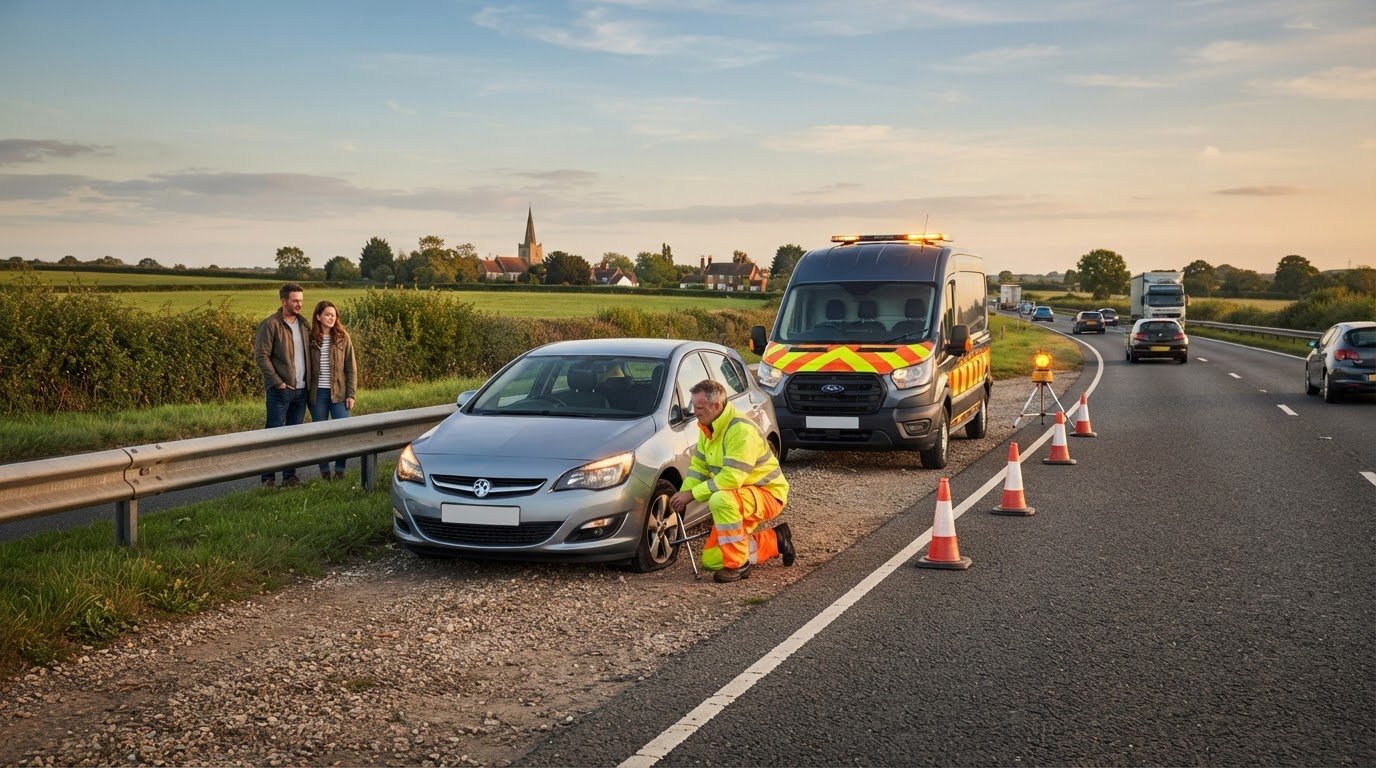
A sudden flat tyre on the A12, a town-centre road or a quiet country lane can bring your journey to an abrupt stop. If you need roadside assistance for flat tyre Essex drivers should put safety first: stop somewhere safe and don’t continue on a damaged tyre if it’s unsafe to do so.
It’s unsettling to be stranded and unsure whether moving the vehicle will make things worse. On a motorway, follow the safety guidance: leave the vehicle only when it’s safe, get behind the barrier and call for assistance. Elsewhere, move well clear of traffic if you can do so safely, switch on your hazard lights and stay in a secure place.
This guide explains what to do next, what details to share when arranging help, and how Mobile Tyre Service can assess a flat tyre at your location. A mobile technician can determine whether an on-site repair is suitable or whether the tyre needs replacing, so you can take a clear next step without attempting a roadside repair yourself.
Key Takeaways
- Prioritise your safety. Stop somewhere safe and follow the Highway Code before inspecting the tyre or arranging help.
- Understand what roadside flat-tyre assistance in Essex involves, from an on-site assessment to a suitable repair or replacement.
- Be ready to describe your vehicle, the tyre problem, your exact location and whether you’re safely stopped.
- Roadside, home and workplace assistance all depend on safe access and the circumstances around your vehicle.
- Mobile Tyre Service provides tyre fitting and repairs at your location, helping you take the next step when your vehicle can’t safely continue.
Flat tyre in Essex? Take these safety steps before arranging roadside assistance
Put personal safety first. Don’t get out to inspect the tyre or start changing a wheel until you’re confident you can do so without entering traffic or putting yourself at risk. If the vehicle remains controllable, move it only as far as needed to reach a safer stopping place, such as a suitable parking area away from moving vehicles. Follow the Highway Code and any road signs or instructions around you.
Once stopped, use your hazard warning lights when appropriate to alert other road users. Stay clear of moving traffic, and don’t continue driving on a visibly damaged or deflated tyre. Doing so may worsen the damage or affect your control of the vehicle. If anyone is injured or there’s immediate danger, contact the emergency services.
What should you do immediately after a tyre goes flat?
Take things in order rather than rushing into a roadside repair. A tyre may lose pressure suddenly or be damaged by an object, but it may not be safe to inspect the cause beside the road. For a general overview of flat tyres and temporary options such as spare tyres or inflators, see understanding flat tyres. That information doesn’t replace finding a safe stopping place or arranging a professional assessment.
- Keep control. Reduce speed smoothly and avoid sudden steering or braking. Move towards a safe stopping place only if the vehicle responds predictably.
- Make yourself visible. Switch on the hazard warning lights when appropriate, then stop clear of traffic if possible.
- Check the surroundings before exiting. Consider traffic, visibility and whether there’s a safe place to stand. Don’t attempt a wheel change if you’d be exposed to moving vehicles.
- Get help if the situation is dangerous. If there’s an injury or immediate risk, contact the emergency services rather than focusing on the tyre.
When is it unsafe to inspect the tyre yourself?
Don’t inspect or change a tyre beside fast-moving traffic, in poor visibility or on a narrow verge with no safe space away from vehicles. Even a brief check can be hazardous in these conditions. If leaving the vehicle would expose you to traffic, stay somewhere safer instead. Conditions and stopping places vary along Essex roads such as the A12, A13 and A127.
Approach the wheel only if you can do so safely without stepping into traffic. If you’re stopped somewhere unsuitable for roadside work, tell the assistance provider where you are and describe the conditions. This gives a clearer picture of the situation when arranging roadside assistance for a flat tyre in Essex. Your safety comes before inspecting the damage. A mobile technician can assess the tyre once the vehicle is in a safe, accessible location.
What Roadside Flat Tyre Assistance in Essex Can Do On-Site
Roadside flat-tyre assistance brings mobile tyre help to where your vehicle is stopped. Rather than driving on a damaged tyre to reach a fitting centre, you can have it assessed at your location. Mobile Tyre Service provides on-site tyre repairs and fitting, including at roadside locations in Essex. The technician considers the damage and the tyre’s overall condition before deciding which option is appropriate.
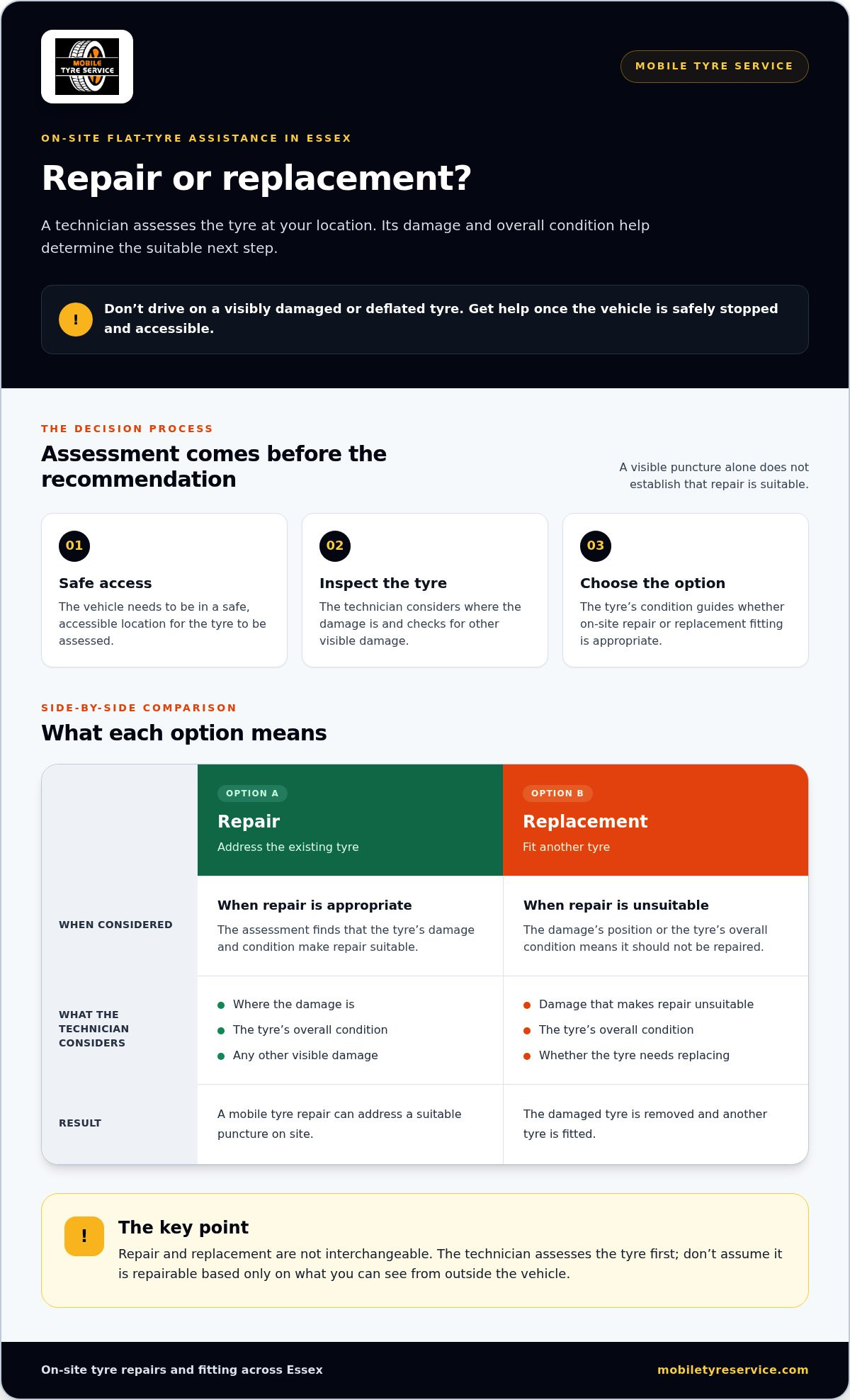
A repair addresses a suitable existing tyre; replacement fitting removes the damaged tyre and installs another one. The options aren’t interchangeable. The right choice depends on the tyre’s condition, not simply on whether it has lost pressure or has a visible puncture.
How does a technician assess a flat tyre?
The technician assesses the tyre on site to understand the problem and its condition. The location of the damage matters, as does any other visible damage. A puncture alone doesn’t establish that a repair is suitable. Tyre safety advice from TyreSafe also explains why sound tyre condition matters for road safety.
The assessment helps distinguish a tyre that may be suitable for repair from one that needs replacing. A small puncture and more extensive visible damage, for example, call for different considerations. The technician looks at the tyre as a whole before recommending what to do next. Some damage requires replacement, so don’t assume a tyre is repairable before it has been assessed.
When might on-site repair or replacement be appropriate?
If the assessment finds the tyre suitable for repair, a mobile tyre repair can address the puncture on site. If the damage’s position or the tyre’s overall condition makes repair unsuitable, fitting a replacement is the alternative. The decision follows an assessment, rather than relying only on what you can see from outside the vehicle.
- Repair: considered when the tyre’s damage and condition make repair appropriate.
- Replacement: considered when the damage means the tyre shouldn’t be repaired.
Knowing the difference can help you understand why a technician recommends one option over the other. If you’re researching repair costs, the mobile tyre repair cost guide is a useful next step. Mobile Tyre Service can assess the tyre at your location and provide a mobile repair or fitting as appropriate.
If your vehicle can’t safely continue, mobile tyre assistance at your location lets you have the problem assessed without driving on the damaged tyre.
How to arrange roadside assistance for a flat tyre in Essex
A clear, accurate request helps the mobile tyre service understand what has happened and where the vehicle is stopped. Before arranging roadside assistance for a flat tyre in Essex, gather the details you can provide safely. Don’t leave a safe position or approach traffic to read a tyre marking or find a landmark. Share what you already know and explain anything you can’t check.
What information should you have ready?
Give a concise description of the vehicle and the problem. The make, model and tyre size can help identify the vehicle and tyre. Share the size only if it’s readily available, such as in information you already have to hand. Explain whether the tyre appears deflated, has visible damage or has suffered a puncture. You don’t need to diagnose the cause.
- Vehicle: provide the make and model, plus any other identifying details you can give safely.
- Tyre problem: describe what you noticed, which tyre is affected and any visible damage.
- Location: give the road name, nearby town, landmark or junction, and identify the safest accessible stopping place as clearly as possible.
- Safety and access: say whether you’re safely stopped, whether passengers are with you, and whether there are immediate hazards or difficulties reaching the vehicle.
Be specific about access. Explain, for example, whether the vehicle is in a parking area, on a narrow verge or somewhere difficult to approach. If traffic or other conditions make the location unsafe for roadside work, say so. This gives the service a clearer picture without requiring you to inspect the tyre or move the vehicle to an unsuitable place.
How can Essex location details make the request clearer?
Essex place names and road numbers can help distinguish similar locations, but include the details that best identify where you are. “Near Colchester” is a useful start; a road name, nearby junction or recognisable landmark can narrow it down. Saying you’re near Basildon alongside the A13 or A127 gives more context than the town name alone.
Where possible, describe your position in plain terms: the road you’re on, your direction of travel if known, and a nearby landmark or junction. If your phone shows your exact location, share it through the contact method you’re using. Don’t put yourself at risk to obtain more precise information.
Clear details help Mobile Tyre Service understand the vehicle, tyre issue and location, then arrange suitable on-site assistance. They don’t mean every roadside stopping point is accessible or indicate a particular arrival time. Include any safety concerns, especially if the stopping place is difficult to reach or presents an immediate hazard.
What to expect from mobile flat-tyre help across Essex
Mobile flat-tyre help brings tyre assessment and service to the vehicle’s location, whether it’s safely stopped at the roadside, parked at home or at a workplace. The setting matters, but so do safe access and enough room to work. The assistance Essex drivers arrange depends on whether the vehicle and tyre can be approached safely in the circumstances.
Roadside, home or workplace: which location is suitable?
A driveway or workplace parking area may provide more space away from passing traffic. A roadside stop can be more complex: the verge may be narrow, visibility limited or the vehicle positioned where there’s no safe working area. Share these conditions when arranging help. Don’t drive a damaged vehicle to a more convenient location if continuing would be unsafe.
Wherever the vehicle is, explain how it can be reached and whether there’s clear space around it. At home, mention restricted access or if the vehicle is parked tightly between others. At work, identify the relevant parking area and any access constraints you know about. For a roadside stop, describe nearby traffic, the verge and the safest position you can identify. These details clarify the situation without assuming every stopping point is suitable for roadside work.
What happens after the tyre has been assessed?
Once the technician can safely access the vehicle, the tyre is assessed to establish the appropriate next step. If its condition makes repair suitable, a mobile tyre repair can be carried out at the location. If the damage or overall condition means repair isn’t appropriate, mobile tyre fitting provides a replacement option. The outcome depends on the tyre assessment, not simply on the fact that it has lost pressure.
Include the tyre issue and any conditions that affect safe access in your request. A tyre-pressure warning may also involve the vehicle’s pressure monitoring system rather than visible tyre damage alone. If that warning or a suspected sensor issue is relevant, the mobile TPMS sensor service guide explains the related service.
Mobile Tyre Service provides tyre repairs and fitting at customers’ locations, including roadside locations. Share where the vehicle is and what the tyre is doing, then have it assessed so the appropriate tyre service can be determined. No repair should be assumed before that assessment.
For help with a flat tyre at a suitable location, explore mobile tyre assistance and the on-site options available through Mobile Tyre Service.
Get roadside assistance for your flat tyre in Essex
Once you’re somewhere safe, give a clear account of the tyre problem and where the vehicle is stopped. This helps Mobile Tyre Service understand the situation and prepare for an on-site assessment. If you need roadside assistance for a flat tyre in Essex, mobile tyre help comes to your location, so you don’t have to drive to a garage on a damaged tyre.
A short checklist before requesting help
Before making the request, organise the details you can provide safely. You don’t need to diagnose the fault. A clear description of what you’ve noticed is enough to explain the issue and the circumstances around the vehicle.
- Safe stopping place: confirm that the vehicle is stopped somewhere safe to wait, and explain any access concerns.
- Vehicle details: provide the make and model, and identify the affected tyre if you can do so safely.
- Tyre problem: describe what happened and any visible damage or pressure warning.
- Exact location: share the town, road name and a nearby landmark or junction to help identify the vehicle’s position.
- Safety concerns: mention passengers, immediate hazards or anything that makes reaching the vehicle difficult.
Don’t step into traffic or approach an unsafe area to gather extra information. If you’re uncertain about a detail, say so rather than guessing. The safest accessible location and any restrictions around it are useful context for arranging mobile assistance.
How Mobile Tyre Service can help at your location
Mobile Tyre Service provides tyre fitting and repair at customers’ locations, including roadside locations. Once the technician can access the vehicle safely, they assess the tyre’s condition and determine whether an on-site repair is suitable or fitting a replacement is appropriate. The decision depends on the tyre itself, so a repair shouldn’t be assumed before the assessment.
This gives drivers a practical way to address a flat tyre where the vehicle is parked, rather than attempting to continue the journey to a garage. The location might be a roadside stopping place, a driveway or workplace parking, but safe access and working space remain essential. If the location presents a hazard, include that information when arranging help and stay somewhere safer rather than approaching the vehicle at risk.
Keep the request straightforward: explain the tyre issue, provide your vehicle details and give the clearest location information available. These essentials help Mobile Tyre Service understand the assistance you need and attend to the tyre through mobile repair or replacement fitting as appropriate.
For a flat tyre that needs attention at your location, Arrange mobile tyre assistance with Mobile Tyre Service.
Take the next step towards getting back on the road
A flat tyre can disrupt your plans, but you don’t have to decide on a repair before the tyre has been assessed. Focus on a suitable next step for your vehicle and its location. Mobile support brings tyre work to Essex drivers, rather than requiring a drive to a garage on a damaged tyre.
Mobile Tyre Service provides on-site tyre fitting and repair, along with mobile TPMS sensor services. The technician assesses the tyre and determines whether repair or replacement is appropriate. You can then decide how to proceed based on the tyre’s condition, without assuming the damage is suitable for repair.
When you’re ready to arrange assistance, share the vehicle and location details you have to hand, then arrange mobile tyre assistance. A composed, practical next step can help turn an unexpected stop into a manageable interruption.
Frequently Asked Questions
Is it safe to drive with a flat tyre?
No. A visibly deflated or damaged tyre can affect steering and control, and driving on it may cause further damage to the tyre or wheel. Don’t continue to a garage simply because it seems close. Stop somewhere safe if you can, and avoid inspecting or changing the wheel beside traffic. Once you’re safely stopped, arrange mobile tyre assistance so the problem can be assessed at your location.
Can a flat tyre be repaired at the roadside?
Sometimes, but an on-site assessment is needed to decide whether repair is suitable or replacement is required. The puncture’s position and the tyre’s overall condition both matter, so a visible object or small hole doesn’t guarantee a repair is possible. Mobile assistance can address the tyre where the vehicle is stopped, provided there’s a safe place to access and work on it.
What should I do if my tyre blows out on an Essex road?
Keep a firm grip on the steering wheel and focus on bringing the vehicle under control. If it remains controllable, move towards a safe stopping place without sudden manoeuvres. Use hazard warning lights when appropriate and keep clear of moving traffic. Don’t attempt a wheel change somewhere unsafe. If anyone is injured or in immediate danger, contact the emergency services.
What information should I give when requesting roadside tyre assistance?
Give the vehicle’s make and model, describe what happened to the tyre, and state your exact location. A road name with a nearby junction or recognisable landmark can be more useful than a town name alone. Explain whether you’re safely stopped and mention hazards, passengers or access difficulties. If you don’t know the tyre size or cause of the damage, say so rather than leaving a safe place to check.
Can mobile tyre assistance come to my location in Essex?
Yes. Mobile Tyre Service provides tyre fitting and repair at customers’ locations in Essex and Cambridge, including roadside settings. Give a precise location and explain where the vehicle is positioned, so the situation and access are clear. Roadside work requires a safe place to reach and work on the vehicle. Don’t move it to another location if driving there would be unsafe.
Should I use a temporary spare tyre after a puncture?
A temporary spare may have restrictions specified by the vehicle or tyre manufacturer, so check the vehicle handbook and the spare’s markings before using it. Don’t fit one at the roadside if traffic or the surroundings make changing the wheel unsafe. If you’re unsure how to use the spare or can’t change it safely, stay somewhere safe and arrange mobile tyre assistance.
What happens if the tyre pressure warning light stays on after a flat tyre?
The warning light can indicate a tyre pressure issue or a concern with the tyre pressure monitoring system (TPMS), but it doesn’t identify the cause by itself. Don’t ignore visible tyre damage because the warning appears to be a sensor issue. Prioritise a safe stop, then arrange an assessment. Mobile TPMS sensor services are available, but the vehicle needs to be checked to establish what’s behind the warning.
Need a mobile tyre service?
We cover Harlow, Bishop's Stortford, Cambridge and all surrounding areas — 24/7.
Call: 01279 881234