Mobile Tyre Repair Essex: Professional On-Site Puncture Solutions 2026
A puncture doesn’t always mean you need a new tyre or a trip to a garage. With mobile tyre repair Essex, a specialist can assess the damage where your vehicle is and explain whether a safe repair is possible before replacement is considered.A puncture can leave you stranded and unsure what to do, pa…
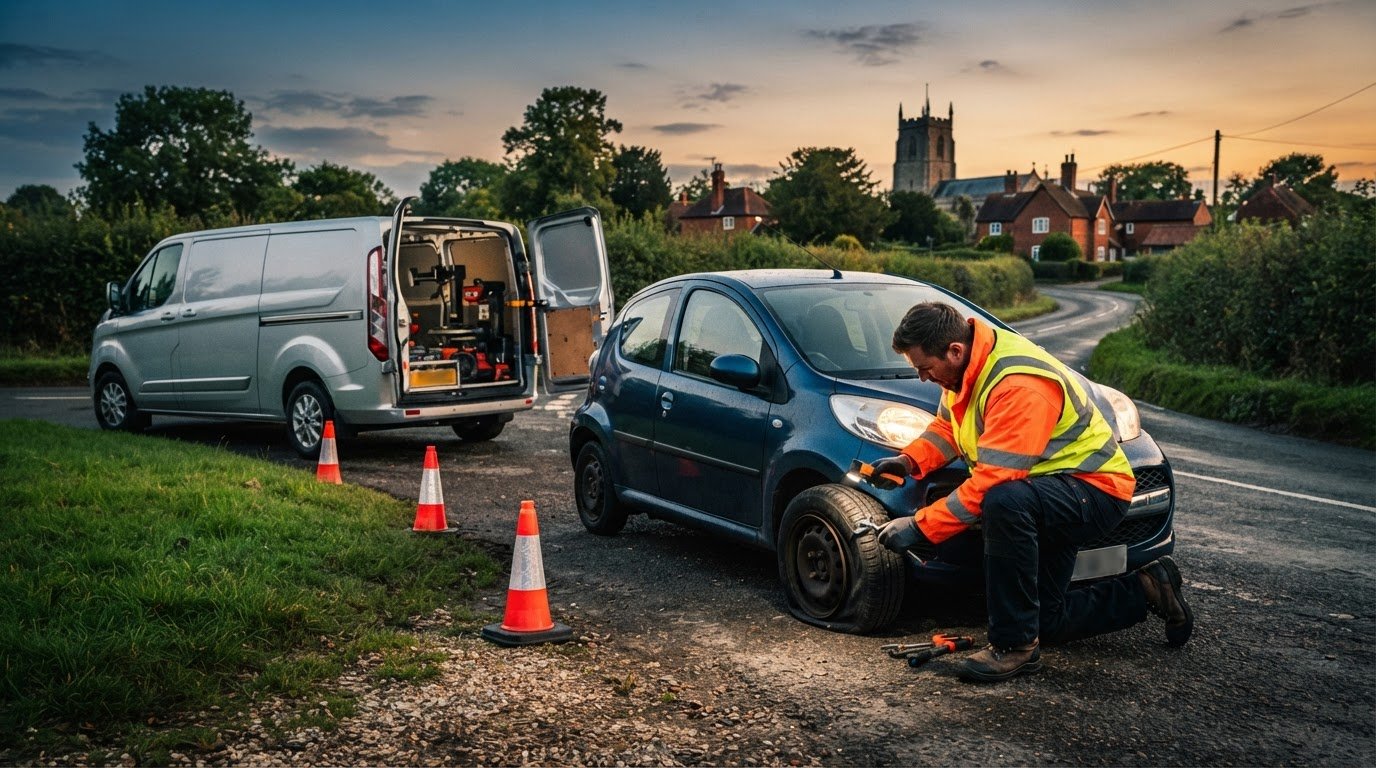
A puncture doesn’t always mean you need a new tyre or a trip to a garage. With mobile tyre repair Essex, a specialist can assess the damage where your vehicle is and explain whether a safe repair is possible before replacement is considered.
A puncture can leave you stranded and unsure what to do, particularly if you’re concerned about roadside safety or conflicting advice. The British Standard BS AU 159 sets criteria for permanent tyre repairs, so the decision depends on the damage and the tyre’s condition, not guesswork.
This guide explains what makes a puncture suitable for repair, when a tyre needs replacing and what the standard means in practice. It also covers how to prepare for an on-site visit at home, work or a suitable roadside location in Essex. The aim is a clear assessment and a safe route back to mobility.
Key Takeaways
- Learn how mobile tyre repair Essex brings puncture assessment and repair to your home, workplace or a safe roadside location.
- Understand how technicians use BS AU 159 criteria to assess whether tyre damage is suitable for repair.
- See which factors can make repair a practical alternative to replacement, and how keeping a suitable tyre in use may reduce waste.
- Prepare for an on-site visit by choosing a safe, accessible location and having your locking wheel nut key ready if available.
- Find out how a mobile specialist can assess the tyre and help restore mobility without a garage visit.
Professional Mobile Tyre Repair in Essex: Rapid On-Site Response
A puncture doesn’t mean you should drive on a damaged tyre or arrange a trip to a garage. Mobile tyre repair Essex brings tyre services to your vehicle at home, at work or in a safe, accessible roadside location. The tyre is assessed first, and a repair is carried out only if the damage and its condition make it suitable.
A permanent puncture repair must meet the relevant safety criteria. This can mean removing the tyre from the wheel to inspect it internally and apply an appropriate repair. Mobile tyre equipment allows suitable repairs to be completed on site. Not every puncture can be fixed, so the decision depends on the tyre’s condition.
Why Essex Motorists Choose Mobile Solutions
Driving on a flat or badly deflated tyre can cause further damage and affect vehicle control. If you’re stranded, don’t continue driving on it. Arrange an on-site assessment from a safe location. A mobile visit can also spare you the disruption of taking the vehicle to a tyre centre or arranging recovery.
At home or work, the practical benefit is simple: the technician comes to the vehicle, so you can stay at your location. The time needed depends on the tyre and the work required.
Our Essex Service Coverage Zones
Mobile tyre repair Essex brings tyre support to drivers in Essex, including at home, work and suitable roadside locations. When arranging a visit, give the exact location and any useful access details, particularly if you’re parked somewhere difficult to find.
Roadside safety comes first. If your vehicle is in a dangerous position, don’t attempt a repair or put yourself at risk. Move somewhere safer if you can do so safely, then provide clear location details. The technician needs a safe, accessible place to work on the vehicle.
After the immediate problem is resolved, routine checks can help you spot pressure loss, uneven wear and other signs of tyre trouble. This overview of tyre maintenance best practices provides further background on looking after tyres between visits.
The Science of Safety: UK Tyre Repair Standards (BS AU 159)
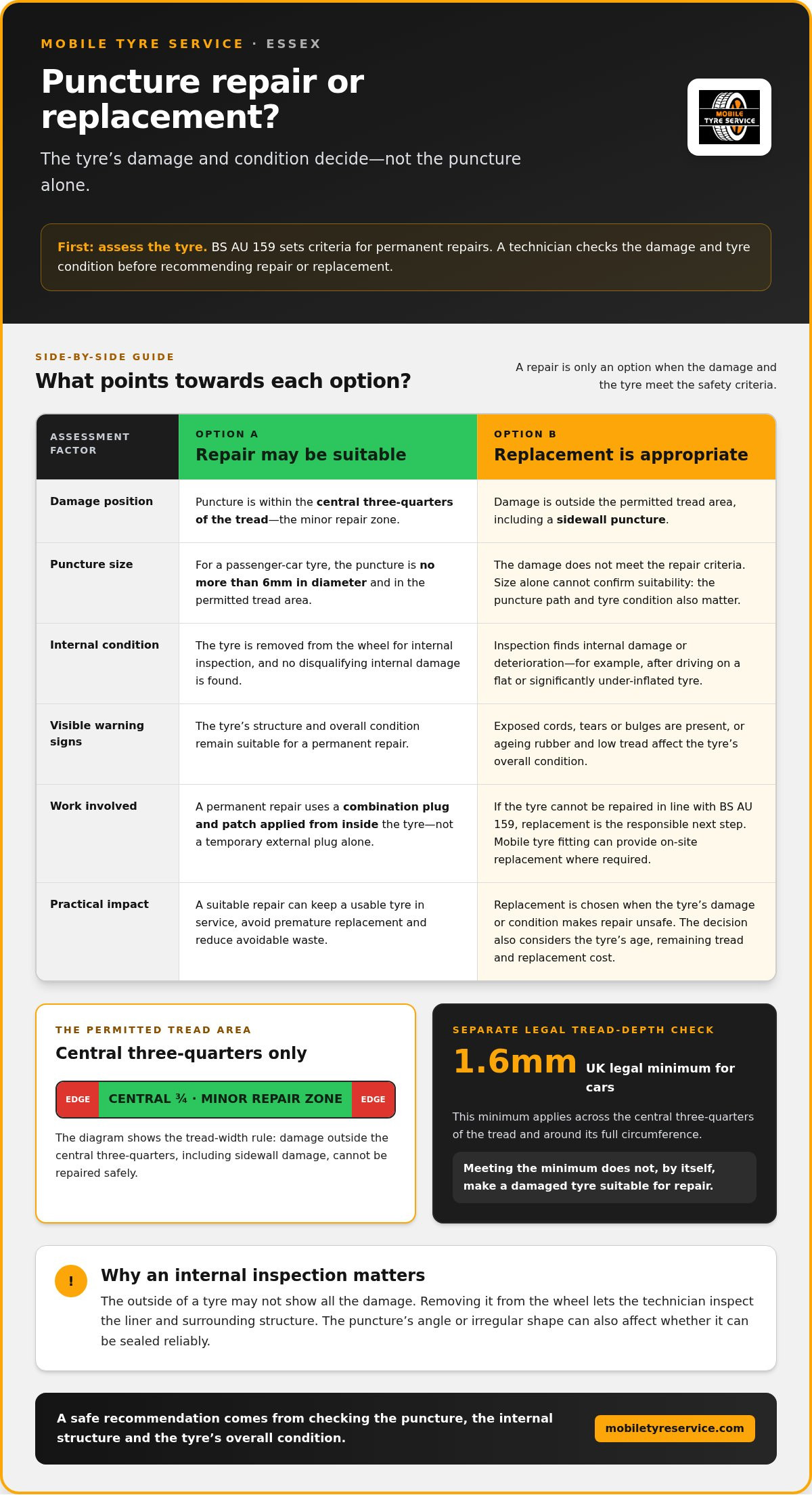
A puncture’s position can determine whether a tyre is repairable. BS AU 159 sets criteria for assessing and carrying out tyre repairs. Permanent repairs are limited to damage within the central three-quarters of the tread, often called the minor repair zone. Damage outside this area, including a sidewall puncture, cannot be repaired safely because the tyre flexes and carries load differently at its edges.
The standard also requires the tyre to be removed from the wheel for internal inspection. This lets the technician look for damage that may not be visible from the outside. A permanent repair uses a combination plug and patch applied from inside, rather than relying on a temporary external plug alone.
The Anatomy of a Repairable Puncture
For a passenger-car tyre, the puncture must be no more than 6mm in diameter and within the permitted tread area. The path of the puncture also matters. An angled or irregular injury may be harder to seal reliably than a straightforward one, so the visible hole alone cannot confirm whether a repair is suitable.
An internal inspection checks the liner and surrounding structure for damage. Driving on a flat or significantly under-inflated tyre may cause internal deterioration, even when the outside looks intact. Run-flat tyres also need careful assessment because driving without pressure can affect their structure. Suitability depends on the tyre’s actual condition, not just the type of puncture.
When a Tyre Must Be Replaced
Exposed cords, tears, bulges or evidence of internal damage are warning signs that a repair may not be safe. Ageing rubber and low tread can also affect the tyre’s overall condition. The UK legal minimum tread depth for cars is 1.6mm across the central three-quarters of the tread and around its full circumference. Meeting that minimum does not, by itself, make a damaged tyre suitable for repair. GOV.UK’s official vehicle safety guidance also covers tyre condition and maintenance.
With mobile tyre repair Essex, safety comes before a quick fix. If an inspection shows the tyre cannot be repaired in line with BS AU 159, replacement is the appropriate next step. Our mobile tyre fitting service provides on-site replacement where required. For a puncture assessment at your location, explore our mobile tyre repair service.
Mobile Tyre Repair vs. Replacement: Making the Elite Choice
A new tyre isn’t automatically necessary after a puncture. If the damage meets the repair criteria and the tyre remains structurally sound, a professional repair can keep a usable tyre in service rather than replacing it prematurely. If the assessment finds damage that makes repair unsafe, replacement is the responsible choice. The decision should follow the tyre’s condition, not an assumption that every puncture needs a new tyre.
A suitable repair can also keep a tyre in use for longer, reducing avoidable waste and the demand for materials used in replacement tyres. There is no fixed lifespan for a repair: a correctly completed permanent repair is intended to last for the remaining safe, usable life of the tyre, subject to its condition and use.
Cost-Benefit Analysis for Essex Drivers
The value of repair depends on the tyre’s age, condition, damage and remaining tread, as well as the cost of a suitable replacement. If a tread puncture is repairable, avoiding premature replacement may make practical and financial sense. A mobile assessment also brings the service to you, avoiding a journey to a garage.
Our technicians assess the damage and the tyre’s overall condition before recommending either option. This supports a clear recommendation instead of an automatic move to replacement. A slow pressure loss can be easier to address when identified early. Our mobile TPMS sensor service supports the vehicle’s tyre pressure monitoring system, which can alert you to a potential issue.
Safety First: The Replacement Trigger
Internal damage, exposed cords, a bulge or signs that the tyre has been driven under-inflated can indicate structural damage. These symptoms matter because a tyre may look repairable from the outside while its internal structure is compromised. Our assessment considers the whole tyre, not just the puncture site. The relevant requirements are set out in UK Tyre Repair Standards.
Tread condition matters too. The legal minimum for car tyres is 1.6mm across the central three-quarters of the tread and around the full circumference. A tyre close to or below that limit needs careful attention, regardless of the puncture. Drivers remain responsible for keeping their tyres roadworthy and MOT-compliant after a repair or replacement. For an assessment at your location, mobile tyre repair Essex offers a practical route to an informed repair-or-replace decision.
Preparing for Your Mobile Technician: A Professional Checklist
Preparing a few details before your appointment can help the technician locate your vehicle and assess the tyre. Use this checklist to make an on-site mobile tyre repair Essex visit safer and more straightforward.
- Share your exact location. Give the address, road name and direction of travel if you’re roadside. In rural areas, a What3Words location can help pinpoint your position. Add a nearby landmark or junction if possible.
- Describe the tyre issue. Explain which wheel is affected, when you noticed the puncture or pressure loss, and whether a TPMS warning light appeared on your dashboard.
- Read the tyre size if it’s safe. The size is printed on the tyre sidewall, for example 205/55 R16. Don’t step into traffic or move an unsafe vehicle to find it. If you can’t see the markings safely, say so.
- Locate the locking wheel nut key. Check the boot or glovebox and have the key accessible if a wheel needs to be removed. If it’s missing, mention this when arranging the visit.
- Make room around the vehicle. On a driveway, park on firm, level ground with clear working space around the affected wheel. Move other vehicles or obstructions only if you can do so safely.
Securing Your Location for Roadside Repair
Use your hazard lights if you’re stopped somewhere they can help warn other road users. Prioritise your safety, stay away from moving traffic and follow the Highway Code. Don’t place a warning triangle on a motorway, and don’t try to set one out if doing so would put you in danger. On a fast or busy road, move to a safer place if you can do so without risk, then provide clear location details.
At a roadside stop, describe the carriageway or direction you’re on and give the nearest exit, junction, service area or landmark. Clear space around the vehicle helps the technician work safely. Never try to create that space by standing in a live traffic lane.
The Technical Essentials
Before the visit, note the tyre size, affected wheel and any dashboard warnings. Mention whether the tyre has been driven while deflated, as this helps explain the situation. These details support an on-site assessment, but the tyre still needs to be inspected before repairability can be determined.
Have your location and tyre information ready, then arrange a mobile tyre repair visit at your vehicle.
Why Mobile Tyre Service is Essex’s Premier Specialist
Tyre problems call for focused support. Mobile Tyre Service provides mobile tyre repairs, fitting and TPMS services at customers’ locations. The service is dedicated to mobile tyre work, bringing the equipment needed to assess and work on tyres at your vehicle.
When a puncture disrupts your plans, an on-site visit can avoid arranging a garage trip. A specialist can attend your home, workplace or a safe, accessible roadside location. Mobile Tyre Service serves Essex and Cambridge, bringing mobile tyre support to drivers in both areas.
Elite Expertise on Your Driveway
Our mobile units are equipped for on-site puncture repairs, tyre fitting and TPMS work. The technician assesses the tyre before recommending repair or replacement, so the next step is guided by its condition and safety rather than an automatic assumption that it needs replacing.
Mobile tyre fitting can support different vehicle and tyre requirements. The right option depends on the vehicle and its tyre specification. The technician carries out the fitting at your location, with the wheel secured correctly.
Direct Access to Essex Tyre Solutions
Clear information helps the mobile team locate your vehicle and prepare for the visit. Share your location, which tyre is affected and the details of the problem. For roadside incidents, include the road, direction of travel and nearest landmark.
The work required depends on whether the tyre can be repaired or needs replacing. For more information, read about mobile tyre repair cost. Choosing mobile tyre repair Essex brings a specialist assessment to your location, with a recommendation based on the tyre’s condition.
For a puncture or tyre problem in Essex, arrange a visit from our mobile team through Mobile Tyre Service. Get on-site tyre support and a clear assessment of the next step.
Restore Your Mobility with a Specialist Mobile Visit
A puncture doesn’t automatically mean you need a new tyre. An inspection can establish whether the damage meets BS AU 159 requirements and whether the tyre is safe to repair. If replacement is needed, mobile tyre fitting can bring that service to your location.
With mobile tyre repair Essex, Mobile Tyre Service brings tyre equipment to homes, workplaces and suitable roadside locations. The company provides on-site tyre repairs, fitting and TPMS support in Essex and Cambridge, helping drivers avoid an unnecessary garage visit. Sharing your location, the affected wheel and any pressure warnings helps the technician prepare for the assessment.
Choose mobile support focused on tyre work and safety-led decisions. Arrange a mobile tyre repair in Essex and take the next step towards getting back on the road.
Frequently Asked Questions
Is a mobile tyre repair as safe as a garage-based repair?
A mobile repair can be safe when the technician follows the recognised repair criteria and confirms that the tyre is suitable. The tyre must be inspected, including internally, before a permanent repair is made. Our mobile units are equipped for on-site puncture repairs, and our technicians assess damage against BS AU 159 criteria. If the tyre’s condition makes repair unsafe, it should not be patched for convenience.
Can you repair a puncture on the A12 or M11 motorways?
Mobile tyre repair Essex can provide support at suitable roadside locations, but a repair must never be attempted in a live traffic lane or another unsafe position. The A12 is an A-road, whilst the M11 is a motorway. If you’re stranded, follow the road’s emergency procedures, move to a safe place if possible and provide your precise location. The technician needs a safe, accessible position to work on the vehicle.
Do I need to stay with my vehicle while you perform the repair?
Stay nearby if it’s safe, so you can identify the vehicle and share relevant information about the puncture. At a roadside location, your safety comes first. Don’t wait beside moving traffic or near the affected wheel in a dangerous position. At home or work, remain somewhere safe nearby and make sure the technician can access the vehicle and, if needed, the locking wheel nut key.
What happens if my tyre is found to be non-repairable?
If an inspection shows that the tyre doesn’t meet the repair criteria, the technician will explain why a repair isn’t safe. Sidewall damage, excessive puncture damage or signs of internal deterioration can rule out a permanent repair. Mobile Tyre Service also provides mobile tyre fitting, making replacement the appropriate next step when needed. Don’t continue driving on a flat or structurally damaged tyre. Arrange a safe solution at your location.
Can you repair run-flat tyres on-site in Essex?
A run-flat tyre can be assessed on site, but repair depends on its condition and the damage. Driving on it after pressure loss can cause internal structural damage that isn’t visible from the outside, so inspection is essential. If the technician finds the tyre unsuitable for a safe repair, replacement is the responsible option. Tell the technician that it’s a run-flat and whether it has been driven while deflated.
Do you carry spare tyres in case my puncture is too large to fix?
Mobile Tyre Service provides mobile tyre fitting as well as puncture repairs, but the right replacement depends on your vehicle and tyre specification. Share the tyre size from the sidewall, if you can read it safely, along with your vehicle details and location. This information helps prepare for the fitting. Don’t assume a temporary sealant or plug is a permanent substitute for a tyre that needs replacing.
How long does a typical mobile tyre repair take to complete?
There isn’t one fixed duration for every repair. The time depends on factors such as the tyre’s position, the damage, access to the vehicle and whether the wheel needs to be removed for inspection. A technician must assess the tyre before confirming what work is suitable. Providing the tyre size, affected wheel and an accurate location when arranging mobile tyre repair Essex helps the visit proceed efficiently.
Will a mobile repair affect my tyre warranty or insurance?
The effect depends on the wording of your tyre warranty and insurance policy, as terms vary between providers. A repair should be assessed and completed in line with the relevant safety standard, with details of the work recorded for your reference. If you’re concerned about cover, review your policy documents and warranty conditions before proceeding. Don’t assume every policy treats a professional repair in the same way.
Need a mobile tyre service?
We cover Harlow, Bishop's Stortford, Cambridge and all surrounding areas — 24/7.
Call: 01279 881234