Mobile fleet tyre checks for Cambridge businesses
Tyre checks are easier to organise when vehicles can be inspected where they are already parked. For a mobile fleet tyre check in Cambridge, practical locations include depots, workplaces and taxi bases where vans, taxis or company cars are gathered. Mobile tyre-fitting visits bring equipment to the…

Tyre checks are easier to organise when vehicles can be inspected where they are already parked. For a mobile fleet tyre check in Cambridge, practical locations include depots, workplaces and taxi bases where vans, taxis or company cars are gathered. Mobile tyre-fitting visits bring equipment to the vehicles, and checks can cover pressure, tread depth and overall condition.
Keeping a fleet moving means more than responding when a tyre problem becomes obvious. Scheduled inspections can help identify potential issues early, giving businesses time to plan preventive action and manage tyre maintenance across their vehicles.
This guide explains where mobile checks can take place around Cambridge, what an inspection covers and how scheduled checks can support vans, taxis and company cars. It also looks at how mobile tyre fitting and repair can support a practical maintenance routine, and what to consider when planning fleet visits.
Key Takeaways
- Plan visits around where fleet vehicles are parked, so checks fit the working day and minimise vehicle movements.
- Use the business’s location and vehicle parking arrangements to establish whether a visit suits your Cambridge postcode.
- Keep inspection findings organised by vehicle to help prioritise tyre issues and plan follow-up action.
- When tyres need attention, mobile tyre fitting or repair can bring the work to the vehicle’s location.
Cambridge and surrounding service area
In Cambridge, mobile tyre-fitting visits bring equipment to parked vehicles. For fleet managers, the first step is choosing an inspection location that matches where vehicles are available.
Cambridge service availability
Mobile visits in Cambridge can include fitting new tyres, removing old tyres and completing installation. A fleet check can assess tyre pressure, tread depth and overall condition. Before planning a visit, map where each vehicle is normally parked, such as a depot, workplace or taxi base. This helps define a practical inspection point and reduces unnecessary vehicle movements between locations.
Nearby area coverage
For fleets based beyond Cambridge, the relevant service area depends on the vehicles’ actual location. A business with vehicles split between a Cambridge depot and a separate worksite should treat each address as a distinct visit point. Record the site address, parking arrangements and vehicles present. These details help establish whether inspections can be organised around each location, rather than assuming Cambridge coverage automatically includes every nearby site.
Plan the visit around the fleet’s operating pattern. Identify when vans return to the depot, when taxis are between shifts and where company cars remain parked during working hours. Having several vehicles at one location makes it easier to work through the fleet systematically.
Before arranging checks, create a simple location schedule:
- Group vehicles by their usual Cambridge parking site.
- List any vehicles kept at a separate workplace or base.
- Note when each group is available without disrupting planned journeys.
Mobile tyre fitting requires access to the vehicle, so consider entry routes and safe parking space at each site. For businesses operating across Cambridge and nearby locations, clear site information helps organise inspections and prioritise vehicles needing attention.
Cambridge coverage and postcodes
A postcode helps identify a site, but it does not describe every access detail. For a Cambridge inspection, record the full postcode for each vehicle location, then group vehicles by site. This distinguishes a central depot from a second workplace, even when both are in the Cambridge area.
Use the address where vehicles will be parked, not the company’s registered office. A firm may manage its fleet from one Cambridge office while its vans are kept at a separate depot. The depot postcode is the useful location for planning access and vehicle availability.
Prepare a location record for each site before arranging a visit:
- Enter the full postcode and street address.
- List the vans, taxis or company cars normally parked there.
- Note the site entrance and where vehicles can be accessed.
- Identify any vehicles routinely based at another address.
These steps give a clearer picture than using one postcode for the whole business. If vehicles are split between Cambridge and another nearby area, record each location separately. This makes it easier to organise checks by site and avoid overlooking vehicles away from the main base.
Postcodes can also distinguish a vehicle’s usual base from a temporary parking point. A taxi kept overnight at home, for instance, may need to be recorded separately from taxis waiting at a central rank. Similarly, assign a company car parked at an employee’s workplace to that address, not the fleet’s administrative office.
Once locations are mapped, compare the list with the working pattern. Mark which vehicles are present at each site and when they can be accessed without interrupting planned journeys. This postcode-led schedule gives a practical basis for arranging a mobile tyre visit around Cambridge fleet locations.
Scheduled fleet tyre checks for vans, taxis and company cars
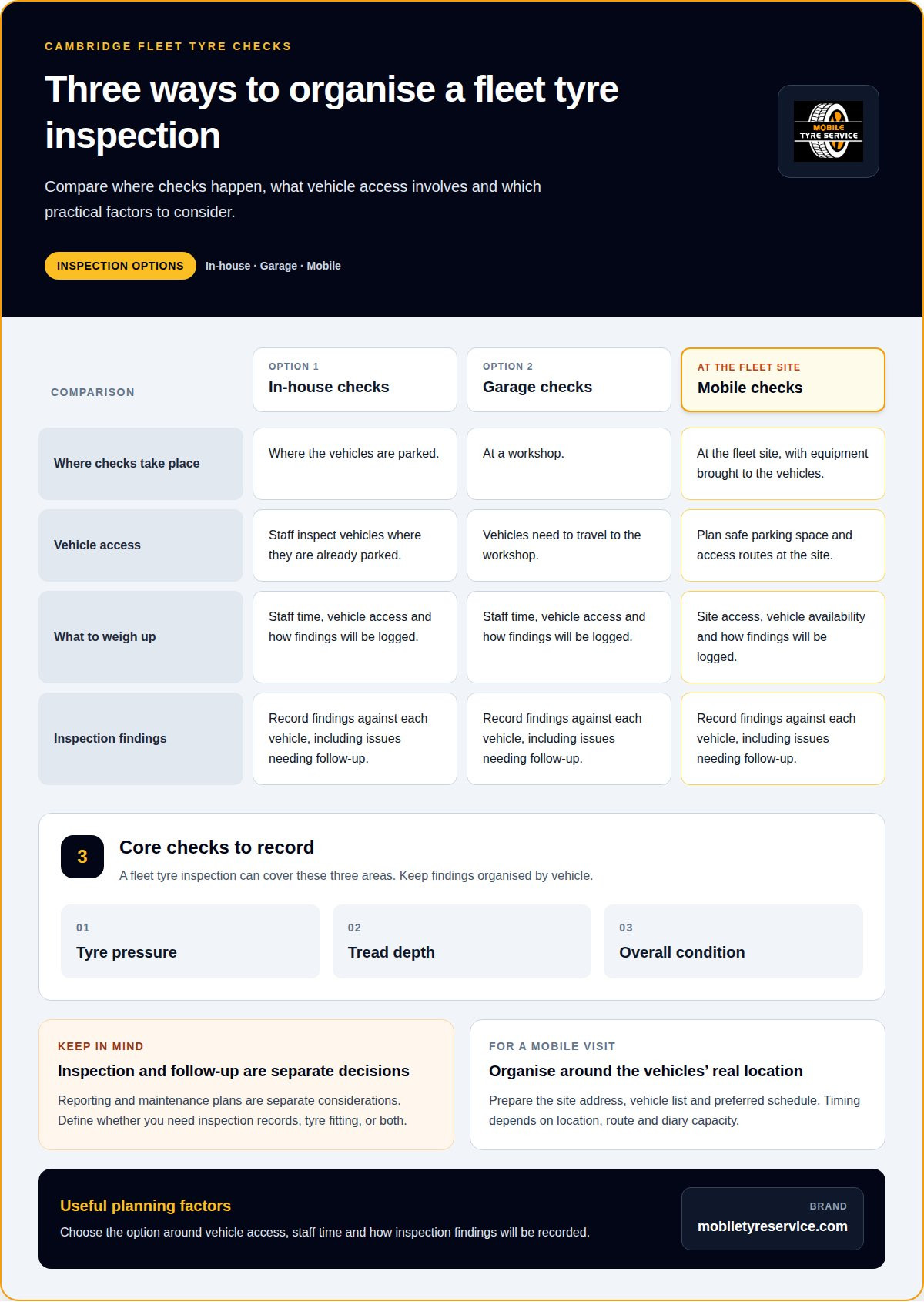
Plan checks around vehicle use, site access and the follow-up needed after inspection. A mobile fleet tyre check in Cambridge can help businesses coordinate checks across different vehicle types.
Inspection scope and pressure checks
A check covers tyre pressure, tread depth and overall condition. Record findings against each vehicle, including any issue requiring follow-up. To arrange a mobile fleet tyre check in Cambridge, prepare the site address, vehicle list and preferred schedule. Visit timing depends on location, route and diary capacity. Decide what records you need, such as findings grouped by vehicle.
Some mobile tyre-fitting visits can include checks. Reporting and maintenance plans are separate considerations, so define whether you need inspection records or fitting as well.
Inspection options
In-house checks let staff inspect vehicles where they are parked. Garage checks require vehicles to travel to a workshop, while mobile checks take place at the fleet site. Choose based on vehicle access, staff time and how findings will be logged. A Cambridge operator can discuss the inspection scope and whether reporting or a maintenance plan forms part of its service.
Tyre condition and tread requirements
UK commercial tyres must meet the tread-depth and condition requirements applicable to their vehicle class. Requirements can differ between vehicle categories, so keep clear records for vans, taxis and company cars. Note tread measurements and visible damage, then assign any necessary follow-up to a responsible person.
Risks of neglected fleet tyres
Poor tyre condition can reduce grip, lengthen braking distances and increase accident risk. Defects may also cause roadside disruption or compliance consequences. Regular reviews help businesses identify issues early and plan preventive action. Proper tyre maintenance can extend tyre life, improve fuel efficiency and reduce wear on other vehicle components.
Which mobile fleet tyre inspection services operate in Cambridge and nearby areas?
In Cambridge, mobile tyre-fitting services bring equipment to vehicles for tyre work. Fleet checks can also take place during a fitting visit, allowing businesses to combine an inspection with fitting when replacement tyres are needed. Clarify whether the visit is for inspection, fitting, or both.
A fleet inspection should cover pressure, tread depth and overall tyre condition. These checks apply to vans, taxis and company cars, with findings recorded against each vehicle. Clear records help managers see which tyres need attention and plan preventive action.
Mobile fitting visits suit vehicles gathered at a depot or workplace. In-house checks are carried out by the business’s own staff, while garage checks require vehicles to travel to a workshop. Each approach takes place at a different location, so parking arrangements and vehicle availability guide the practical choice.
Reporting and maintenance plans are separate from the physical tyre inspection. A business can keep its own vehicle-by-vehicle log, noting pressure, tread depth, visible condition and follow-up action. For example, a fleet manager can flag a tyre needing attention and track whether the work has been completed.
For Cambridge and nearby sites, prepare a location record for each depot or workplace. Include its address, vehicle list and access arrangements. This distinguishes vehicles based at a Cambridge site from those parked elsewhere and provides a clear basis for scheduling inspections alongside tyre fitting where needed.
- Set out whether the priority is inspection, fitting, or both.
- Group vans, taxis and company cars by parking location.
- Record findings against individual vehicles for follow-up.
To arrange mobile tyre support for a fleet, book a tyre visit around the vehicles’ location and availability.
Mobile Tyre Service: MOBILE TYRE FITTING
Mobile Tyre Service provides mobile tyre fitting and repair for vehicles needing follow-up after an inspection. If a van, taxi or company car needs a replacement tyre, mobile fitting brings the work to the vehicle’s location. A repair may be suitable when the tyre can be repaired; damaged or unsuitable tyres may need replacing.
For Cambridge businesses, identify which vehicles need tyre work and where they will be parked. This helps organise fitting or repair around the fleet’s locations. Mobile Tyre Service also provides mobile tyre fitting at home for individual vehicles.
Contact Mobile Tyre Service to discuss mobile tyre fitting or repair for your vehicle.
Turn inspection findings into clear next steps
Use your next mobile fleet tyre check in Cambridge to establish a practical follow-up process. Record which vehicles need attention, assign responsibility for each action, and update the fleet record when work is complete. This keeps tyre issues visible between visits and helps managers coordinate decisions across vehicle locations.
When a tyre needs replacing, Mobile Tyre Service provides mobile tyre fitting. Mobile tyre fitting at home is also available for individual vehicles, while mobile tyre repair can address suitable damage. Match the service to the tyre’s condition rather than treating every inspection finding as a reason for replacement.
Prepare the vehicle details and location before getting in touch. Contact Mobile Tyre Service to discuss the next step for your tyres, and keep your fleet’s maintenance plan moving with confidence.
Frequently Asked Questions
Do providers offer on-site tyre checks for vans, HGVs, and mixed fleets?
On-site checks can be organised for vehicles parked together, including vans and mixed fleets. HGVs need a service equipped and arranged for that vehicle type, so include vehicle classes when planning a visit. For a fleet with vans and company cars at one depot, list each vehicle type and parking position. This defines the inspection scope without assuming every vehicle can be assessed in the same way.
How often should commercial fleet tyres be inspected in the UK?
Set inspection frequency according to vehicle use, mileage, loads and operating conditions, then record the schedule in the fleet maintenance plan. A van making frequent work journeys may need closer oversight than a car used occasionally. Review the schedule when routes, workloads or vehicle condition change. Add an interim check after a tyre impact or noticeable pressure change instead of waiting for the next planned review.
Need a mobile tyre service?
We cover Harlow, Bishop's Stortford, Cambridge and all surrounding areas — 24/7.
Call: 01279 881234