Is My Tyre Puncture Repairable? 5 Common Myths Debunked by Experts
A DIY "string plug" or a quick squirt of sealant foam is never a permanent solution, and using them as one could invalidate your insurance. When you discover a nail in your tread, the immediate question is always: is my tyre puncture repairable, or am I facing an expensive replacement? It's a high-s…
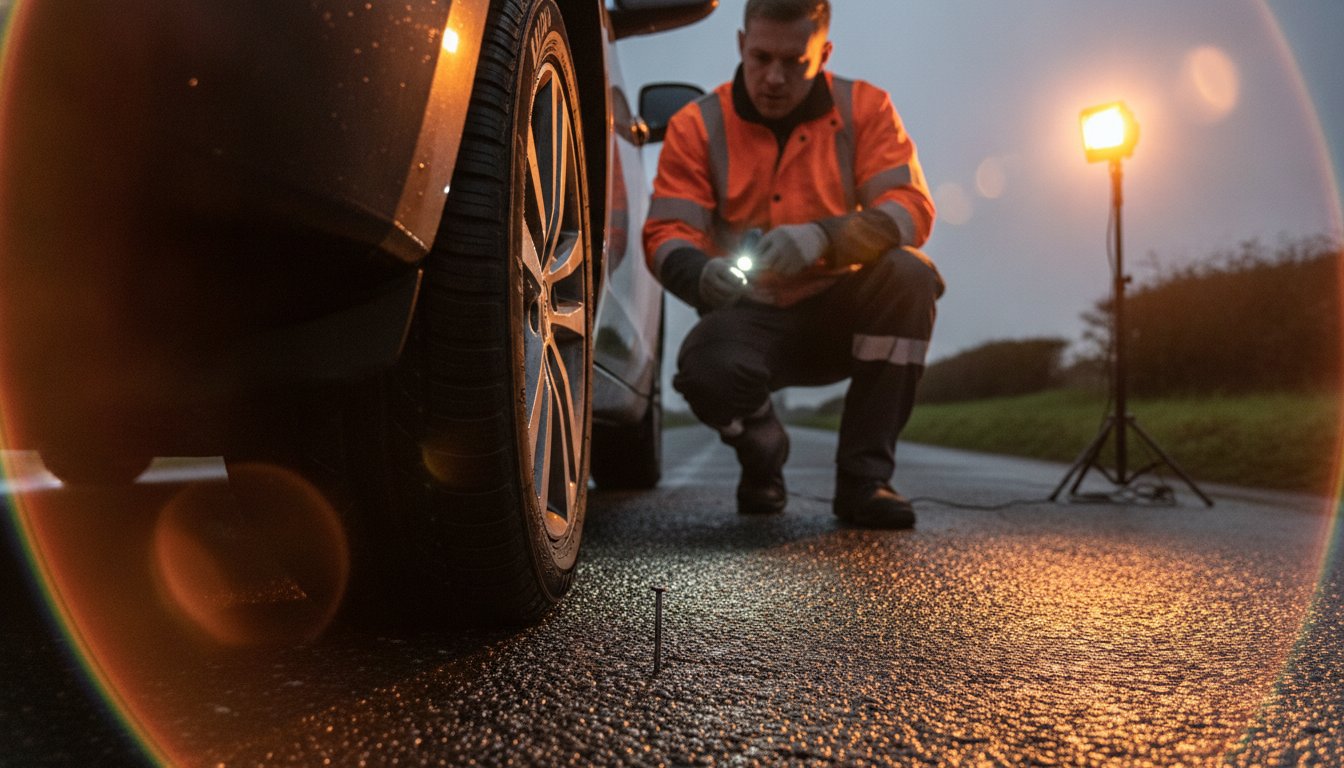
A DIY "string plug" or a quick squirt of sealant foam is never a permanent solution, and using them as one could invalidate your insurance. When you discover a nail in your tread, the immediate question is always: is my tyre puncture repairable, or am I facing an expensive replacement? It's a high-stakes situation that often leads to significant stress, especially when you're stranded and receiving conflicting advice from various online sources. You need a definitive answer that prioritises your safety without unnecessary costs.
We understand the frustration of balancing road safety with the fear of being overcharged. This article clarifies the strict safety mandates of British Standard BS AU 159, providing the technical facts needed to make an informed decision. You'll learn the exact criteria for safe repairs, from the specific dimensions of the repairable tread zone to the hidden dangers of sidewall damage. We debunk five persistent myths that put drivers at risk and explain why a professional on-site assessment is the only reliable method to confirm your tyre's structural integrity. This guide ensures you understand the difference between a secure, professional fix and a dangerous compromise.
Key Takeaways
- Identify the "Minor Repair Zone" defined by BS AU 159 to determine if the damage falls within the central three-quarters of the tread.
- Learn why the definitive answer to "is my tyre puncture repairable" depends on a maximum damage diameter of 6mm and a mandatory internal tyre inspection.
- Recognise why sidewall nicks and bulges are legally non-repairable and require immediate professional replacement to prevent catastrophic failure.
- Understand the critical risks of DIY string plugs and why these temporary emergency measures do not comply with UK road safety standards.
- Discover how mobile intervention in Essex and Cambridge prevents terminal rim damage by assessing your vehicle on-site rather than risking a drive to a garage.
The Puncture Repair Myth: Why Not Every Hole Can Be Plugged
Every driver facing a flat tyre asks the same question: is my tyre puncture repairable? Many motorists assume that any penetration of the rubber is a simple, low-cost fix. This is a dangerous misconception. A professional puncture repair is a permanent, vulcanised intervention. It involves bonding new rubber to the existing casing to restore its integrity. It's not a temporary string plug or a liquid sealant. These emergency measures only buy time; they don't restore the tyre to its original safety specification.
In the United Kingdom, all repairs must adhere to British Standard BS AU 159. This regulation serves as the definitive safety framework for the industry. It dictates exactly when a specialist can intervene and when a tyre must be discarded. Ignoring these standards leads to catastrophic failure. Falling into the "emotional trap" of seeking the cheapest possible fix often results in high-speed motorway blowouts. Road safety is a technical reality, not a financial negotiation. Our mobile units across Essex and Cambridge prioritise these standards to ensure your vehicle remains roadworthy.
The Anatomy of a Tyre Puncture
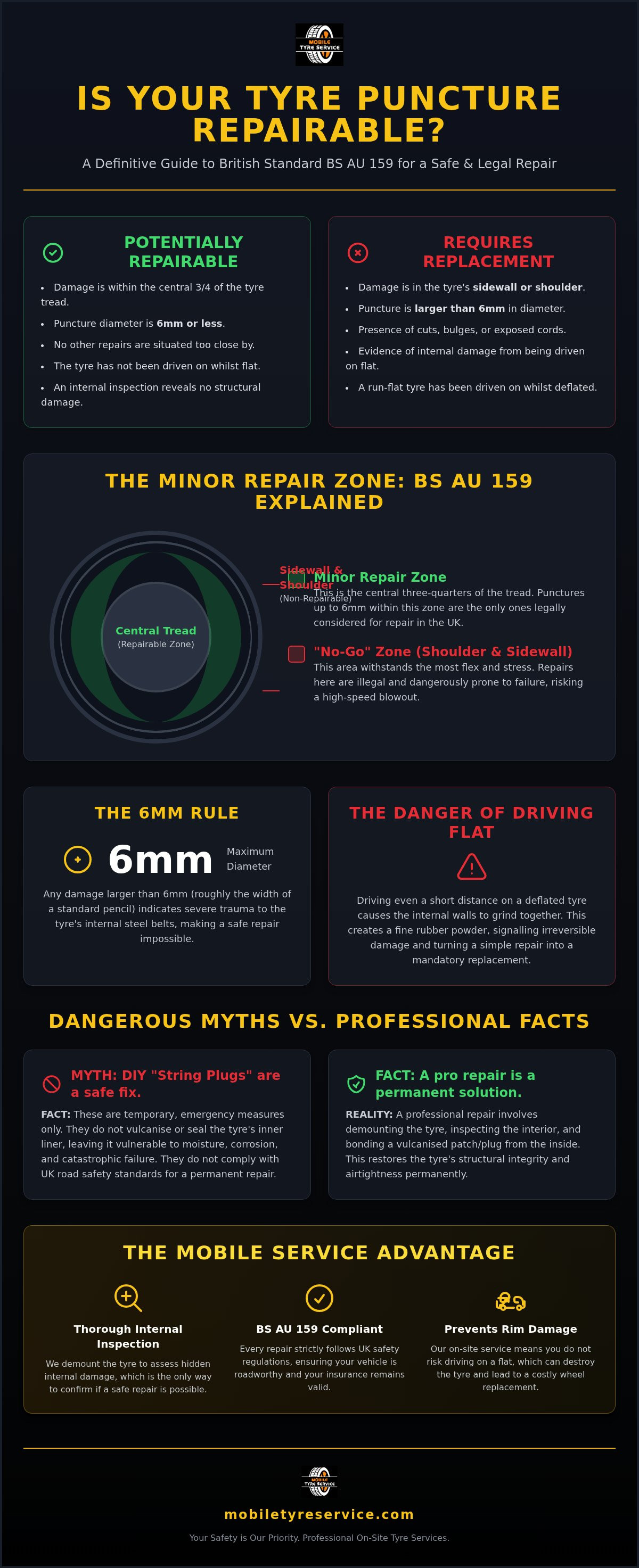
The nature of the damage determines the outcome. A clean nail entry often allows for a successful repair. Jagged debris or large screws create irregular tears that compromise the steel belts. Even if the exterior puncture looks minor, the internal structure may be ruined. Adhering to Tire Maintenance Best Practices ensures that these structural risks are identified before they become fatal. When you ask is my tyre puncture repairable, the answer depends entirely on the size and location of the entry point. Per UK law, the tread area is the only repairable zone, comprising the central three-quarters of the tyre's width.
Why "Just Plugging It" is a Dangerous Mindset
Plugging a hole merely stops air from escaping. It does nothing to reinforce the carcass or protect the internal steel cords from moisture and corrosion. Driving on a partially deflated tyre, even for a short distance, "chews" the internal liner. This creates a fine rubber powder inside the tyre that signals terminal internal failure. We recognise the stress of being stranded whilst trying to maintain a busy schedule. However, our priority is your safety. A professional on-site assessment identifies internal issues that a simple external plug ignores. Precision in diagnosis prevents disaster on the road.
The Minor Repair Zone: Understanding BS AU 159 Standards
The question is my tyre puncture repairable is governed by British Standard BS AU 159. This regulation defines the "Minor Repair Zone" as the central 60% to 70% of the tyre's tread width. Only damage within this specific area is legally eligible for a permanent fix. The shoulder and sidewall regions are excluded because they endure the highest levels of flex and stress during cornering. A repair in these "No-Go" zones will inevitably fail. It's a binary safety standard. If the entry point sits outside this central band, the tyre is scrap. This strict limit prevents the risk of a catastrophic blowout caused by patches failing in high-stress areas.
Measuring the Damage: The 6mm Rule
Determining is my tyre puncture repairable requires a precise measurement of the damage diameter. Technicians apply a strict 6mm limit to the entry hole. For visualisation, 6mm is roughly the width of a standard HB pencil or a garden pea. Anything larger than this threshold indicates significant structural trauma. Large punctures sever the internal steel belts that provide the tyre's high-speed stability. Once these belts are compromised, the tyre's carcass cannot safely contain high pressures. Moisture entry is another major concern. Water penetrates large holes and causes the internal steel cords to rust. This leads to delamination, where the tread literally peels away from the casing. Adhering to Industry Standards for Puncture Repair ensures these risks are mitigated through rigorous inspection.
The Proximity of Previous Repairs
A tyre isn't a blank canvas for infinite fixes. UK regulations specify that multiple punctures must be a certain distance apart to remain legal. If a new puncture is too close to an existing patch, the structural integrity of that section is lost. Overlapping patches create a weak spot that cannot withstand the heat generated at speed. Our mobile puncture repair specialists conduct a full internal examination to identify previous work. If the new damage sits too close to an old repair or if the tyre has already reached its maximum number of permitted fixes, replacement is the only safe path. If you're unsure about the location or size of your damage, a professional on-site assessment is the safest way to get a definitive answer without risking a drive on a failing tyre.
Sidewalls, Run-flats, and Bulges: When Repair is Legally Impossible
The sidewall of a tyre is its most vulnerable component. A common myth suggests that a "small nick" or a superficial scrape on the side is harmless. This is false. The sidewall bears the entire load of the vehicle and flexes constantly. Any structural compromise here makes a tyre unrepairable. In Cambridge, the prevalence of deep potholes frequently leads to "pinched" sidewalls. These impacts crush the rubber between the rim and the road, causing internal tears that cannot be patched. If you see a bulge or an "egg" on the side of your tyre, the internal cords have already failed. This is a terminal injury. A blowout is imminent. When asking is my tyre puncture repairable, remember that sidewall damage is an automatic fail under BS AU 159. Following NHTSA Tire Safety Guidelines highlights the necessity of professional inspection to catch these hidden failures before they cause an accident.
The Run-flat Controversy
Run-flat tyres feature reinforced sidewalls designed to support the car's weight without air pressure. This allows you to reach a safe location after a puncture. However, this convenience comes at a cost. Once a run-flat tyre is driven on whilst deflated, the internal structure begins to crumble under the heat and weight. Most premium manufacturers, including Michelin and Bridgestone, strictly forbid repairs on run-flat tyres that have been operated at low pressure. It is impossible to verify the integrity of the internal reinforcement without destructive testing. For this reason, we treat run-flat punctures with extreme caution. Safety dictates that a replacement is almost always the only responsible outcome.
Age and Condition Constraints
Even if a puncture is in the repairable zone, other factors can make a fix illegal. Tyre age is a critical constraint. Rubber degrades over time through oxidation. We don't recommend repairing any tyre older than 10 years, as the casing is likely brittle. Tread depth is another deciding factor. If your tread is near the 1.6mm legal minimum, investing in a repair is a poor financial decision. We also look for visible cords or bead damage during our assessment. These conditions require an immediate mobile tyre replacement to maintain roadworthiness. Determining is my tyre puncture repairable requires assessing these technical variables. A professional on-site visit is essential. It prevents you from spending money on a tyre that is already at the end of its service life.
The Danger of DIY Kits: Why Roadside String Plugs are a Mythical Fix
The market is flooded with £10 "Amazon Special" string plug kits. These products promise a quick roadside fix, but they are fundamentally non-compliant with British Standard BS AU 159. A string plug is an "outside-in" repair that ignores the most critical part of the process: the internal inspection. When you ask is my tyre puncture repairable, the answer cannot be determined while the tyre is still mounted on the rim. Without removing the rubber, you cannot see internal structural damage, such as "marbling" or heat-related degradation of the inner liner. Using a string plug effectively blinds you to the true condition of your safety equipment.
Sealant cans, often referred to as "gloop," present a different set of challenges. These emergency aerosols are designed to get you to a safe location within a short 10-mile radius. However, the chemical residue often coats the internal surface in a way that prevents the vulcanising cement used in professional repairs from bonding. Many professional tyre centres refuse to handle tyres filled with sealant due to the contamination risk and the labour required to clean the rim. Relying on a temporary spray often turns a repairable tyre into a mandatory replacement. For a definitive assessment that prioritises your safety, book a professional mobile inspection today.
The "Outside-In" vs. "Inside-Out" Method
Professional technicians use the "combination plug-patch" method, often called a mushroom repair. This is an "inside-out" process. We pull a rubber stem through the hole from the inside and bond a reinforced patch to the inner liner. This dual action seals the entry path against moisture and restores the airtight seal of the inner carcass. A patch alone or a plug alone is insufficient for high-speed motorway use. Re-sealing the inner liner is the only way to prevent air from migrating into the tyre's layers, which otherwise leads to delamination and sudden failure.
Insurance and Legal Implications
The legal stakes of a DIY repair are exceptionally high. An illegal or non-compliant repair can void your car insurance policy if an accident investigation reveals the tyre failed due to an improper fix. Under UK law, driving on an incorrectly repaired tyre can result in a "Dangerous Condition" police fine. This penalty can reach £2,500 per tyre and include three penalty points on your licence. Professional certification of a repair acts as your legal safety net. It confirms that the work meets BS AU 159 standards and that the vehicle is roadworthy. When determining is my tyre puncture repairable, the cost of a professional intervention is negligible compared to the potential legal and financial fallout of a failed DIY attempt.
Professional On-Site Assessment: The Mobile Tyre Service Advantage
Driving to a garage on a deflated tyre is a critical error that frequently ruins a repairable casing. Even a short two-mile journey under-inflated causes intense internal friction and heat. This process "chews" the internal sidewall structure, turning a simple nail hole into a terminal failure. When you ask is my tyre puncture repairable, the answer often changes from "yes" to "no" the moment you pull out of your driveway on a flat. Our mobile intervention across Essex and Cambridge eliminates this risk. We arrive at your location to assess the tyre exactly where it failed, preserving the integrity of the casing and protecting your alloy rim from ground contact.
Cambridge professionals often operate on high-precision schedules that do not allow for garage wait times. Mobile tyre repair at home or the workplace allows you to continue your duties whilst we handle the technical recovery. Our units perform elite diagnostics, including a full calibration check of the TPMS sensor. These sensitive electronic components are easily damaged during a puncture or a clumsy repair attempt. We ensure the vehicle's monitoring systems are as sound as the rubber itself. This systematic approach guarantees that your road safety is restored with surgical precision.
Rapid Response in Essex and Cambridge
Our mobile units operate with the disciplined efficiency of a specialised intervention force. We maintain a systematic, organised approach to every roadside call-out. Each van carries high-precision technical tools capable of performing BS AU 159 compliant repairs on-site. We prioritise commercial transparency, ensuring you understand the mobile tyre repair cost before our specialists begin work. This eliminates the financial uncertainty and stress often associated with traditional fast-fit centres. We ground our service in a physical, real-world response that values your time and safety equally.
Your Next Steps: Safety First
The moment your TPMS light illuminates or you feel the steering pull, stop in a safe location immediately. Do not attempt to "limp" the vehicle to a service centre, as this almost certainly guarantees the tyre will be scrapped. Our specialised intervention includes expertise in locking wheel nut removal, ensuring we can access the wheel even if you cannot locate your key. We provide the definitive answer to is my tyre puncture repairable without requiring you to risk your safety on the road. Contact Mobile Tyre Service for an expert on-site assessment to secure a high-precision, professional fix that gets you back on the move.
Secure Your Mobility with Professional Precision
Road safety is built on technical accuracy, not guesswork. You now understand that British Standard BS AU 159 dictates the strict boundaries of a legal repair. Driving on a deflated tyre or relying on a temporary DIY string plug compromises the structural integrity of your vehicle's most vital safety component. Determining is my tyre puncture repairable requires more than a glance at the tread; it demands a full internal inspection by a qualified expert.
Our specialist mobile units operate across Essex and Cambridge, equipped with high-precision tools for elite TPMS diagnostics and locking wheel nut removal. We bring strict BS AU 159 compliance directly to your home or workplace, ensuring your vehicle is restored to peak operational condition without the risk of a dangerous journey to a garage. Precision intervention is the only way to protect your safety and your rims simultaneously.
Book Your Professional On-Site Tyre Assessment Now
Trust in expert diagnostics to get you back on the road with total confidence.
Frequently Asked Questions
Is it legal to repair a tyre sidewall puncture in the UK?
It is illegal and unsafe to repair a tyre sidewall puncture in the UK. British Standard BS AU 159 dictates that only the central three-quarters of the tread area is eligible for a permanent fix. The sidewall undergoes significant flex and heat during operation; any patch applied here would inevitably fail. If you discover damage on the side of your tyre, an immediate replacement is the only roadworthy solution available.
How much does a professional mobile tyre puncture repair cost?
Professional mobile tyre repair costs vary depending on your location and the specific technical requirements of the intervention. A mobile service typically includes the call-out fee, a BS AU 159 compliant repair, a new valve, and wheel balancing. This premium service provides the convenience of a safe fix at your home or workplace in Essex or Cambridge, preventing the added expense and risk of driving on a damaged casing.
Can I drive to a garage with a nail in my tyre?
You shouldn't drive to a garage with a nail in your tyre if the pressure is dropping. Even a short journey of two miles on an under-inflated tyre causes terminal internal damage to the casing. This often turns a repairable puncture into a mandatory replacement. To determine is my tyre puncture repairable, a static on-site assessment is the safest method to preserve the tyre's structural integrity and protect your alloy rims.
Why do garages say run-flat tyres cannot be repaired?
Most manufacturers, such as Continental and Michelin, advise against repairing run-flat tyres because it's impossible to assess internal structural integrity. Once a run-flat tyre has supported the vehicle's weight without air, the reinforced sidewall may have crumbled internally. A professional inspection cannot verify this hidden damage without destructive testing. Consequently, replacement is the standard safety protocol to prevent a high-speed blowout later during high-stress motorway driving.
What is the maximum size of a repairable puncture?
The maximum diameter for a repairable puncture is 6mm, which is roughly the size of a standard pencil. Any hole larger than this threshold indicates that the internal steel belts have been significantly compromised. Once these structural cords are severed or exposed to moisture, the tyre cannot safely contain high pressure. If the damage exceeds 6mm, the tyre is legally considered unrepairable and requires an immediate replacement to ensure roadworthiness.
How long does a professional mobile puncture repair take?
A professional mobile puncture repair typically takes between 30 and 60 minutes to complete. This systematic process involves removing the tyre from the rim, performing a rigorous internal inspection, and applying a vulcanised mushroom plug-patch. Our specialists also check your TPMS sensors and ensure the wheel is balanced before refitting. This efficient roadside intervention allows you to resume your schedule in Essex or Cambridge with minimal disruption and total confidence.
Can a tyre be repaired twice in the same area?
A tyre cannot be repaired twice in the same area if the patches would overlap or sit too close together. UK regulations specify minimum distances between repairs to maintain structural stability. If a new puncture occurs near an existing fix, the carcass is deemed too weak to support a second patch. Our technicians always inspect the interior for previous work to determine is my tyre puncture repairable according to legal safety standards.
Do DIY puncture repair kits pass an MOT?
DIY "string plug" kits don't comply with BS AU 159 and will typically fail an MOT if identified as a permanent repair. MOT testers look for evidence of a secure, vulcanised internal patch. Temporary emergency fixes are intended only to get you to a safe location for a professional intervention. Relying on a cheap roadside kit as a long-term solution is illegal and risks an MOT failure or a significant police fine.
Need a mobile tyre service?
We cover Harlow, Bishop's Stortford, Cambridge and all surrounding areas — 24/7.
Call: 01279 881234