How to replace a tyre when your locking wheel nut key is lost
A lost locking wheel nut key doesn’t make a tyre change impossible. If you need to replace a tyre after losing the key, you can obtain a matching replacement or have a professional remove the locking nut with specialist equipment. The right approach depends on the nut’s type and condition; forcing i…

A lost locking wheel nut key doesn’t make a tyre change impossible. If you need to replace a tyre after losing the key, you can obtain a matching replacement or have a professional remove the locking nut with specialist equipment. The right approach depends on the nut’s type and condition; forcing it can damage the nut or alloy wheel.
Locking wheel nuts need a uniquely shaped key to turn, but the key isn’t the only way to remove them. This guide explains where to look for a missing key and how to arrange a replacement or removal.
You’ll also find out what to do after the locking nuts are removed, how to avoid delaying tyre work and what to consider before driving with a flat tyre.
Key Takeaways
- Check the glove box, boot storage and spare-wheel tool kit before arranging a replacement key.
- Look for the locking wheel nut code on its storage box or bag; the code can help identify a key that matches the nut pattern.
- A professional can remove a locking nut without its key, while DIY attempts may damage the nut or alloy wheel.
- Once the locking nuts are off, replace damaged fixings and have the remaining wheel fixings tightened to the vehicle handbook’s specification.
What happens after the locking nuts are removed?
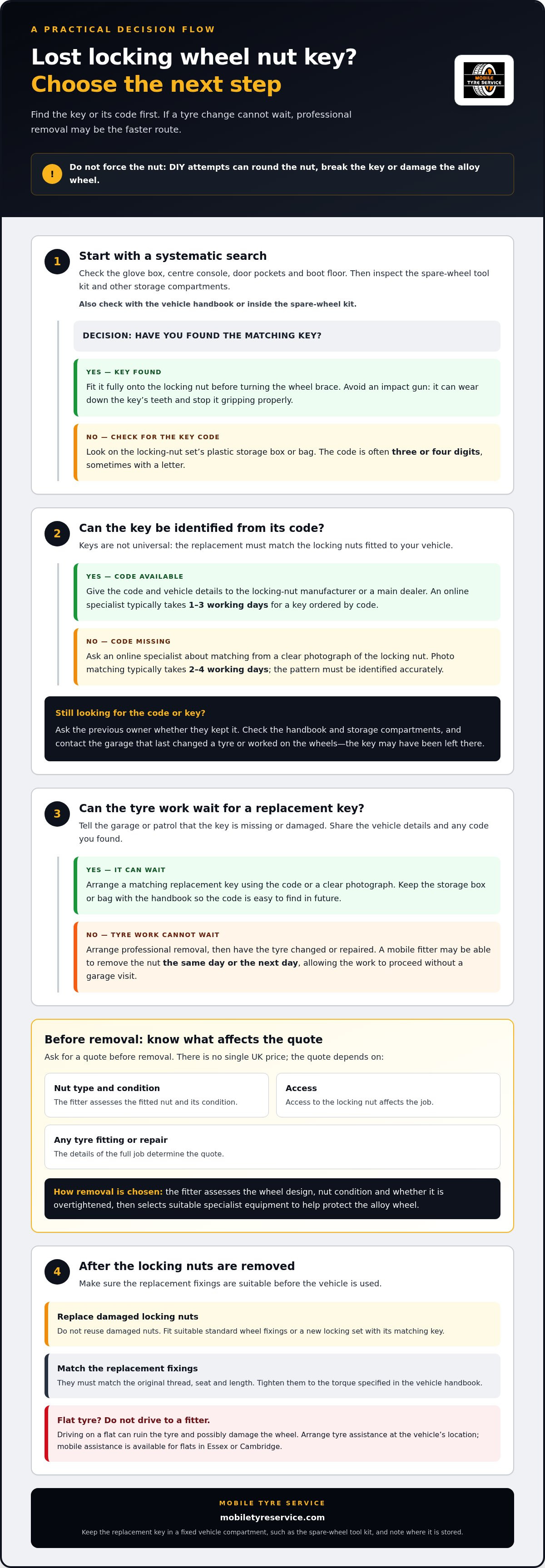
- If you still have the key, fit it fully onto the locking nut before turning the wheel brace. Avoid using an impact gun, as it can wear down the key’s teeth and stop it gripping properly.
- Ask for a quote before removal. There’s no single UK price: the cost depends on the nut’s type and condition, access, and whether you also need tyre fitting or repair. The details of the job determine the quote.
- To replace a tyre without the key, arrange professional removal of the locking nut, then have the tyre changed or repaired. The fitter assesses the wheel design, nut condition and whether it’s overtightened before choosing suitable specialist equipment to help protect the alloy wheel.
- For a flat in Essex or Cambridge, arrange mobile tyre assistance at the vehicle’s location. A mobile tyre fitter may be able to remove the nut the same day or the next day, allowing tyre work to proceed without a garage visit.
- Don’t drive on a flat tyre to reach a fitter. Doing so can ruin the tyre and possibly damage the wheel. DIY removal can round the nut, break the key or damage the alloy, delaying a tyre change or puncture repair. Replace damaged locking nuts rather than reusing them. Match replacement fixings to the original thread, seat and length, and tighten them to the torque specified in the vehicle handbook.
What is a locking wheel nut key?
- Identify the locking wheel nuts on your vehicle. Many cars with alloy wheels have one locking nut on each wheel. The patterned heads need a uniquely shaped key to turn, not a standard wheel brace.
- Check the key’s shape before searching. A keyed-head version has a hexagonal end for a wheel brace, while a rotating-collar design spins around the nut and needs its matching key. A standard set has one key for all four locking nuts.
- Search the vehicle’s storage systematically. Check the glove box, centre console, door pockets and boot floor, then inspect the spare-wheel tool kit and other storage compartments. The key may be stored with the vehicle handbook or inside the spare-wheel kit.
- Look for the original key’s code on its plastic storage box or bag. The code is often three or four digits, sometimes with a letter. Keep the box or bag with the handbook if you find it, so the code is easy to locate if you need a replacement.
- Check with the garage that last changed a tyre or carried out wheel-related work. The key may have been left there. If you can’t find it, a main dealer or the locking-wheel-nut manufacturer may be able to identify a replacement from the code and vehicle details.
- Before arranging wheel nut removal or breakdown assistance, tell the garage or patrol that the key is missing or damaged. Provide the vehicle details and any code you’ve found. This can help identify the locking pattern and the next practical step.
Replacing a lost locking wheel nut key
- Check the locking nut storage box or plastic bag for the key code. It’s often three or four digits, sometimes with a letter, and helps identify the correct pattern.
- Give the code and vehicle details to the locking-nut manufacturer or a main dealer. The replacement must match the fitted nuts; keys are not universal. A key ordered by code from an online specialist typically arrives within 1-3 working days.
- If the code is missing, ask about matching the key from a clear photograph of the locking nut. An online specialist typically takes 2-4 working days for photo matching. The nut’s pattern must be identified accurately for the key to fit.
- Ask the previous owner whether they kept the original key or code. Check the vehicle handbook and storage compartments, then contact any garage that previously changed a tyre. The key may have been left there.
- If a tyre change cannot wait for a replacement, arrange professional removal of the locking nuts. A mobile fitter may be able to remove them the same day or the next day. After removal, fit suitable standard wheel fixings or a new locking set with its matching key.
- Keep the replacement key in a fixed vehicle compartment, such as the spare-wheel tool kit, and note where it is stored. If removal is needed before a replacement arrives, arrange help with the tyre change.
Mobile Tyre Service: MOBILE TYRE FITTING
Mobile Tyre Service provides mobile tyre fitting when you need a replacement, including after a locking nut has been professionally removed. The service also includes mobile tyre repairs for punctures that can be repaired.
Choose mobile tyre fitting at home if the vehicle is safely parked there and needs a replacement tyre. If you have a flat, don’t drive to a garage. Arrange the required tyre work at the vehicle’s location instead.
Contact Mobile Tyre Service to discuss mobile tyre fitting or repair for your vehicle.
Get your next tyre step organised
If you need to replace a tyre after losing the locking wheel nut key, arrange the tyre work and keep the replacement key details accessible for future visits. A note with your vehicle records can remind you where the key is stored or where to find its code. That small step can make the next tyre change more straightforward. For drivers encountering broader car key or lockout issues on the road, mobile auto locksmith services like keyskev.co.uk provide prompt vehicle access and key replacements.
Mobile Tyre Service offers mobile tyre fitting, including at home, and mobile tyres. If you’re ready to arrange tyre work, contact Mobile Tyre Service for help. Share the issue and the vehicle’s location so you can discuss the practical next step. Take action at a pace that suits your situation, and get the tyre work moving.
Frequently Asked Questions
What if the key is broken or the locking nut is damaged?
A broken key or damaged nut needs assessment before you try turning it again. A poor fit can round the nut or worsen existing damage, so don’t keep applying force with a wheel brace or impact gun. Damaged locking nuts should normally be replaced rather than reused. Once removed, use a suitable replacement fixing that matches the wheel’s thread, seat and length.
Where is the key code usually recorded?
The code is usually printed on the locking wheel nut set’s storage box or plastic bag. Check both sides and any labels, then compare the code with the vehicle handbook or purchase paperwork. It’s often three or four digits, sometimes with a letter. If you bought the vehicle second-hand, ask the previous owner whether they kept the original code card.
Are DIY removal kits worth trying?
A DIY removal kit can make the job riskier if it doesn’t suit the nut or wheel. An unsuccessful attempt can round the nut, damage an alloy wheel or break a key, complicating a tyre repair. Shear-head bolts are designed to shear if turned with anything other than the matching key, so stop if the fixing resists.
How do professionals remove it without the key?
Professionals use specialist equipment and choose a removal method based on the nut’s type and condition. They assess the wheel design and whether the nut may be overtightened, then work to reduce the risk of alloy damage. For tyre work in Essex or Cambridge, Mobile Tyre Service provides mobile fitting at the vehicle’s location once the locking nut can be removed.
Need a mobile tyre service?
We cover Harlow, Bishop's Stortford, Cambridge and all surrounding areas — 24/7.
Call: 01279 881234