How to get a tyre changed at home with mobile fitting
A puncture doesn’t always mean you need a new tyre. To get a tyre changed without leaving home, arrange for a mobile tyre fitter to visit and assess the damage. They can repair it if suitable or replace the tyre when needed, without you driving to a fitting centre. When a damaged tyre disrupts your…
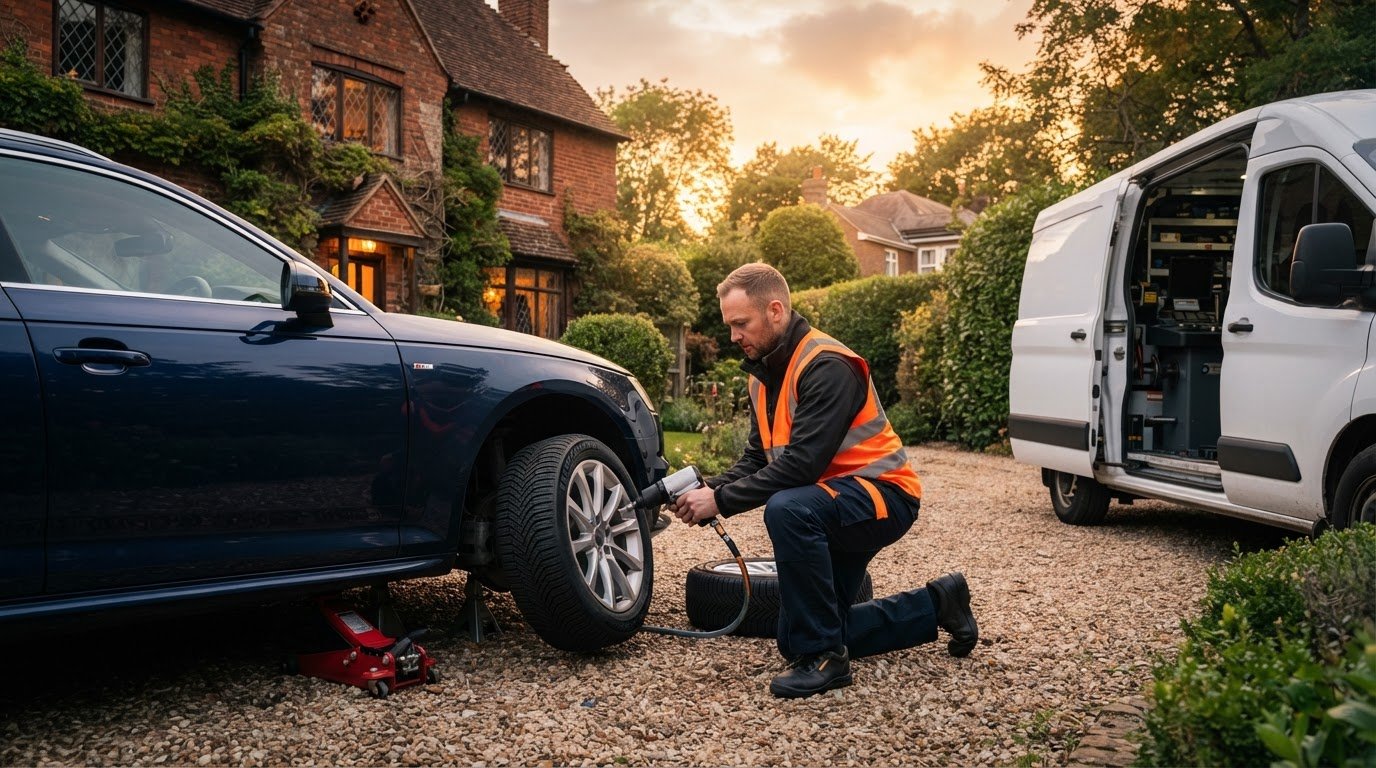
A puncture doesn’t always mean you need a new tyre. To get a tyre changed without leaving home, arrange for a mobile tyre fitter to visit and assess the damage. They can repair it if suitable or replace the tyre when needed, without you driving to a fitting centre.
When a damaged tyre disrupts your plans, it’s understandable to want a clear answer quickly. The right solution depends on the type and location of the damage, so an assessment helps determine whether repair or replacement is appropriate.
This guide explains what to do first, what to expect during a home visit and how mobile fitting can help. You’ll also learn when a puncture may be repairable, when replacement is the safer option and what information to have ready when arranging the service.
Key Takeaways
- If a tyre is damaged, prioritise a safe location; don’t attempt a tyre change on a motorway.
- On a road away from a motorway, the Department for Transport says to place a warning triangle 45 metres (147 feet) behind a parked car, where it is safe to do so.
- A mobile fitter can assess whether a puncture is suitable for repair or whether the tyre needs replacing.
- Replacing a tyre involves specialist fitting equipment, while balancing helps ensure the wheel runs correctly after fitting.
Getting a punctured tyre repaired or replaced
Driving on a damaged tyre can cause further pressure loss, reduce vehicle control and damage the wheel. If you suspect a flat, don’t continue driving while waiting for a fitter. Stop somewhere safe and arrange an assessment. Where severe rim damage or hazardous roadside conditions prevent an on-site change, professional operators such as Done Wright Towing & Transport illustrate how dedicated vehicle transport services can safely recover an immobilised car.
- Move away from traffic if possible. Slow down smoothly, keep the steering steady and pull into a safe place away from the carriageway. Don’t attempt to change a tyre on a motorway. If you feel in immediate danger on the motorway, call 999, as advised by the UK Government.
- Get everyone out of the vehicle safely. Once parked in a safe location, have passengers leave the vehicle and wait away from traffic. Avoid standing beside the car on the carriageway or in another exposed position.
- Make the stopped vehicle visible. On a road other than a motorway, position a warning triangle 45 metres (147 feet) behind the parked car to warn approaching drivers, according to the Department for Transport. Don’t place a warning triangle on a motorway.
- Choose repair or replacement after inspection. A fitter assesses the puncture and tyre condition before deciding whether a repair is suitable. Damage that cannot be repaired safely means the tyre needs replacing. Don’t loosen wheel nuts or attempt a roadside change beside moving traffic.
- Check tread condition as well as punctures. The UK legal minimum tyre tread depth is 1.6 mm across the central three-quarters of the tyre, according to the Driver and Vehicle Standards Agency. A tyre may need attention before reaching that limit if it has visible damage or is losing pressure.
- Arrange an assessment at a safe location. If the car cannot be driven safely, keep it parked and arrange mobile tyre repair or replacement at its location. Share the tyre’s visible damage and the vehicle’s position so the fitter can assess the problem and plan the work. In situations where an on-site fix is not viable and the car must be moved, 24-hour roadside assistance operators such as dependabletowing.ca show how professional recovery teams can transport stranded motorists safely.
Mobile replacement tyre fitting and balancing
A mobile fitter can replace a tyre at your location, using specialist equipment to remove the tyre from the wheel. If you’re deciding how to get a tyre changed without leaving home, these steps explain what to arrange and what to expect during the visit.
-
Choose and call a mobile fitter
Provide your vehicle details, tyre size and location when you make contact. Read the size from the tyre sidewall or handbook, and explain whether you need a replacement or have a spare fitted. Check that the service handles the work you need and can reach your location. Clear details help the fitter prepare for your vehicle and wheel.
-
Arrange the replacement fitting
Set out where the vehicle is parked and arrange access to a firm, level working area. A mobile tyre fitting visit typically takes around 30 to 45 minutes. The fitter removes the wheel, replaces the tyre and balances it, helping the wheel run smoothly. This is a practical option for drivers considering how to get a tyre changed without leaving home.
- Understand price differences. Mobile and garage prices can differ because the quote reflects the tyre, fitting requirements and visit location. The price depends on the case and is given after a quote request; tyre specification and the work required affect it.
- Use a spare as a temporary measure. A space-saver is intended for emergencies, so avoid driving on it longer than necessary. A winter wheel must match the vehicle’s required size and specification. The handbook can help you identify the correct details.
- Check directional tyres. Look for the rotation arrow on the sidewall. It must point in the direction the wheel turns as the vehicle moves forwards, so the tread is fitted correctly.
- Distinguish balancing from other work. Balancing is separate from wheel alignment, which adjusts wheel angles. Old-tyre disposal is also a separate arrangement. Clarify whether disposal is included when arranging mobile tyre fitting at home.
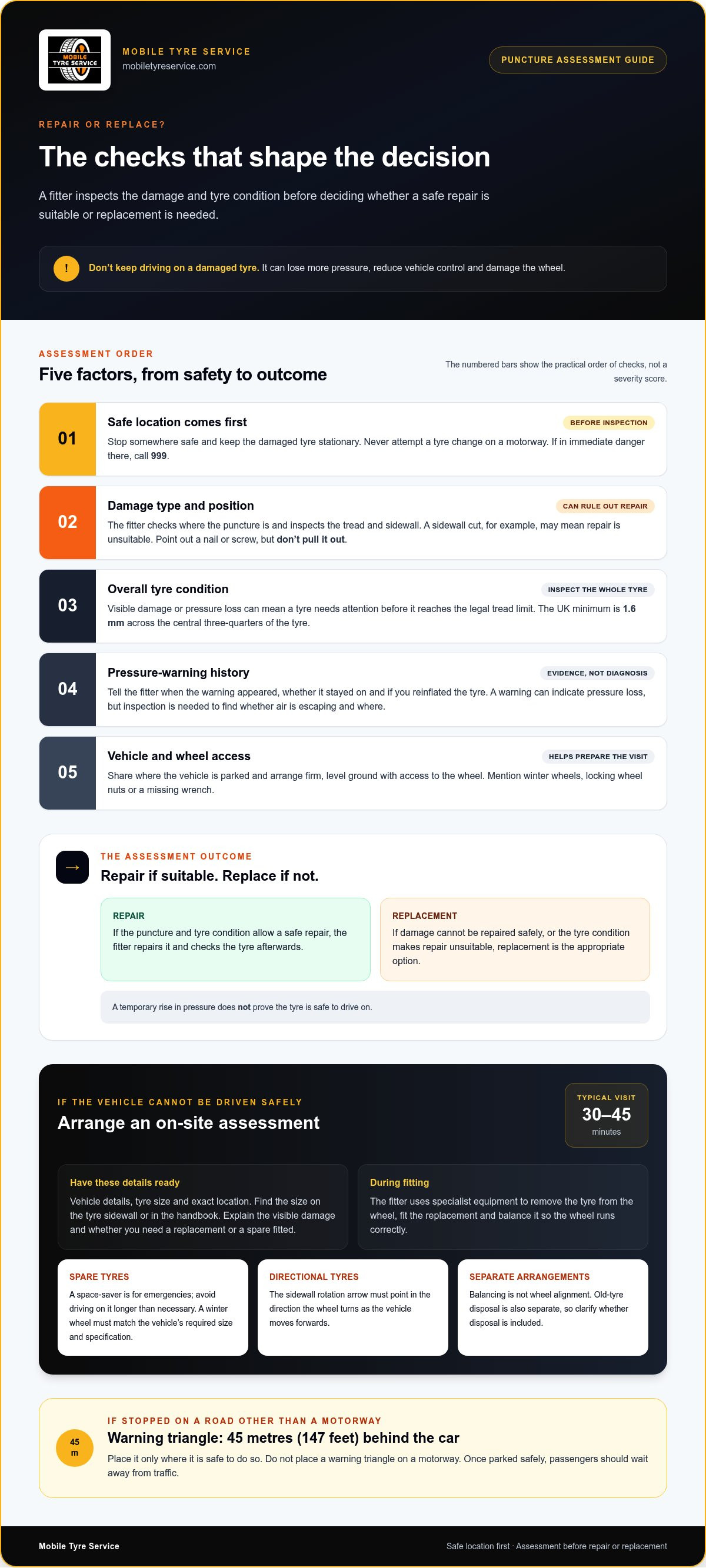
Mobile tyre puncture assessment and repair
A puncture assessment establishes whether the tyre can be repaired or needs replacing. Use these steps to prepare for an on-site inspection and understand what affects the decision.
- Record what happened. Note when the pressure warning appeared, whether the vehicle pulled to one side and where it’s parked. For example, tell the fitter if the tyre lost pressure after driving over debris. These details help focus the inspection without you removing the wheel.
- Keep the damaged tyre stationary. Don’t drive on a tyre that is visibly damaged or losing pressure. Continued driving can worsen internal damage, even if the tread looks intact. An on-site assessment can establish the next step without a garage visit.
- Show the fitter the puncture area. Point out a visible nail, screw or other object, but don’t pull it out. The fitter can inspect the tread and sidewall, then assess whether the damage and tyre condition allow a safe repair. A sidewall cut, for example, may rule out repair.
- Share pressure-warning details. Tell the fitter if an automatic tyre-pressure warning appeared, whether it stayed on and whether you reinflated the tyre. A warning can indicate pressure loss, but it doesn’t identify the damage. An inspection is needed to establish whether air is escaping and where.
- Prepare access to the vehicle. Park on firm, level ground where the wheel is accessible. Mention winter wheels, locking wheel nuts or a missing wrench when arranging the visit. These details help the fitter prepare for the wheel on your vehicle.
- Follow the assessment outcome. If repair is suitable, the fitter repairs the puncture and checks the tyre afterwards. If the damage or tyre condition makes repair unsuitable, replacement is the appropriate option. Don’t treat a temporary increase in pressure as proof that the tyre is safe to drive on.
Which mobile tyre fitting services operate in the UK?
UK mobile tyre services cover different needs, from replacing a worn tyre to assessing a puncture. Use these steps to identify the service that matches your vehicle and situation.
- Identify the work required. Mobile fitters may handle tyre replacement, puncture assessment and suitable repairs. Changing a wheel using a spare is different: it swaps the whole wheel, whereas tyre fitting removes the tyre from the wheel. Explain whether you need a repair, a replacement tyre or a spare fitted.
- Match the service to your location. Mobile fitting brings the work to a suitable place, such as your home or workplace. Give the full address and explain where the vehicle is parked. A firm, level space with access around the car helps the fitter work safely.
- Explain the vehicle and tyre requirements. Provide the vehicle make, model and tyre size, printed on the tyre sidewall. Mention a locking wheel nut, a direct tyre pressure monitoring system or a specialist wheel. These details can affect the equipment and fitting process.
- Choose repair or replacement support. If a tyre has lost pressure, request an assessment rather than assuming it needs replacing. The fitter considers the puncture’s position and the tyre’s condition. Repair is suitable only if the damage allows it; otherwise, replacement is the relevant service.
- Separate related services. Some mobile tyre work includes fitting and balancing a replacement tyre. Balancing is different from wheel alignment, which adjusts wheel angles, and from mechanical repairs. If a TPMS sensor issue accompanies the tyre problem, mention it when describing the vehicle.
- Arrange the right type of visit. Tell the service whether the car is at home, at work or stopped elsewhere, and describe any access restrictions. Clear information helps match the visit to the job, whether you need a puncture assessment or a replacement. For a home visit, arrange mobile tyre fitting for the vehicle’s location.
Mobile Tyre Service: MOBILE TYRE FITTING
Mobile Tyre Service provides mobile tyre fitting at home, mobile tyre repair and replacement at your location. Choose the service when a puncture needs assessment or a damaged tyre needs replacing, and you want the work done without driving to a fitting centre.
For a puncture, the fitter assesses the damage and whether repair is appropriate. If the tyre needs replacing, mobile fitting brings the work to your vehicle. Share your location, vehicle details and tyre information when arranging the service to help identify what’s needed.
If a damaged tyre makes driving unsafe, keep the vehicle parked and arrange assistance at its location. Contact Mobile Tyre Service to discuss mobile tyre fitting or repair.
Make your next step a practical one
Planning how to get a tyre changed without leaving home starts with knowing where the vehicle is and what the tyre needs. If it’s damaged or losing pressure, keep it safely parked and arrange an assessment rather than driving it. Have the vehicle and tyre details ready to make the conversation more focused.
Mobile Tyre Service provides mobile tyre fitting at home and replacement tyres at your location. If a puncture needs attention, its mobile tyre repair service can assess the tyre where you are. Choose the service that matches the problem, then share the relevant details when you get in touch.
Contact Mobile Tyre Service today to discuss the next step for your tyre. With the right assessment and fitting arranged, you can move towards getting your vehicle back on the road.
Frequently Asked Questions
How does mobile tyre fitting at home work?
A mobile fitter comes to your address and carries out the tyre work beside your vehicle. Keep the car accessible and have its keys ready in case the fitter needs to position or move it. If your vehicle has locking wheel nuts, make sure the key is available. You can stay at home while the fitting takes place.
How do I book a mobile tyre fitter and what details do I need?
Contact a mobile tyre service with your vehicle registration, tyre size and exact location. Explain whether you need a puncture assessed or a replacement, and mention access details such as a narrow driveway or underground parking. If you can’t read the tyre size, provide the vehicle make and model so the required specification can be identified.
Can a mobile tyre fitter repair a puncture or only replace a tyre?
A mobile tyre fitter can assess a puncture and replace a tyre. For example, if a tyre has lost pressure after picking up debris, an on-site assessment can establish whether repair is suitable. If the damage or tyre condition makes repair inappropriate, replacement is the alternative. Mobile Tyre Service provides mobile tyre repair and fitting.
Can mobile tyre fitters work on driveways, on-street parking, or at work?
Mobile tyre work can take place on a suitable driveway, at a workplace or roadside, provided the vehicle is accessible and there’s a safe, level working area. In Essex and Cambridge, Mobile Tyre Service provides mobile services at customers’ preferred locations. For on-street parking, consider whether the fitter can work without obstructing traffic or pedestrians.
Need a mobile tyre service?
We cover Harlow, Bishop's Stortford, Cambridge and all surrounding areas — 24/7.
Call: 01279 881234