Free MOT tyre checks in Essex
A tyre can look sound and still need a closer check. For a tyre check for an MOT in Essex, focus on tread depth, visible damage and pressure. A free check can flag concerns before the test, but it does not replace the MOT inspection.Checking your tyres before MOT day is sensible, especially if you h…
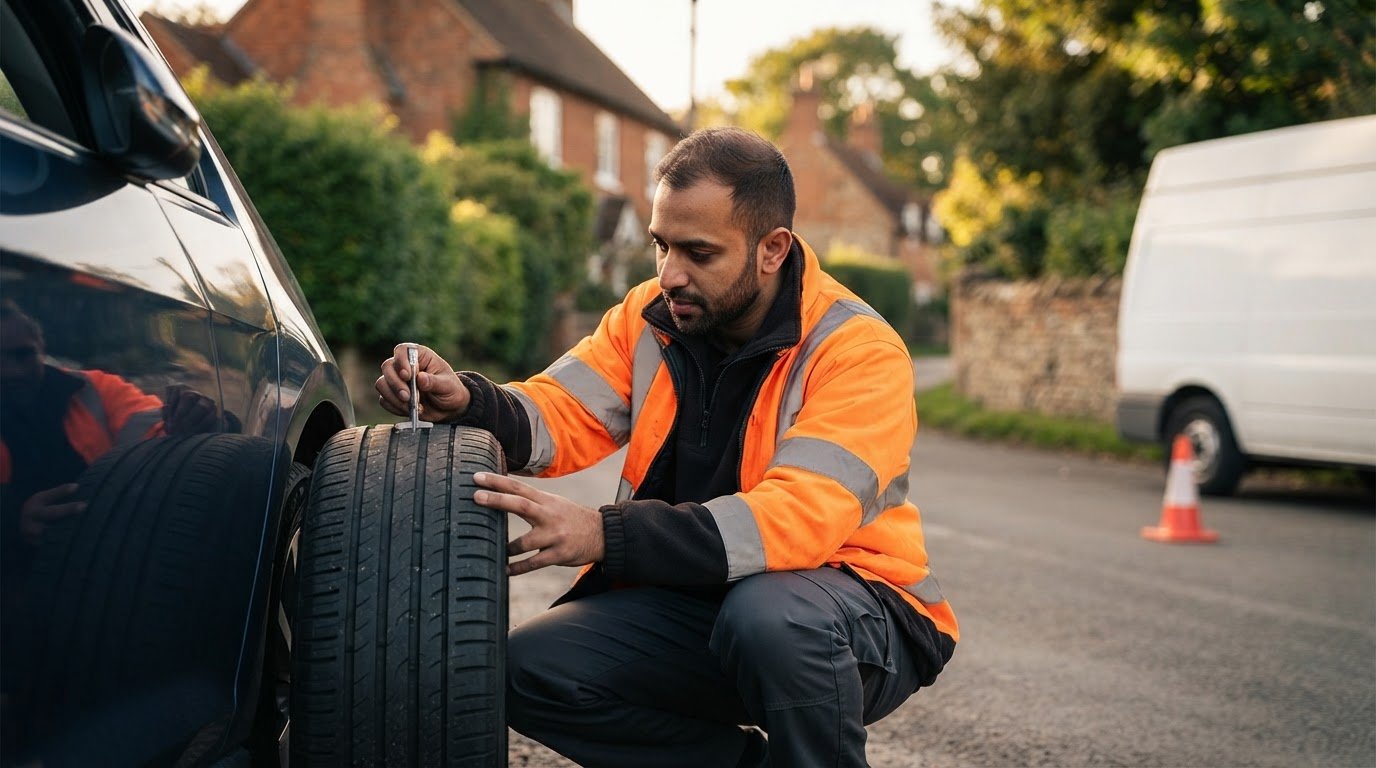
A tyre can look sound and still need a closer check. For a tyre check for an MOT in Essex, focus on tread depth, visible damage and pressure. A free check can flag concerns before the test, but it does not replace the MOT inspection.
Checking your tyres before MOT day is sensible, especially if you have noticed uneven wear, pressure loss or damage. A quick visual inspection can reveal warning signs, but it cannot confirm that every part of the vehicle meets MOT requirements.
This guide explains what a free tyre check can cover, how a pre-MOT inspection works and which checks you can make yourself. You will also learn when a tyre issue may call for mobile tyre fitting or repair, so you can take a practical next step.
Key Takeaways
- Vehicles over 3 years old need an MOT annually, according to the Driver and Vehicle Standards Agency.
- Before your test, inspect tyre tread, visible condition and pressure for issues that may need attention.
- A pre-MOT inspection can cover more than tyres, including lights, wipers, seat belts, mirrors and a visual check of key vehicle systems.
- Check your tyres in good light and look across the tread for uneven wear, damage or signs of pressure loss.
- If a tyre needs repair or replacement, mobile tyre services can address the issue at your chosen location.
MOT testing and vehicle safety
According to the Driver and Vehicle Standards Agency, vehicles over 3 years old must have an MOT test annually. The test assesses whether a vehicle meets required safety and roadworthiness standards at the time of inspection. A tyre issue is only one possible reason for a failure, so prepare the vehicle as a whole.
Start by confirming the vehicle’s MOT due date and identifying the correct test class. A Class 4 MOT applies to cars and small vans with up to 8 passenger seats. A Class 7 MOT is specifically for heavy goods vehicles, and Class 7 testing is only available at centres that offer it.
For MOT testing in Grays, Chelmsford or Maldon, choose a test centre that handles your vehicle’s class. Before booking, check its location, opening arrangements and booking process. Have your registration details ready, and ask whether the centre can explain any tyre defects recorded during the inspection.
Local convenience matters, but the test itself follows the vehicle’s class and condition. For example, a car in Chelmsford needs the appropriate car test, whilst a heavy goods vehicle near Maldon needs a centre offering Class 7 testing. Choosing the right category helps prevent avoidable booking problems.
Use a short preparation routine before travelling to an MOT centre:
- Check the due date and identify the vehicle’s test class.
- Inspect the tyres for visible damage, uneven wear and pressure concerns.
- Look over lights, mirrors, number plates, wipers and seat belts.
- Note any warning signs or repairs that may need attention.
These checks can help you spot issues early, but they do not replace the formal MOT. Inspect the full visible tread and both sidewalls, not just the side facing outwards. If one tyre looks different from the others, note what you can see and have it assessed before the test.
What should I do if my tyres fail an MOT? Read the failure result and arrange the required tyre repair or replacement before returning for a retest. If the problem is a repairable puncture or other tyre damage, mobile tyre repair can address it.
Keep the MOT result and repair details together. If the test identifies a tyre defect, these records help clarify what was changed and what still needs attention. A tyre check for an MOT in Essex is a useful preparation step, especially when you inspect each tyre methodically before travelling to Grays, Chelmsford or Maldon.
In the UK, you can renew an MOT up to a month before it expires. This gives you time to plan the test rather than leaving the booking until the last moment. Check the expiry date, then arrange the inspection and any tyre assessment. If you are concerned about a tyre, allow time to have it checked before the test. Keep the vehicle’s class and the centre’s booking arrangements in mind as you plan.
Pre-MOT inspection availability
Pre-MOT inspections help identify vehicle issues before the formal MOT appointment. Availability depends on the garage’s opening hours, inspection capacity and the vehicle’s requirements. In Essex, plan around your MOT due date and allow time to arrange repairs if the inspection finds a problem. Booking ahead also gives you a clearer schedule for the inspection and any follow-up work.
Can I get an MOT and tyre check at the same garage in Essex? Yes, a garage that provides MOT testing and pre-MOT inspections can assess the tyres and carry out the test at the same location. Arrange both services together so the garage can allow time for each.
Near Basildon, the page lists 27 garages for pre-MOT checks. There were 272 pre-MOT check jobs in Basildon this month. These figures show that local inspection options and activity are available, but your choice still needs to fit your vehicle and timing. When contacting a centre, specify that you want a pre-MOT check and a tyre assessment, rather than assuming the MOT booking includes both.
Opening times can shape your options. The Billericay centre is open on Saturdays from 8:30am to 5:00pm and Sundays from 10:00am to 4:00pm. If weekday appointments conflict with work or other commitments, use those published weekend hours to plan a suitable visit. Confirm the appointment time and explain whether you need the pre-MOT inspection before the formal test.
Same-day MOT availability depends on an open appointment, the correct test class and the centre’s schedule. A same-day booking does not automatically include a separate pre-MOT inspection. Tell the centre what you need when booking and provide the registration details so staff can identify the vehicle and suitable test category.
Use this booking sequence to make your visit more efficient:
- Check the MOT due date and note any tyre concerns, such as visible damage or uneven wear.
- Find a local centre whose opening hours match your schedule and whose testing covers your vehicle.
- Request the pre-MOT inspection and MOT appointment together, stating clearly that tyres need assessment.
- Ask for the inspection findings to be explained before agreeing on any repairs.
A good booking plan matches the appointment to the work required, rather than simply choosing the earliest time. For example, a driver near Basildon with a tyre concern can arrange an inspection first, then leave time for any necessary repair before the MOT. This avoids a rushed visit and clarifies the next step if the inspection identifies a defect.
Free tyre checks covering tread depth, condition and pressure
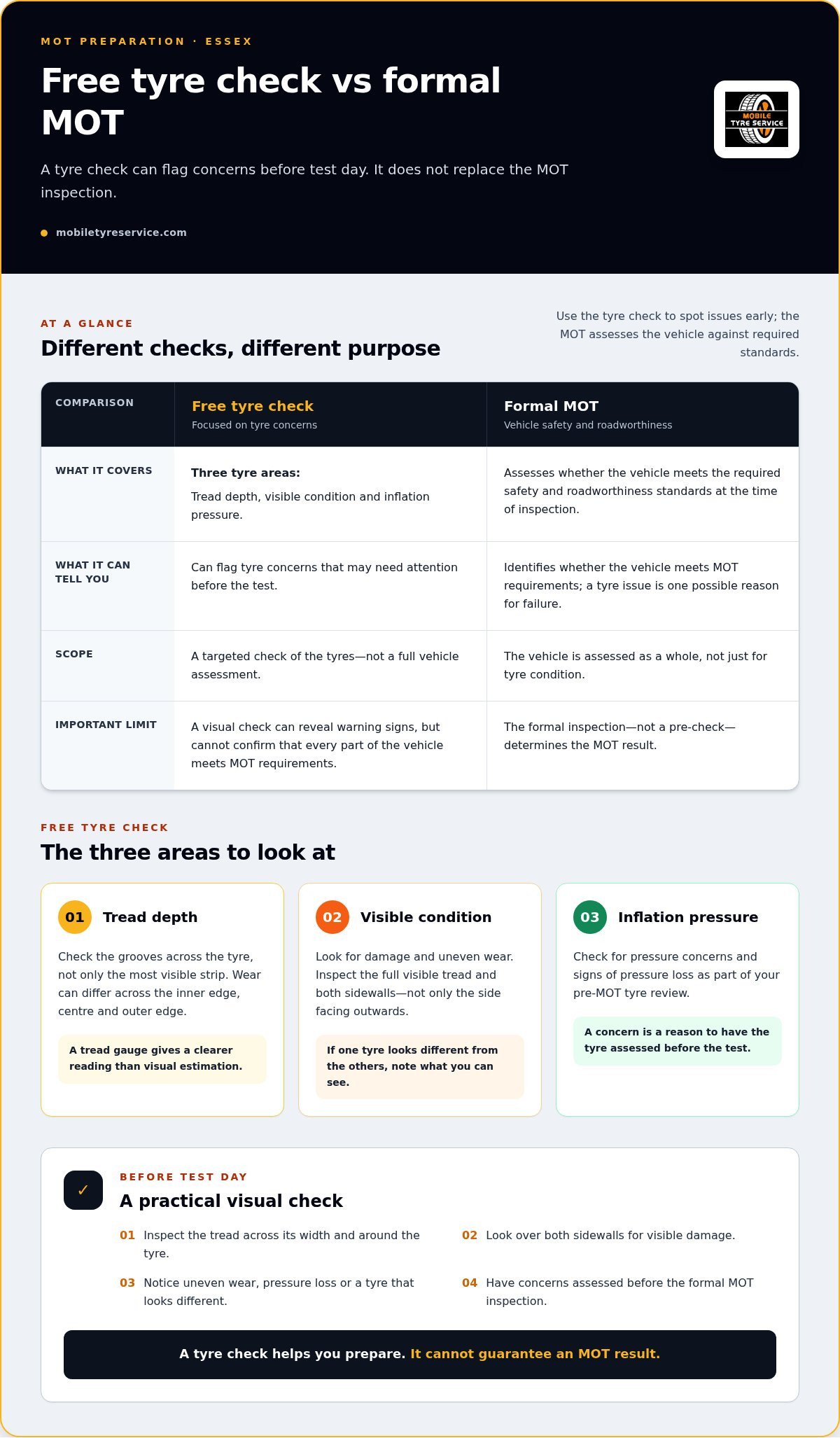
A free tyre check gives you a focused assessment before your MOT. It covers tread depth, visible condition and inflation pressure, helping you identify concerns that need attention before the formal test.
Tread depth checks
A tread check measures the grooves across the tyre, not just the most visible strip. Inspect the full width and circumference because wear can differ between the inner edge, centre and outer edge. A tread gauge gives a clearer reading than visual estimation, especially when the grooves look close to the wear indicators.
What is the legal minimum tyre tread depth in the UK? During an MOT, the tester assesses tread depth against the legal minimum that applies to the tyre. Check the full tread rather than relying on one measurement, as worn patches can be difficult to see from the outer sidewall.
Tyre condition and pressure checks
Check for cuts, cracks, embedded objects, bulges and exposed cords. A bulge can indicate damage beneath the outer rubber, while visible cords show that the tyre’s covering has worn through. The assessment considers where the damage is and how it affects the tyre’s safe condition. Do not dismiss a defect because the tread looks adequate.
Use a suitable pressure gauge and compare the reading with the vehicle manufacturer’s recommended setting. Check every tyre, including the spare if fitted, and inspect the valve areas for damage. Underinflation can change how a tyre contacts the road, while overinflation can affect its contact patch. A pressure check is useful, but it does not replace an MOT inspection.
Are tyre checks included in an MOT test fee? The MOT includes an assessment of the tyres. A separate pre-MOT tyre check is distinct from the formal test, so do not assume it is included in an MOT booking.
How are tyre damage, bulges and exposed cords assessed during an MOT? The tester examines the visible condition of the tyres and determines whether damage or wear makes a tyre unacceptable. Visible tyre damage may warrant closer attention, even when other parts of the tyre appear sound.
A free check can cover a range of visible issues, but it focuses on the tyres rather than the whole vehicle. Use this practical sequence before your appointment:
- Check tread across the tyre width and look for uneven wear.
- Examine both visible sidewalls for cuts, bulges or exposed cords.
- Measure pressure and compare it with the vehicle’s recommended setting.
- Note any concern and arrange appropriate attention before the MOT.
For example, a tyre with adequate-looking centre tread may have heavier wear at one edge. Checking each tyre carefully gives you a fuller picture and can reveal issues a quick glance might miss.
Checks to make before an MOT
Before an MOT, you can make practical checks, starting with the tyres and then walking around the vehicle. A careful visual inspection can also reveal faults in lights, wipers, mirrors and other visible equipment.
Tyre conditions that cause MOT failure
The MOT includes an assessment of tyre condition, so check each tyre for uneven wear, cuts, bulges or exposed cords. Look closely at the tread and sidewalls, including the parts facing towards the vehicle, where damage can be harder to see. Give extra attention to a tyre that looks different from its partner. Note the location and appearance of any concern.
Checking tyre tread and condition
How do I check tyre tread depth and condition before an MOT? Park safely, turn the steering to improve access, then inspect the full tread and visible sidewalls. Use a tread-depth gauge at several points across each tyre. Note uneven wear, embedded objects, cuts or bulges for attention before the test.
Compare the tyres on the same axle. Different levels of wear can indicate a problem that needs further assessment, even if one tyre appears sound. Do not judge tread from a single groove or small section.
Continue your walk-round with the items a pre-MOT inspection should cover. Test the lights, including indicators and brake lights, then check that the number plates are clean and readable. Operate the horn and look for cracks or damage to mirrors, doors and bodywork. Check that the seat belts extend, retract and fasten securely.
Check the wipers and washers separately. Run the washers and confirm that fluid reaches the windscreen, then inspect the blades for splits or poor contact. Also check the windscreen for damage in the area swept by the wipers. These simple steps can help you identify faults before reaching the test centre.
A thorough visual inspection should also include the wheels and visible parts of the brakes, suspension, steering and fuel system. These checks do not replace a trained technician’s assessment, but they can help you spot a concern early. If a component looks loose, damaged or out of place, note its location rather than attempting an unfamiliar repair.
Routine maintenance supports MOT preparation. Check engine oil and coolant levels, and replace fluids or lights as necessary. If a warning light appears or a fluid level keeps falling, arrange an assessment rather than treating it as a simple pre-test task.
- Walk around the vehicle and inspect each tyre and wheel.
- Test lights, horn, wipers and washers, then check mirrors and number plates.
- Check doors and seat belts for normal operation.
- Look for visible concerns around the brakes, suspension, steering and fuel system.
- Make a note of faults and address them before the MOT appointment.
A consistent check helps you distinguish an obvious maintenance task from a defect that needs professional assessment. Inspect in good light, and do not overlook inner-facing tyre surfaces or areas beneath the vehicle that are visible without moving parts.
What tyre conditions cause an MOT failure in the UK?
An MOT tyre assessment considers visible tread and condition. Worn tread, damage, bulges or exposed cords are warning signs that need attention before the test. Check each tyre closely because wear can vary across its surface. For example, the outer shoulder may look sound while the inner edge shows heavier wear.
Start with the tread. Inspect its full width and the whole circumference instead of judging one visible patch. Uneven wear may leave one section noticeably smoother than another. A quick look from outside a parked vehicle can miss the inner surface, so find a safe position that gives you a clear view of each tyre.
Next, inspect both visible sidewalls for cuts, cracks, bulges and exposed cords. A bulge changes the tyre’s outline, while exposed cords appear as reinforcement beneath damaged rubber. An embedded object also needs attention, even if the tyre still appears inflated. Do not remove an object or attempt a repair during a roadside inspection.
Pressure loss is another reason to investigate a tyre before the MOT. A tyre that looks flatter than its counterpart may be losing air, while a pressure warning can signal a problem that needs assessment. Check the pressure against the vehicle manufacturer’s guidance, then look for damage around the tread and valve. Pressure alone cannot reveal structural damage.
These observations help you identify concerns, but they do not replace the MOT tester’s assessment. The tester considers the tyre as fitted to the vehicle, including its visible wear and condition. If a defect is recorded, use the result to identify the affected tyre and the required work. Do not assume that correcting the pressure will resolve a cut, bulge or worn section.
- Compare tread across the inner edge, centre and outer edge.
- Look around each tyre for uneven wear and embedded objects.
- Inspect visible sidewalls for cuts, bulges, cracks or exposed cords.
- Investigate pressure loss rather than relying on appearance alone.
A pre-test inspection can identify concerns early and give you time to understand the repair needed. For example, a visible puncture may need assessment, while severe wear may call for a replacement tyre. When describing the issue, note the wheel’s position, such as front nearside or rear offside. This makes the findings easier to act on.
If a tyre needs repair, arrange mobile tyre repair as the practical next step. Address the specific defect before returning for the MOT, and use the test result to guide any required follow-up.
Regular car maintenance can help you avoid MOT failure. Check engine oil, coolant, lights and tyres, and replace or repair them as necessary. These checks complement an inspection for visible tyre wear and damage before the test.
Mobile Tyre Service: MOBILE TYRE FITTING
Mobile Tyre Service provides mobile tyre fitting and repair when a tyre needs replacing or attention before an MOT. If an inspection identifies a damaged or unsuitable tyre, these services address the tyre issue at your chosen location. Mobile tyre fitting at home can also help if arranging a garage visit is difficult.
When making an enquiry, share the tyre concern and your vehicle details. This helps direct your request to the relevant service, whether you need a repair or replacement fitting. Problems involving other vehicle systems need a separate assessment.
For help with a tyre issue before your MOT, contact Mobile Tyre Service or visit mobiletyreservice.com.
Take the next step towards MOT day
Use your tyre check for an MOT in Essex to decide what needs attention before the test. If an inspection identifies a tyre that needs replacing, Mobile Tyre Service offers mobile tyre fitting, including fitting at home, as well as mobile tyre repairs. Note which tyre is affected and whether it needs repair or replacement. This gives you a practical starting point for arranging support and preparing for your MOT.
There’s no need to leave a tyre concern unresolved until test day. Take action at a time and place that suit your situation, then continue preparing the vehicle for its MOT. Contact Mobile Tyre Service today to discuss your tyre requirements. A clear plan now can help you approach the appointment with greater confidence and keep your next steps focused.
Frequently Asked Questions
How much does a tyre check cost in Essex?
A basic tyre check may be free where a garage offers one, while a broader pre-MOT inspection may be chargeable. The cost depends on the inspection’s scope, the vehicle and whether further assessment is needed. Any price is provided after a quote request. Before booking, check whether the service covers tyres only or the whole vehicle, so you know what the inspection includes.
Which garages in Essex offer free tyre checks before an MOT?
Near Basildon, 27 garages are listed for pre-MOT checks, but that does not mean every listing offers a free standalone tyre check. In Essex and Cambridge, look for garages that explicitly describe a free tyre assessment and distinguish it from a full pre-MOT inspection. Ask what the check covers, such as tread, visible damage and pressure, and whether you need to book it separately from the MOT.
Need a mobile tyre service?
We cover Harlow, Bishop's Stortford, Cambridge and all surrounding areas — 24/7.
Call: 01279 881234