Flat tyre on an Essex driveway: repair or replacement
A flat tyre on a driveway in Essex doesn’t always need replacing. A puncture may be repairable if it is in a suitable part of the tread and the tyre is otherwise in sound condition. Cuts, splits or bulges in the sidewall cannot be repaired, so the tyre must be replaced. The damage and its position d…
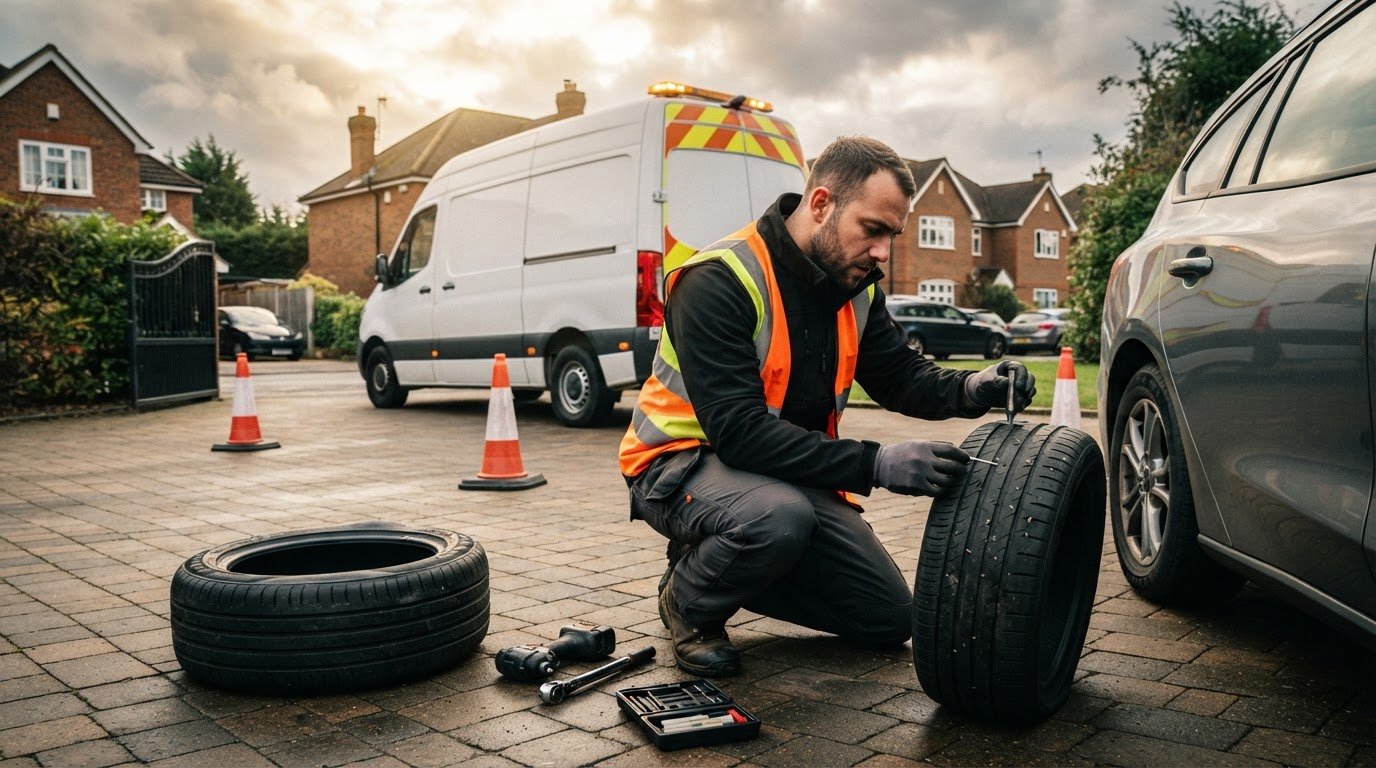
A flat tyre on a driveway in Essex doesn’t always need replacing. A puncture may be repairable if it is in a suitable part of the tread and the tyre is otherwise in sound condition. Cuts, splits or bulges in the sidewall cannot be repaired, so the tyre must be replaced. The damage and its position determine the right option.
A flat tyre can disrupt your day, but you don’t need to guess whether repair or replacement is appropriate. This guide explains what makes a tyre repairable, what damage means it needs replacing, and what to expect when arranging help at home.
You’ll also learn what a technician needs to work safely on a driveway, what to do if a tyre fails on an Essex road, and how mobile fitting can help when you can’t drive the car to a garage.
Key Takeaways
- A puncture may be repairable when its position and the tyre’s condition make a safe repair possible; sidewall cuts, splits and bulges mean replacement.
- A technician needs a safe, accessible place to work, so consider the driveway space and access before arranging a visit.
- If a tyre loses pressure, avoid driving on it unnecessarily; damage can worsen and affect whether repair remains possible.
- The legal minimum tread depth is 1.6mm, according to The Scottish Government. Check the tread across the tyre, not just in one spot.
- Mobile tyre fitting and repair can bring help to a suitable home or roadside location when the car cannot be driven to a garage.
Mobile fitting for driveways, workplaces and roadside locations
A mobile tyre technician can work at home, at a workplace or in a car park, as long as there is safe, accessible space around the vehicle.
In the UK, the legal minimum tyre tread depth is 1.6mm, according to The Scottish Government. Check the tread and inspect the tyre for visible damage, including sidewall cuts, splits or bulges.
If you find a flat tyre on your driveway, park securely, apply the handbrake and switch off the engine. Check for visible damage without moving the vehicle or attempting a repair beside traffic.
Don’t drive on a flat tyre to a nearby garage. Doing so can damage the tyre and wheel and may affect the vehicle’s control. Arrange assistance at the vehicle’s location instead.
To check your breakdown or insurance cover, read the policy documents for tyre assistance, home-start cover, exclusions and call-out conditions. Follow the stated claims process and keep your policy details handy.
Fitting in car parks and other locations
A car park, workplace or roadside area may be suitable for fitting if there is a safe, accessible place to work. Before arranging a visit, consider access to the vehicle, space around the affected wheel and whether parked cars or moving traffic obstruct the work area.
If a tyre fails on the road, move to a safe position only if you can do so without further risk. In a blowout on an Essex road, pull over as far left as possible, switch on the hazard lights and leave through the left-hand door if it’s safe.
On a driveway, make sure the vehicle is accessible and the affected wheel can be reached. A flat tyre on a driveway in Essex can be assessed on site, so the damage can guide the choice between repair and replacement.
Tyre supply, fitting and balancing
Mobile tyre supply and fitting brings a replacement tyre to the vehicle’s location, removes the damaged tyre and fits the replacement. The correct size, load rating and speed rating must suit the vehicle; a size may appear as 205/55 R16 on the tyre sidewall.
After fitting, the wheel is balanced to help it rotate evenly. Share the vehicle details and tyre markings when arranging service, particularly if you have a run-flat tyre in Basildon. Run-flat tyres have reinforced sidewalls and robust rubber inserts. Compatible vehicles have a Tyre Pressure Monitoring System that alerts the driver to pressure loss.
Run-flat availability depends on the tyre specification required by the vehicle. If changing from run-flat to standard tyres, all 4 tyres must be changed, and drivers considering the change should consult the vehicle manufacturer.
Mobile flat-tyre repair at home
A puncture at home can be inspected where the vehicle is parked, avoiding an unnecessary journey on a damaged tyre. Keep the car stationary, apply the handbrake and note which wheel has lost pressure before arranging assistance.
A specialist first examines the tyre and identifies where air is escaping. The puncture’s position and the tyre’s overall condition determine whether repair is suitable. A cut, split or bulge in the sidewall means the tyre needs replacing. A nail in the tread does not, by itself, show that the tyre can be repaired safely.
Assessment involves more than locating the puncture. The technician considers visible damage, pressure loss and whether the tyre has been driven while deflated. Driving on a flat can cause further tyre damage and may affect the wheel. Don’t remove an embedded object yourself, as it may be limiting the air loss.
If repair is appropriate, the tyre is prepared and repaired before being refitted and checked. If the damage rules out a repair, the next step is a replacement tyre with the correct specification for the vehicle. Tyre markings can help identify the size; for example, a sidewall may show 205/55 R16. Share that marking when booking if you can read it safely.
To arrange a mobile tyre repair, provide clear details about the vehicle and its location. Include the registration, make and model, affected wheel, and tyre size if visible. Describe what happened, such as finding a screw in the tread or noticing the tyre had deflated overnight.
- Give the full address and postcode, including driveway or access details.
- Identify the affected tyre, such as the front passenger-side wheel.
- Describe visible damage and any pressure warning shown on the dashboard.
- Mention run-flat tyres or a TPMS warning if you know the vehicle has them.
These details help the technician prepare for the vehicle and the reported fault. Don’t crawl beneath the car or reach into traffic to read a tyre marking. If you can’t see it safely, explain that when booking and provide the registration and vehicle details instead.
Before the visit, clear the working area around the affected wheel. Move items off the driveway and keep other vehicles clear of the access route. A level, accessible space helps the technician assess the tyre and carry out the necessary work at home.
Same-day replacement for damaged tyres
A tyre with sidewall damage must be replaced. A cut, split or bulge in the sidewall cannot be repaired, so don’t drive on it to see whether it holds pressure. Keep the vehicle parked and arrange a replacement at its location.
For a flat tyre on a driveway in Essex, start by identifying the damaged wheel and recording the vehicle details. Check the tyre markings only if you can reach them safely. A size such as 205/55 R16 helps identify the tyre, but the replacement must also match the vehicle’s load rating and speed rating.
Provide the full address, postcode, vehicle registration and tyre size when arranging assistance. Describe the damage clearly, such as a bulge on the outer sidewall or a split near the rim. If the tyre is too deflated for you to read its markings, give the vehicle make and model instead.
Location affects how a replacement visit can be arranged. A vehicle on a clear driveway in South Woodham Ferrers presents different access conditions from one parked in a narrow street or busy car park. Share practical details about gates, parking restrictions and space around the affected wheel. The technician needs a safe, accessible place to work.
Before the visit, remove obstacles around the vehicle and keep the affected side accessible. Don’t jack up the car or try to remove the wheel unless you have the right equipment and know how to do so safely. Driving on a damaged tyre can worsen the damage and may affect the wheel, making the problem more involved.
Replacement follows a careful sequence:
- Identify the specification. Match the tyre size, load rating and speed rating to the vehicle.
- Inspect the damage. Check the sidewall and tread to establish why repair isn’t appropriate.
- Fit the replacement. Remove the damaged tyre and install one suited to the vehicle.
- Check the result. Confirm the wheel is fitted correctly and the tyre is inflated to the vehicle’s recommended pressure.
If you have run-flat tyres, tell the technician when arranging the visit. These tyres have reinforced sidewalls, and compatibility with the vehicle matters. If pressure has fallen, don’t treat the run-flat feature as permission for routine driving. It is designed to help after pressure loss, not to remove the need for prompt attention.
A request for same-day replacement is time-sensitive, but that’s no reason to drive on a visibly damaged tyre. Provide accurate vehicle and location details, keep the car stationary and make the work area accessible. This helps identify the required tyre specification and the practical conditions for fitting it.
Tyre repair versus replacement
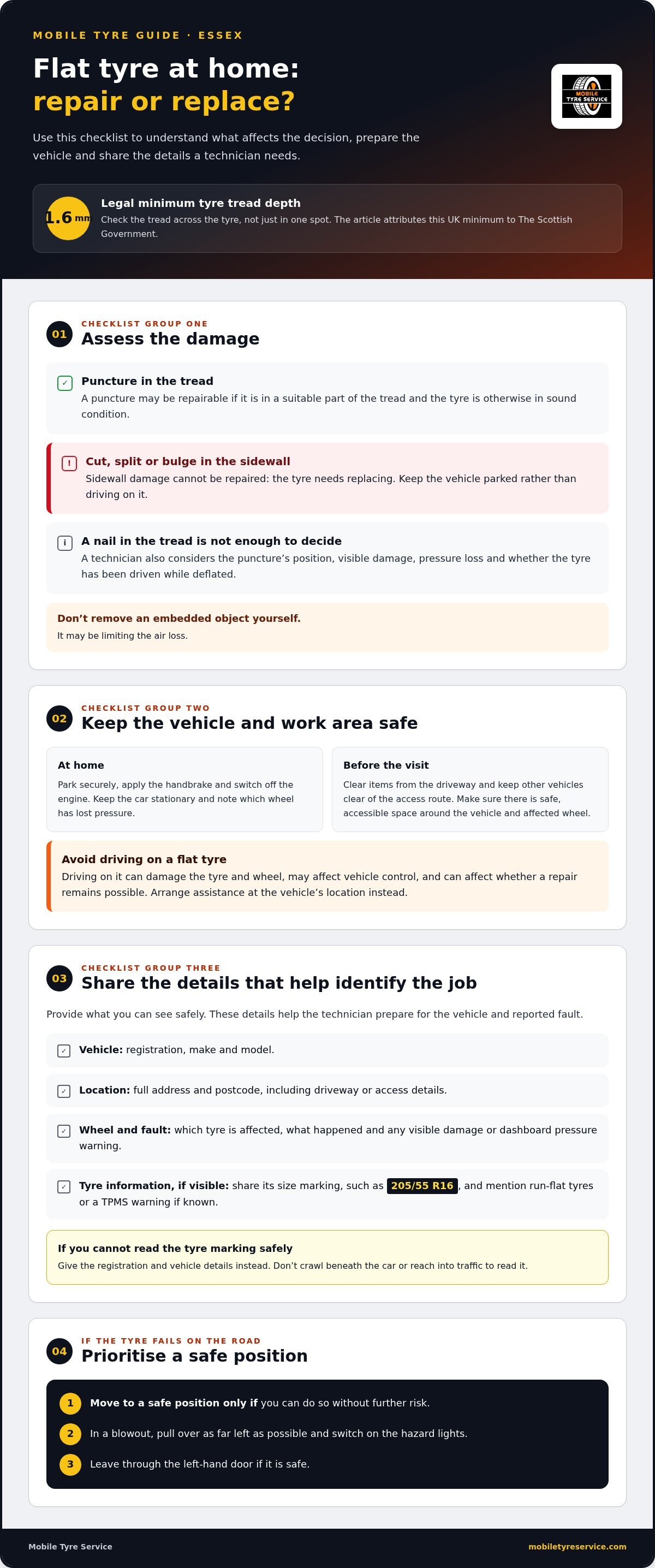
The decision depends on the puncture’s location and the tyre’s condition. A tread puncture may be repairable after inspection, but sidewall damage cannot be repaired. Cuts, splits and bulges in the sidewall mean the tyre needs replacing. A nail in the tread alone doesn’t establish whether a safe repair is possible.
The tyre’s overall condition matters too. Look for cracking, uneven wear, exposed cords or damage around the bead, where the tyre meets the wheel. These signs can affect whether the tyre is suitable for continued use. Don’t remove an embedded object before assessment, as it may be slowing the air loss.
Tread depth is a separate part of the decision. The legal minimum tyre tread depth is 1.6mm, according to The Scottish Government. Measure the tread across the central part of the tyre, and consider its condition around the full circumference. A puncture repair doesn’t make worn tread compliant.
Tyre size helps identify a replacement, but it doesn’t determine repairability. A marking such as 205/55 R16 gives the tyre’s size information; the replacement must also have the vehicle’s correct load rating and speed rating. Look for these details on the tyre sidewall or in the vehicle handbook, without reaching beneath the car.
A garage or mobile technician assesses the tyre after removing it from the wheel. That inspection can reveal internal damage that isn’t visible from outside, especially if the car has been driven while the tyre was flat. For vehicles that require a more comprehensive inspection for potential wheel or suspension damage, full-service repair workshops such as On Top Diesel & Automotive provide complete mechanical assessments. Tell the technician how the puncture happened and whether the vehicle moved after losing pressure.
Use these checks to understand the likely decision, not to approve a repair yourself:
- Position: tread punctures may be repairable; sidewall damage requires replacement.
- Condition: look for bulges, splits, cracking or uneven wear.
- Pressure loss: note whether the tyre deflated gradually or suddenly.
- Vehicle specification: record the tyre size and relevant ratings if visible.
If the tyre is visibly damaged or fully deflated, keep the vehicle stationary rather than driving to a garage. Driving can worsen internal damage and affect the repair decision. A flat tyre on a driveway in Essex can be assessed where the car is parked, with repair considered only if the tyre’s location and condition make it suitable.
Which mobile tyre repair services cover Essex driveways?
For an Essex driveway, mobile tyre assistance can include an on-site puncture assessment, a repair where suitable, or fitting a replacement. Dedicated providers like Mobile Tyre Fitting Essex cover driveways and roadside locations across the region. The right service depends on the fault and the vehicle’s location. A driveway in Chelmsford, for example, offers different working conditions from a car park or roadside stop.
Coverage is only one part of arranging help. The technician needs the exact address and a safe, accessible place to work. Give the full postcode, driveway access details and the affected wheel. Mention gates, parked vehicles or a narrow entrance that could prevent equipment reaching the car.
When arranging a visit, explain what happened rather than diagnosing the tyre yourself. Say whether you found an object in the tread, noticed pressure loss overnight or saw visible damage. A photo may help describe the problem, but don’t touch an embedded object or move the vehicle to get a better view.
The type of mobile service depends on the damage. A puncture may be repairable if its position and the tyre’s condition allow it. Sidewall damage, such as a split or bulge, means the tyre needs replacing. Mobile fitting brings the replacement to the vehicle, so you don’t have to drive on a damaged tyre.
Before booking, collect the details that help identify the vehicle and likely tyre specification:
- Vehicle registration, make and model.
- Tyre size, if readable without reaching beneath the vehicle.
- Which wheel is affected, such as the rear offside tyre.
- Whether the vehicle has run-flat tyres or a TPMS warning.
- Exact Essex location and any access restrictions.
These details help determine whether the vehicle needs a repair visit or replacement fitting. A visible tread puncture, for example, differs from sidewall damage. The tyre markings also help match a replacement to the vehicle’s required size, load rating and speed rating.
Keep the vehicle stationary if the tyre is flat, and clear loose items from around the affected wheel. The technician needs safe access, not a tightly packed driveway or a car positioned behind another vehicle. If the vehicle is at a workplace or in shared parking, identify the space clearly.
For a flat tyre at home, arrange mobile tyre assistance with the address, vehicle details and a clear description of the fault. This gives the visit a precise starting point and helps direct attention to the damaged wheel.
Mobile Tyre Service: MOBILE TYRE FITTING
Mobile Tyre Service provides mobile tyre fitting and mobile tyre repair at your chosen location. If a puncture leaves your car stranded on an Essex driveway, its mobile tyre fitting at home can bring the work to the vehicle rather than requiring you to drive on a damaged tyre.
The next step depends on the tyre’s condition. Some tread punctures may be repairable, while sidewall damage requires replacement. When arranging service, share your vehicle details, visible tyre markings, affected wheel and driveway access information. A clear, safe working area helps the technician reach the vehicle and assess the tyre.
For a flat tyre at home in Essex or Cambridge, contact Mobile Tyre Service to arrange mobile tyre fitting or repair for your vehicle.
Make your next move with confidence
A flat tyre on your driveway in Essex can disrupt work, family plans or an essential journey. Don’t put the damaged wheel back on the road while deciding what to do. Arrange tyre service around where the vehicle is parked and what it needs.
Mobile Tyre Service provides mobile tyre fitting, fitting at home and mobile tyre repairs. This lets you arrange help at your location rather than drive on a damaged tyre. Have your vehicle details and location ready when you get in touch, so the conversation can focus on your situation.
Contact Mobile Tyre Service to discuss the next step for your vehicle. With a clear plan in place, you can focus on getting your day back on track.
Frequently Asked Questions
Flat Tyre or Blowout in Essex?
A flat tyre loses pressure, while a blowout is a sudden tyre failure that can affect vehicle control. If a blowout happens on an Essex road, pull over as far left as possible, switch on your hazard lights and leave through the left-hand door if it’s safe. Don’t inspect the tyre beside moving traffic. Once safely away from the road, arrange assistance at the vehicle’s location.
Do I need a tyre repair or full replacement?
The tyre’s damage and condition determine whether repair or replacement is appropriate. A tread puncture may be repairable after inspection, but a sidewall cut, split or bulge means the tyre must be replaced. Consider wear and damage elsewhere on the tyre too. For example, a repair won’t make a tyre with worn tread suitable for continued use. Keep the car parked until the damaged tyre has been assessed.
How quickly can you reach me in Chelmsford?
Attendance in Chelmsford depends on the call’s location, technician scheduling and the information provided about the fault. Give the full postcode, vehicle details and a clear description of the tyre problem. Mention whether the car is on a driveway, at work or in a car park, and note any access restrictions. These details help organise attendance at the right location.
Need a mobile tyre fitter in Essex?
Mobile Tyre Service provides mobile tyre fitting and repair at customers’ preferred locations, including homes and roadside settings. For a vehicle in Essex, share its registration, make and model, affected wheel and tyre size if visible. Include your postcode and access details. This helps the technician understand what the vehicle needs, whether that’s attention to a damaged tyre or a replacement fitted on site.
Can a punctured tyre be repaired, or does it need replacing?
A punctured tyre can be repaired only if its location and overall condition make repair suitable. Sidewall damage, including a cut, split or bulge, requires replacement. Internal damage can also affect the decision, particularly if the vehicle has been driven while the tyre was deflated. Don’t pull out a nail or screw before assessment. Leave it in place and describe its position when arranging help.
How quickly can an Essex mobile tyre fitter attend a driveway?
Attendance at your driveway depends on the address, scheduling and the information available about the vehicle and tyre. Provide the full Essex postcode, vehicle registration and a description of the fault. Mention driveway access, gates or another parked vehicle that could obstruct the working area. If you’re in Cambridge rather than Essex, give your precise location so the service can be arranged for where the car is parked.
Need a mobile tyre service?
We cover Harlow, Bishop's Stortford, Cambridge and all surrounding areas — 24/7.
Call: 01279 881234