Flat tyre at work in Cambridge: mobile repair and fitting
A flat tyre at work in Cambridge doesn’t mean you should drive to a garage. Stop in the first legal place clear of traffic, as driving on a flat tyre can destroy it. Mobile tyre help can come to your workplace or car park for an assessment, repair or replacement, so you don’t have to move the vehicl…

A flat tyre at work in Cambridge doesn’t mean you should drive to a garage. Stop in the first legal place clear of traffic, as driving on a flat tyre can destroy it. Mobile tyre help can come to your workplace or car park for an assessment, repair or replacement, so you don’t have to move the vehicle.
A puncture can disrupt your working day, but the right next step depends on the tyre’s condition. Whether it can be repaired or needs replacing can only be determined after the wheel is removed and the damage is inspected.
This guide explains what to do first, how mobile tyre repair and fitting work in Cambridge, and what information helps arrange the right service. You’ll also learn how to stay safe while waiting and what to expect when the tyre is assessed.
Key Takeaways
- Don’t drive a car with a flat tyre to a garage; stop at the first legal place clear of traffic to avoid further damage.
- A tyre can be assessed for repair or replacement after the wheel is removed and the damage inspected.
- Have the tyre size from the sidewall and your exact workplace or car-park location ready when arranging mobile help.
- If your car is stopped in an A14 running lane or another unsafe location, call 999 or National Highways on 0300 123 5000.
- Learn what to expect from mobile tyre fitting at work and how the vehicle’s condition and location shape the next steps.
Mobile tyre repair and replacement across Cambridge
At work, a puncture may be repairable, or the tyre may need replacing. The decision depends on inspecting the removed wheel and the damage.
Repair and replacement options
A puncture can be repaired only if the damage meets the relevant repair criteria. If the tyre isn’t suitable for repair, replacement is the alternative. A technician must assess the damage, not just the visible tread. For example, a nail in the tread and a cut near the sidewall can lead to different outcomes. Give accurate details about the tyre and vehicle when arranging help, then allow for an inspection before a decision is made.
Urgent repairs and service area
Mobile tyre services in Cambridge can help if you can’t safely continue on a damaged tyre. Give the workplace address, car-park entrance and vehicle location clearly so the technician can find the right spot. If you’re stopped beside a motorway, wait behind the barrier or well up the verge, not inside the car. Don’t drive to a garage on a flat tyre: it can destroy the tyre. First, stop somewhere clear of traffic.
Repair standards and safety checks
BS AU 159 is the British Standard to consider when assessing a tyre repair. The technician should examine the tyre’s condition and damage before deciding whether repair is appropriate. Safety checks also include looking for further visible damage and confirming the tyre is suitable for use after the work. A puncture repair is not the right outcome for every damaged tyre; replacement may be needed where the assessment finds the tyre unsuitable.
Who is responsible for a puncture in a workplace car park in the UK? A puncture alone doesn’t establish responsibility. The cause matters: evidence that a car-park hazard caused the damage may be relevant when determining who is responsible.
Can roadside assistance change a flat tyre in Cambridge? Yes, roadside assistance can change a flat tyre if tyre assistance is included and the vehicle can be accessed safely. The service may fit a spare or arrange a repair or replacement.
Does breakdown cover or car insurance cover a flat tyre at work? Breakdown cover may include help with a flat tyre, while insurance depends on the policy’s cover and exclusions. Check the wording of your policy to understand what assistance or damage it covers.
Where can I find a tyre repair shop near Cambridge city centre? You can look for a tyre repair shop near the city centre or arrange mobile help at your workplace or car park. Don’t drive there on a flat tyre, as this can destroy the tyre.
NEED URGENT TYRE REPAIR?
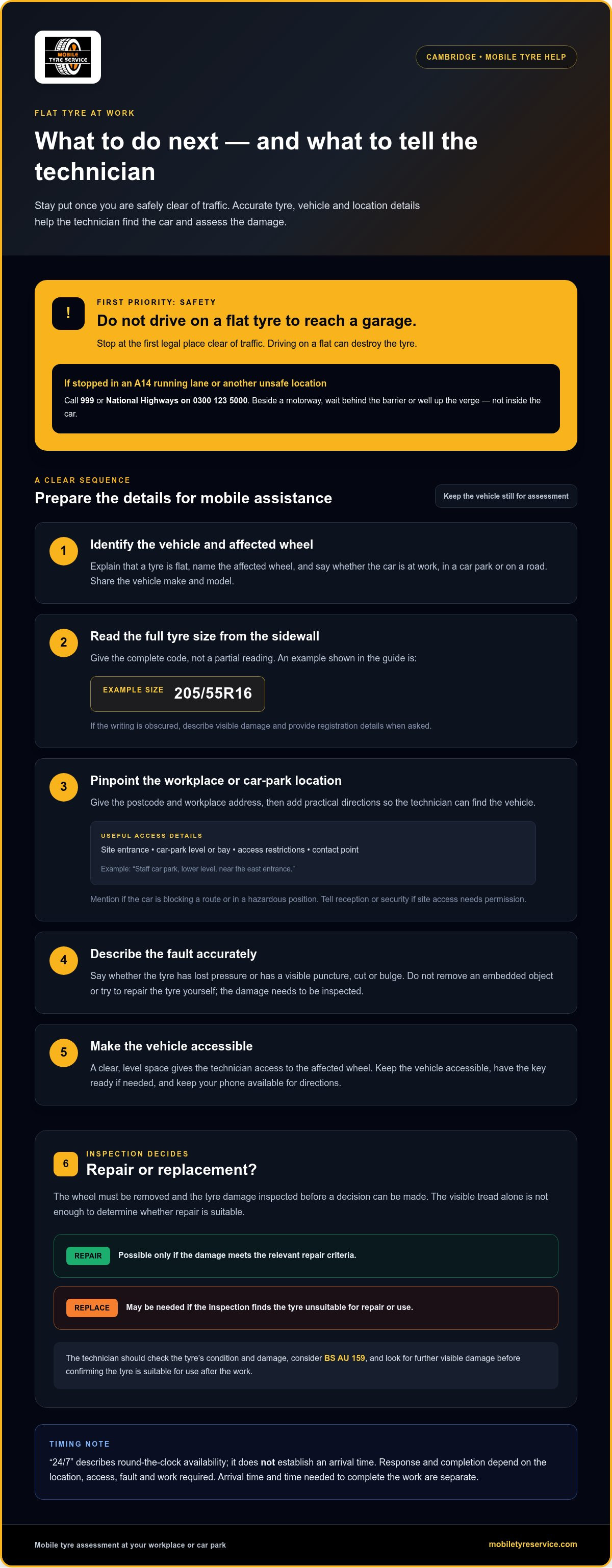
Arranging mobile tyre assistance starts with clear details about your vehicle and location. Explain that a tyre is flat, identify the affected wheel, and say whether the car is at work, in a car park or on a road. This helps the technician understand the issue and find the vehicle. Don’t drive on the damaged tyre to reach a garage.
Before booking, find the tyre size on its sidewall and note the vehicle’s make and model. The size includes a sequence such as 205/55R16, a common UK tyre size. Share the full code, not a partial reading, because different sizes can fit different vehicles. If the writing is obscured, provide the registration details when asked and describe any visible damage.
Give practical access information, not just your workplace name. Include the building entrance, car-park level or bay, any access restrictions and a contact point. For example, “staff car park, lower level, near the east entrance” is more helpful than a company name alone. Mention if the vehicle is blocking a route or in a hazardous position.
Choose a suitable place where the vehicle can stay still during the assessment. A clear, level space gives the technician access to the affected wheel. At work, follow site procedures for visitors and tell reception or security to expect the appointment. Keep the vehicle accessible and have the key ready if it’s needed to move or inspect the car.
Tyre booking forms commonly ask for the tyre size, vehicle details, location and a description of the fault. Enter the workplace address accurately, then add car-park directions in the notes. Check everything before submitting: a mistyped tyre code or unclear location can complicate the appointment. Include a contact number so access or vehicle arrangements can be discussed directly.
Describe the symptoms precisely. Say whether the tyre has lost pressure or has a visible puncture, cut or bulge. Don’t remove an embedded object or try to repair the tyre yourself; the technician needs to inspect the damage. Removing and inspecting the wheel helps determine whether repair or replacement is appropriate.
For a workplace puncture, a mobile tyre repair appointment can bring assessment to the vehicle’s location. Submit accurate vehicle, tyre and access details so the request describes the job clearly.
The Cambridge Museum of Technology is less than 10 minutes away on foot from the centre.
24/7 Availability and response times
A flat tyre can happen before work, during a shift or after the working day. The heading “24/7” describes round-the-clock availability, but it doesn’t establish an arrival time. Response depends on the vehicle’s location, access, the fault and the work required. At a Cambridge workplace, a precise address and car-park directions help identify where assistance is needed.
Share the postcode, site entrance, parking level and vehicle registration when arranging help. Add a clear description, such as “front passenger tyre flat in the staff car park”. This helps distinguish a car in a marked bay from one beside a blocked entrance. Tell reception or security if site access requires permission, and keep your phone available for directions.
The estimated arrival and the time needed to complete the work are separate. The technician must reach the vehicle, assess the tyre and decide whether repair or replacement is suitable. Repairing a puncture involves different work from fitting another tyre. The vehicle’s position also affects access: a narrow bay or busy car park may require careful manoeuvring before work can begin.
Run-flat tyres have reinforced sidewalls that can support continued driving without pressure. Run-flat tyres may allow limited driving after losing pressure, but check the vehicle handbook and tyre instructions before continuing. Those limits do not mean every journey is safe or appropriate. Check the vehicle handbook and tyre instructions, and stop if the car becomes difficult to control or reaches an unsafe location.
For a vehicle stopped in an A14 running lane or another unsafe place, contact emergency help rather than waiting beside traffic. Call 999 or National Highways on 0300 123 5000. If you must wait beside a motorway, stay behind the barrier or well up the verge, not inside the car. Your position and immediate safety take priority over a workplace appointment.
At a Cambridge office car park, keep the vehicle stationary and give clear access details. Don’t move it just to reach a more convenient appointment point, especially if the tyre is fully deflated. Driving on a flat tyre can destroy it. If it’s a run-flat tyre, the manufacturer’s distance and speed limits still apply; they don’t replace an assessment of the damage.
Accurate information helps the technician understand the job before arrival. Describe the tyre, vehicle, workplace entrance and any access restrictions when arranging the appointment. This makes it easier to reach the car and assess whether repair or replacement is needed.
Mobile tyre fitting at work and in car parks
Mobile tyre fitting brings the service to your vehicle’s location, including workplaces and car parks in Cambridge. The technician needs enough room to reach the affected wheel and carry out the fitting. A marked bay may be suitable, while a cramped space beside a wall or another vehicle can restrict access. Give the site entrance, parking level and bay details when arranging the visit.
Workplace access involves more than finding the building. Tell reception or site security to expect the technician, and explain any visitor procedure or gate access. If the vehicle is in a multi-storey car park, include the floor and the entrance with the clearest route. A site contact can help direct the technician to the vehicle without searching multiple parking areas.
Before the appointment, clear the space around the affected wheel. Move nearby equipment, bags or work materials, and ask colleagues not to park close to the vehicle. A car beside a loading area may need to be relocated to a safer, more accessible bay, but don’t drive it on a flat tyre. Describe where it’s parked so the fitting plan accounts for the available space.
The fitting process starts with identifying the vehicle and tyre, then assessing the damaged wheel. The wheel is removed so the damage can be inspected, and the assessment determines whether repair or replacement is appropriate. If a replacement is needed, the correct tyre size is essential. Read the full code on the tyre sidewall, including its letters and numbers, and provide it with the vehicle details.
Run-flat tyres need particular consideration during fitting because their reinforced sidewalls are stiff. Fitting them can be more involved than fitting a standard tyre. Tell the technician if your vehicle has run-flat tyres and provide the information from the sidewall. This helps identify the tyre before work begins.
A workplace car park may restrict vehicle access, work areas or visitor entry. Follow the site’s instructions and keep the vehicle at the agreed location. If a colleague has the keys or controls access, coordinate with them before the appointment. Clear arrangements help ensure the technician can locate and approach the vehicle on arrival.
For fleet vehicles, give the registration and identify the specific car, rather than naming only a department or parking zone. If several vehicles share a car park, a bay reference, colour and make can help distinguish the right one. These details help organise a workplace fitting without having to drive the damaged vehicle to a garage.
What should I do if I get a flat tyre at work in Cambridge?
Act in order: secure the vehicle, assess your position and arrange help. If a tyre goes flat in a workplace car park, stop in the first legal place clear of traffic. Don’t keep driving to find a more convenient bay or garage. Driving on a flat tyre can destroy it and cause further damage.
- Stop safely. Switch on your hazard lights if you’re beside moving traffic. Keep clear of passing vehicles, and don’t attempt to change a wheel where traffic or the ground makes it unsafe.
- Assess the location. A car in a marked workplace bay is different from one stopped in a live lane. If the vehicle is in an A14 running lane or another unsafe location, call 999 or National Highways on 0300 123 5000.
- Wait in a safer position. If you’re beside a motorway, wait behind the barrier or well up the verge, not inside the car. Follow instructions from emergency or road-response staff.
- Describe the fault and location. Note which tyre is affected, the vehicle registration, workplace address, car-park level and nearest entrance. Tell reception or security if access arrangements apply.
Don’t remove an object lodged in the tyre or try to seal a puncture while the wheel is still fitted. The tyre needs proper inspection to determine whether repair is suitable or replacement is required. A visible nail doesn’t reveal the full extent of damage inside the tyre. Describe what you can see, but leave the assessment to the technician.
If the car is already in a safe workplace space, keep it stationary and arrange mobile assistance at that location. Provide the full tyre size from the sidewall if it’s readable, along with the vehicle details. A bay number or clear landmark helps identify the car in a large staff car park. If the tyre size is unreadable, say so rather than guessing.
Run-flat tyres have reinforced sidewalls, but their limits still matter. Most run-flat tyre manufacturers allow up to 50km on a flat tyre and set a maximum speed of 50km/h. These figures aren’t a reason to continue driving if the location is unsafe or the car is difficult to control. Stop at a safe place and follow the vehicle and tyre instructions.
Once you’re in a safe position, arrange tyre help at your workplace with accurate access and fault details. Don’t drive the damaged vehicle to a repair location.
Mobile Tyre Service: MOBILE TYRE FITTING
Mobile Tyre Service provides mobile tyre fitting and repair for drivers with a damaged tyre at work. Instead of driving on a flat tyre to a garage, arrange help at the vehicle’s location. The technician removes the wheel and inspects the damage to determine whether repair or replacement is appropriate.
This is a practical option when your car is safely parked at work or in a car park and you need the tyre assessed where it is. Mobile Tyre Service also provides mobile tyre fitting at home, another convenient location when your vehicle is stationary.
For a workplace appointment, provide your vehicle details, tyre size and precise site access instructions. To arrange mobile tyre fitting or repair, contact Mobile Tyre Service or visit mobiletyreservice.com.
Get your working day back on track
If a flat tyre at work in Cambridge has disrupted your plans, arrange for the vehicle to be assessed where it is. Coordinate access with your workplace, then decide whether repair or replacement is needed after the damage has been inspected. That way, you can plan around the vehicle rather than spend your day trying to get it to a garage.
Mobile Tyre Service provides mobile tyre fitting, including at home, and mobile tyre repair. For a tyre problem at work, share the vehicle details and location when arranging help. Clear information gives the appointment a practical starting point and helps you focus on what needs to happen next.
Contact Mobile Tyre Service for help with mobile tyre fitting or repair. A clear next step can make it easier to get your plans moving again.
Frequently Asked Questions
What are the nearest mobile tyre fitting services to Cambridge workplaces?
Mobile Tyre Service provides mobile tyre fitting in Cambridge, including at workplaces. For an office car park or business premises, give the full address and the vehicle’s exact location. A postcode alone may not identify the right entrance or parking area. Include any gate, reception or security instructions to help the technician find your car.
Can a flat tyre be repaired, or does the tyre need replacing?
Either outcome is possible: the tyre’s condition and the damage determine which option is suitable. A technician removes the wheel and inspects the tyre, including its inside, before deciding. Damage that extends beyond a repairable area, for example, may mean the tyre needs replacing. An object visible in the tread doesn’t show the full extent of the damage, so don’t assume a puncture can be repaired based on appearance alone.
Is it safe to drive on a flat or partially deflated tyre?
No. Stop in the first legal place clear of traffic, then keep the vehicle stationary. Even a tyre that looks partly inflated can lose more pressure under the vehicle’s weight, affecting handling and damaging the tyre. Don’t drive to a workplace exit, garage or quieter parking space if the tyre is already damaged. If the vehicle is in a dangerous position, prioritise personal safety and contact emergency help.
How long does emergency mobile tyre fitting in Cambridge usually take?
The total time includes reaching the vehicle, inspecting the tyre and completing the necessary work. Travel time depends on the vehicle’s location and access, while the fitting stage depends on the tyre size and whether repair or replacement is needed. A car in a restricted workplace car park may also take longer to reach than one beside an accessible entrance. Give precise directions and tyre details when arranging assistance.
Need a mobile tyre service?
We cover Harlow, Bishop's Stortford, Cambridge and all surrounding areas — 24/7.
Call: 01279 881234