Cost to Repair a Slow Puncture in Cambridge: What Affects the Quote?
The cheapest-looking answer may not be the right one for a slow puncture. Search for “cost to repair slow puncture Cambridge” and you’ll find that the quote depends less on a headline figure than on whether the tyre is safe to repair. A gradual loss of pressure can disrupt a journey and leave you un…
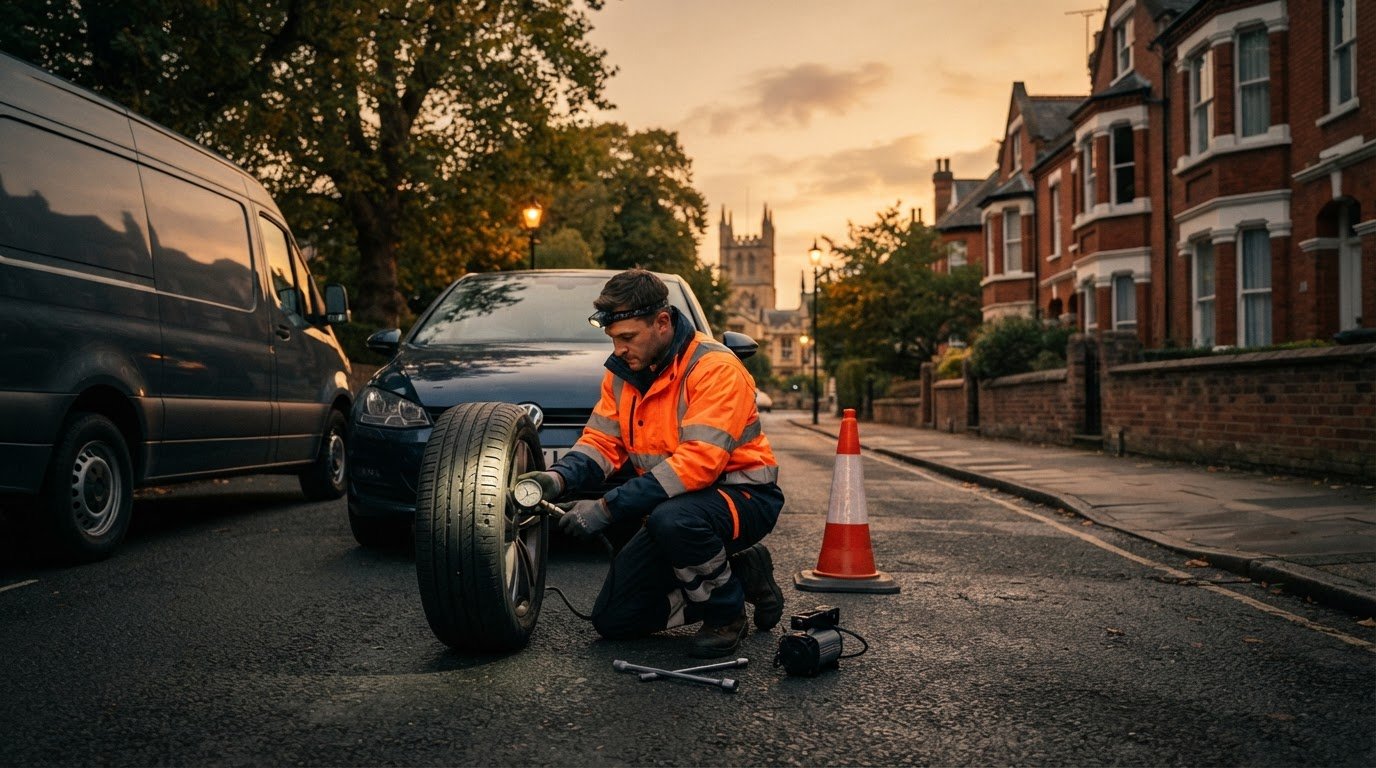
The cheapest-looking answer may not be the right one for a slow puncture. Search for “cost to repair slow puncture Cambridge” and you’ll find that the quote depends less on a headline figure than on whether the tyre is safe to repair.
A gradual loss of pressure can disrupt a journey and leave you unsure whether to keep driving or arrange help where the vehicle is parked. If the tyre is losing pressure, stop somewhere safe and avoid continuing until it has been assessed. A technician will consider the puncture’s position and size, as well as the tyre’s overall condition. If repair isn’t appropriate, replacement may be the next step, changing the work and the quote.
This guide explains which inspection findings shape a slow-puncture quote, when repair may not be possible, and what to do before assistance arrives. It also explains how mobile tyre repair in Cambridge can bring an assessment to your preferred location, including at home or by the roadside, so you don’t need to drive to a garage.
Key Takeaways
- The cost to repair slow puncture Cambridge drivers are quoted depends on inspection findings and the work the tyre needs, not just how quickly it loses pressure.
- A technician assesses the puncture and the tyre’s condition before advising whether repair, further assessment or replacement is appropriate.
- Park safely and note any warning lights or changes in handling. Don’t continue if the tyre appears unsafe or is losing pressure rapidly.
- The inspection findings help explain the recommended next step and why the quote reflects that work.
- Mobile tyre repair in Cambridge brings assistance to your preferred location, avoiding the need to drive to a garage for an assessment.
What affects the cost to repair a slow puncture in Cambridge?
The quote depends on what a technician finds during inspection and what work the tyre needs. A slow leak may come from a repairable tread puncture, damage in an unsuitable area, or a problem that has affected the tyre internally. Each finding can lead to a different next step, so the leak alone cannot establish the cost to repair slow puncture Cambridge drivers are likely to face.
An assessment identifies the damage, checks the tyre’s condition and determines whether repair is appropriate. If it isn’t, replacement may be advised instead. These are different outcomes, not interchangeable charges for the same job.
Which details can change a slow-puncture repair quote?
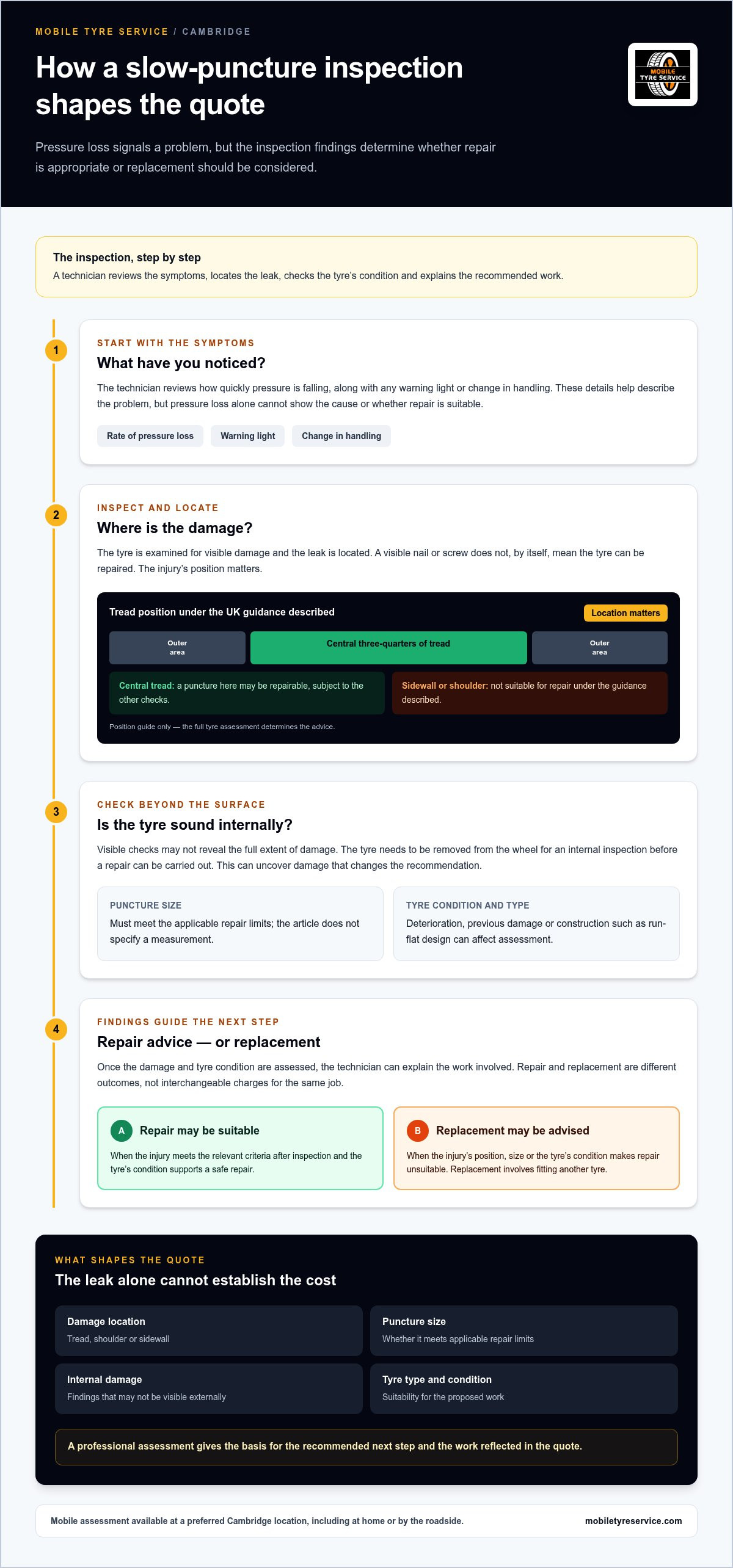
Location matters. Under the BS AU 159 guidance described for UK tyre repairs, a repairable puncture must be in the central three-quarters of the tread. Damage in the sidewall or shoulder is not suitable for repair. Two tyres losing pressure at a similar rate may therefore need different work because the damage is in a different part of each tyre.
Size and internal condition matter too. A puncture must meet the applicable repair limits, and visible damage doesn’t show the full picture. The tyre needs to be removed from the wheel for an internal inspection before a repair can be carried out. This check can reveal damage that isn’t visible from the outside, changing the advice from repair to replacement.
Tyre type and overall condition also shape the assessment. A technician considers whether the tyre is suitable for the proposed work and whether its condition supports a safe repair. For example, internal damage may rule out repair even if the visible puncture appears small. Different construction, including run-flat designs or modified off-road setups—where specialist centres such as Motortech 4X4 frequently align complex safety and wheel configurations—can also affect how the tyre and vehicle must be assessed.
Why repair and replacement are different cost outcomes
A repair addresses damage that meets the relevant criteria after inspection. Replacement is a separate course of action when the injury, its position or the tyre’s condition makes repair unsuitable. It involves fitting another tyre rather than carrying out a puncture repair, so the work and quote are different.
A professional assessment matters before deciding what the job will cost. It avoids assumptions based only on a warning light, a pressure reading or the apparent size of a puncture. A tyre may lose pressure slowly yet have damage that isn’t visible without closer inspection.
In short, the leak alone doesn’t establish the cost. The location, size and internal condition of the damage, alongside the tyre type and condition, determine whether repair is appropriate or replacement should be considered. An inspection gives you a clear basis for understanding the recommended next step.
How a technician assesses a slow puncture before giving repair advice
A pressure warning confirms a problem, but it doesn’t identify the cause. A technician assesses the tyre in stages: first, they review the symptoms; next, they inspect the tyre and locate the leak; then, they determine whether repair or another step is appropriate. Pressure loss alone can’t show where the damage is or whether the tyre is suitable for repair.
What happens during a slow-puncture inspection?
The technician starts with the information available, such as how quickly the tyre loses pressure and whether you’ve noticed a warning light or change in handling. They then examine the tyre for visible damage and work to locate the leak. A nail or screw may be visible, but its presence alone doesn’t establish that repair is suitable.
Visible checks are only part of the assessment. A closer inspection may be needed to assess the tyre’s internal condition, including removing the tyre from the wheel. This can reveal damage that isn’t apparent from the outside. The findings guide the repair advice.
Why the leak's location and the tyre's condition matter
The position of an injury affects whether it can be repaired. Damage in the tread area is assessed differently from damage in the sidewall, where repair isn’t suitable under the UK guidance described for tyre repairs. The technician also considers the injury itself and the condition of the tyre around it, rather than relying on the warning light or a visual glance.
Previous damage or signs of deterioration may affect whether the tyre can safely be repaired. A tyre that looks sound externally may still need further inspection before a recommendation is made. The USTMA Tire Repair Standards outline repair principles, but they are a US industry reference; a UK assessment must follow the applicable UK guidance.
Repairability depends on the damage and the tyre’s condition, not pressure loss alone. The assessment needs to establish both where the air is escaping and whether the tyre remains suitable for repair.
What the assessment means for the quote
Once the findings are clear, the technician can explain the work involved. If the tyre is suitable, the next step may be a repair. If damage or condition makes repair unsuitable, replacement may be advised instead. These outcomes involve different work, so an assumed repair isn’t a reliable basis for understanding the quote.
To understand the cost to repair slow puncture Cambridge drivers may be quoted, the assessment needs to establish what the tyre actually requires. Mobile Tyre Service provides mobile tyre repair at customers’ preferred locations in Cambridge, making it easier to arrange an assessment without driving to a garage. You can arrange mobile tyre repair in Cambridge at a suitable location.
Repair or replacement: which outcome changes the cost?
The inspection may lead to one of three outcomes: repair may be appropriate, more assessment may be needed, or replacement may be advised. Each involves a different next step, so the cost to repair slow puncture Cambridge drivers are quoted depends on the work the tyre needs, not on an assumption that every leak can be fixed.
| Assessment outcome | Why it may be recommended | Likely next step |
|---|---|---|
| Repair may be suitable | The damage appears to meet repair criteria, and the tyre’s condition supports repair. | Complete the required inspection and carry out an appropriate repair. |
| Further assessment needed | The cause or extent of the damage, or the tyre’s internal condition, isn’t yet clear. | Inspect the tyre more closely before deciding on repair or replacement. |
| Replacement may be advised | The injury’s position or the tyre’s condition makes repair unsuitable. | Discuss fitting a suitable replacement tyre. |
When might a slow-puncture repair be suitable?
A repair may be an option if the damage is in an eligible area, is within the applicable limits and the tyre remains in suitable condition. The technician considers the injury and the tyre together, rather than making a decision from a visible object or pressure warning alone. The applicable UK repair guidance informs the assessment, and an external view may not reveal the full condition.
A repair recommendation follows inspection; it isn’t a conclusion that can safely be drawn from the fact that the tyre is losing air. If the initial view doesn’t establish the tyre’s condition, further examination may be needed before the work is agreed.
When might a replacement be the appropriate next step?
Replacement may be advised if damage is in a part of the tyre that isn’t suitable for repair, such as the sidewall, or if inspection finds an unsuitable internal condition. Previous damage or deterioration may also affect the decision. The recommendation should follow a competent inspection, not the leak’s speed or a warning light alone.
A replacement isn’t automatically evidence of unnecessary upselling. If a tyre can’t be repaired safely, choosing a repair simply because it appears to involve less work could leave an unsafe tyre in use. The technician should explain what the inspection found and why it changes the recommended work.
The key question isn’t simply whether repair appears cheaper. It’s whether repair is appropriate for that specific tyre. An assessment links the visible problem to the work required, helping explain why the quote reflects a repair, further investigation or replacement. Until the tyre has been assessed, the leak alone doesn’t establish the cost.
What Cambridge drivers should do before arranging a slow-puncture repair
A few clear details can help a mobile technician understand the situation before arriving. Put safety first, then note what you’ve observed and where the vehicle is parked. You don’t need to identify the cause yourself. Describing the symptoms and location helps prepare for an on-site assessment and the appropriate next step.
How to respond when you notice pressure loss
Follow this sequence before arranging assistance:
- Stop somewhere safe. If you’re driving, move to a safe place before inspecting the tyre. Don’t put yourself in danger by examining it near moving traffic.
- Look for obvious damage. From a safe position, check whether the tyre appears visibly damaged or substantially deflated. Don’t remove an embedded object or attempt a repair yourself.
- Record the symptoms. Note any dashboard pressure warning, when you first noticed it and whether the tyre appears to be losing pressure rapidly.
If the tyre looks unsafe or is rapidly deflating, don’t continue the journey. Avoid repeatedly driving to test how quickly pressure falls. This adds risk and won’t establish whether the tyre can be repaired. Leave the detailed inspection to a technician.
What information helps arrange mobile assistance?
When arranging help, give the vehicle’s location in Cambridge as clearly as possible, including a nearby landmark or site entrance if useful. Share the vehicle registration or tyre details if readily available, along with the affected tyre, any warning shown and the symptoms you’ve noticed. If you know how quickly the pressure has fallen, include that too.
Mobile tyre repair can be carried out at your preferred location, such as where the vehicle is parked at home or work. This gives the technician context for the visit without requiring you to drive a tyre that may be unsafe. Describe what you can see and let the assessment determine the suitable work.
These details help distinguish a pressure warning from the wider condition of the tyre. They also give you a clearer starting point for understanding the cost to repair slow puncture Cambridge drivers may be quoted, since the actual work depends on the inspection rather than the symptom alone. For broader context on factors that can shape tyre-service quotes, see this guide to mobile tyre repair costs.
Once you’re safely parked and have the key details ready, arrange mobile tyre repair in Cambridge at a suitable location. The technician can assess the tyre and explain the appropriate next step.
Arrange a mobile slow-puncture repair in Cambridge
Once you’ve noticed a slow leak, the next steps are clear: report the symptoms, arrange a mobile assessment, then follow the advice based on the tyre’s condition. Mobile Tyre Service provides mobile tyre repair for Cambridge customers at their preferred location, helping avoid the need to drive a potentially unsafe tyre to a garage.
The assessment determines whether repair is appropriate or whether replacement should be considered. That distinction matters to the quote: the cost to repair slow puncture Cambridge drivers are given depends on the work identified, not simply on the fact that a tyre is losing pressure. The inspection establishes the appropriate next step.
What to expect from a mobile tyre repair visit
Arrange assistance at the location where the vehicle is parked, whether that’s at home, at work or elsewhere in Cambridge. Share the symptoms and the affected tyre when describing the issue. This gives the technician useful context before inspecting the tyre at the vehicle’s location.
The technician assesses the tyre and explains the suitable next step. Depending on the findings, that may be repair advice or a recommendation to replace the tyre. If replacement is advised, the inspection helps explain why repair isn’t appropriate. The aim is to make the decision clear, not to assume every slow leak has the same cause or solution.
Keep the vehicle parked if the tyre appears unsafe or is losing pressure rapidly. Don’t drive it to make the appointment easier. A mobile visit brings the assessment to the vehicle, avoiding a journey on a tyre that may need attention.
How to take the next step
When arranging mobile assistance, have these details ready if possible:
- Your location in Cambridge. Give a clear address or identify where the vehicle is parked, such as a workplace or home address.
- Vehicle or tyre details. Share the vehicle registration or tyre information if it’s readily available.
- What you’ve noticed. Describe the pressure warning, which tyre is affected and how the leak appears to be changing.
You don’t need to diagnose the puncture or decide in advance whether the tyre needs repair or replacement. A concise description provides context; the technician’s inspection informs the advice. If you’re unsure whether the vehicle is safe to move, say so when arranging assistance and keep it parked until you have a suitable next step.
Mobile Tyre Service offers a practical way to get an assessment at your preferred location in Cambridge. To arrange assistance, arrange mobile tyre assistance.
Make your next step with confidence
Uncertainty about a tyre can make it tempting to delay a decision or keep driving and hope the warning clears. Instead, treat pressure loss as a prompt to get the tyre assessed, then use the findings to decide what happens next. This gives you a sound basis for understanding the cost to repair slow puncture Cambridge drivers may be quoted, without assuming the leak’s cause or the work required.
Mobile Tyre Service provides tyre repairs at customers’ preferred locations in Cambridge, making it possible to arrange assistance without planning a garage visit. Share where the vehicle is parked and what you’ve noticed, then let the inspection guide the next step. If the tyre appears unsafe, keep the vehicle stationary while arranging help.
Arrange mobile tyre repair in Cambridge and take a clear, considered step towards resolving the puncture. With an assessment, you can move forward with a better understanding of the recommended work.
Frequently Asked Questions
How much does it cost to repair a slow puncture in Cambridge?
A reliable figure depends on an inspection and the work the tyre requires. The cost to repair slow puncture Cambridge drivers are quoted can vary with the damage’s location, the tyre’s condition and whether it’s suitable for repair. A replacement recommendation is a different outcome from a puncture repair, not simply another repair charge. Arrange an assessment in Cambridge to find out what your tyre needs before relying on an assumed repair cost.
Can I drive with a slow puncture?
It’s safest not to continue if the tyre is visibly damaged or substantially deflated. A slow leak can worsen, and falling pressure may affect handling and control. Pull over somewhere safe and arrange a professional assessment rather than driving on to see whether the warning clears. Don’t rely on topping up the tyre to make a journey safe if it looks damaged or continues losing pressure.
Can a nail in a tyre cause a slow puncture?
Yes, an embedded nail can let air escape gradually, sometimes without making the tyre look flat straight away. But seeing a nail doesn’t show whether the damage is suitable for repair. Leave it in place until the tyre has been assessed, since removing it may change how quickly air escapes. A technician needs to inspect the injury and the tyre’s condition before advising whether repair or replacement is appropriate.
Can a slow puncture repair fail?
Yes, a repair can’t be presented as guaranteed. The result depends on the original damage, the tyre’s condition and whether the repair is suitable and carried out appropriately. If inspection finds that the tyre isn’t fit for repair, replacement may be advised instead. If pressure loss continues after a repair, don’t assume it’s safe to keep driving; stop somewhere safe and arrange a prompt reassessment.
Can cold weather make a tyre look like it has a slow puncture?
Temperature changes can affect tyre-pressure readings, but they don’t rule out a leak. Check the pressure according to the vehicle manufacturer’s guidance and note whether the same tyre repeatedly loses pressure. A warning that persists or visible damage needs attention, even during colder weather. Don’t assume temperature explains a continuing pressure drop; arrange an inspection so the cause can be assessed properly.
Can a tyre pressure monitoring system detect a slow puncture?
A TPMS warning can alert you to pressure loss, but it can’t identify the cause or determine whether the tyre is repairable. Follow the vehicle handbook’s instructions and check the tyre only when it’s safe to do so. A tyre may not look flat despite a warning. If the warning persists, arrange an inspection rather than treating the sensor alert as a diagnosis or proof that the tyre is safe.
What happens if a slow puncture is left unrepaired?
Continued pressure loss can leave a tyre underinflated, potentially affecting handling, wear and safe driving. The leak may worsen, and using a damaged or underinflated tyre can cause further damage. Repeatedly adding air doesn’t resolve the underlying problem. If the tyre looks unsafe, stop somewhere safe and arrange an assessment promptly. Avoid continuing a journey on the assumption that the leak will remain slow. To maintain overall roadworthiness, regular maintenance is just as essential; for example, motorists booking a comprehensive car service nz through My Auto Shop can have their tyres, brakes, and safety systems thoroughly checked by certified mechanics.
Need a mobile tyre service?
We cover Harlow, Bishop's Stortford, Cambridge and all surrounding areas — 24/7.
Call: 01279 881234